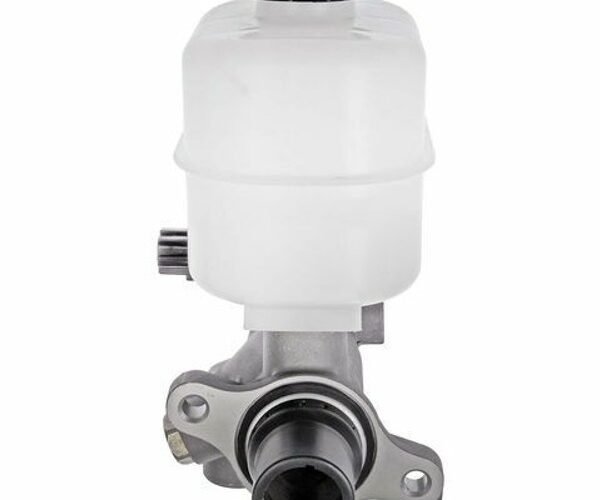
About the 2013 Ford F150 Brake Cylinder
The brake master cylinder, often simply called the brake cylinder, is the hydraulic heart of your 2013 Ford F-150's braking system. When you press the brake pedal, the brake power booster amplifies your foot pressure, and the master cylinder converts that amplified force into hydraulic pressure that travels through the brake lines to engage the calipers and slow the truck. The 2013 F-150 uses a tandem (dual-piston) master cylinder design with two separate brake circuits , typically diagonal split , so that if one circuit fails, the other continues to provide partial braking, a critical safety feature.
Why 2013 F-150 Owners Replace the Brake Master Cylinder
Common 2013 F-150 brake master cylinder replacement triggers include:
- Spongy or soft brake pedal: Air in the system or internal leak in the master cylinder
- Sinking brake pedal under steady foot pressure: Internal seal failure
- Brake fluid loss with no visible external leak: Internal seal failure leaking fluid past the seal
- Loss of one brake circuit: Front-only or rear-only brake function
- Brake warning light on: Often triggered by pressure imbalance from internal leak
- Visible brake fluid leak from master cylinder body or seals
- Reduced overall braking power: Beyond what worn pads or rotors would explain
- After major brake fluid contamination event: When water or debris contaminates the system, master cylinder seals can be damaged
Common 2013 F-150 Master Cylinder Issues
| Detail | Description |
|---|
| Internal Seal Failure | The internal piston seals fail after years of cycling, allowing fluid to bypass between chambers |
| External Fluid Leak | Leak from the body or pushrod seal, visible as fluid pooling under the master cylinder |
| Reservoir Cracking | Plastic reservoir can crack from heat or impact, allowing fluid to escape and air to enter |
| Low-Fluid Sensor Failure | Sensor connector or wiring failure causing false low-fluid warnings |
Things to Confirm Before Ordering
- Engine in your specific 2013 F-150 (3.7 V6, 3.5 EcoBoost, 5.0 V8, 6.2 V8) , affects size on heavier trims
- Year (2009 to 2014 cross-fits in most cases)
- Trim level
- Whether your truck has ABS, traction control, and/or stability control (affects port configuration)
- Brake fluid spec (DOT 3 or DOT 4 to OEM Ford)
What Is Included, What Is Not Included
| Item | Details |
|---|
| INCLUDED | Tested used OEM brake master cylinder with integrated fluid reservoir, low-fluid sensor connector, and mounting hardware where applicable. |
| NOT INCLUDED | Brake power booster (sold separately), brake fluid (refill required), bench bleed kit, brake bleeder kit, tools. |
| Tools You Need | Standard hand tools, brake fluid (DOT 3 or DOT 4 to Ford spec), bench bleed kit (REQUIRED before installation), brake bleeder kit, line wrenches, brake fluid catch pan. |
Vehicle Compatibility
This 2013 Ford F-150 brake cylinder is compatible with the following:
| Vehicle | Compatibility |
|---|
| 2013 Ford F-150 (all engines) | 3.7L V6, 3.5L EcoBoost V6, 5.0L V8 Coyote, 6.2L V8 |
| 2009 to 2014 Ford F-150 (P415/P417) | All trims and engines (size varies slightly by trim) |
| 2010 to 2014 Ford Raptor SVT | 6.2L V8, larger performance braking system |
| 2009 to 2014 Ford Expedition | Similar master cylinder spec on some variants |
NOT compatible with: 2008 and earlier F-150 (different mounting and port configuration), F-250 / F-350 Super Duty (much larger master cylinder for the heavier truck), Ranger or other Ford trucks.
Condition and Inspection
Every used 2013 F-150 brake master cylinder we ship goes through this process:
- Internal piston seal integrity tested (no fluid bypass between chambers)
- External seal integrity verified (no leaks at body or pushrod)
- Reservoir integrity inspected (no cracks, no warping)
- Reservoir cap seal inspected
- Low-fluid sensor connector verified
- Outlet port threads inspected for damage
- Donor application documented when available
These are used OEM master cylinders, not new. Bench bleed is required before installation.
Why Buy From Vaz Auto Solutions
- Tested OEM-specification 2013 F-150 brake master cylinder
- Internal and external seal integrity verified before shipping
- Reservoir integrity inspected (no cracks, no warping)
- Engine and trim compatibility confirmed
- Low-fluid sensor connector verified
- Compatible with 2009 to 2014 F-150 (P415/P417)
- Free shipping to all 50 states, no hidden surcharges
- Real human on the phone who knows F-150 brake systems
- 15 day replacement warranty on operational defects
- F-150 experienced support team
Cole F.
1970-01-01
Internal master cylinder failure was draining brake fluid into the booster. Vaz confirmed EcoBoost spec, sent tested master cylinder. Honest pricing, far less than dealer wanted. Truck stops solid again, brake warning light cleared. Will recommend.
zimerovertover
2026-04-28
Sweet website , super design and style, real clean and employ friendly.
What is a Brake Cylinder for the 2013 Ford F150?
A brake cylinder, technically called the brake master cylinder, is a vital component of the braking system responsible for generating hydraulic pressure to engage the brake calipers and slow down or stop the vehicle. The 2013 F-150 uses a tandem (dual-piston) design with two separate brake circuits for safety redundancy.
Why might I need to replace the Brake Cylinder on my 2013 Ford F150?
Replacement of the brake master cylinder may be necessary if you experience symptoms such as spongy or soft brake pedal, brake pedal sinking under steady foot pressure, brake fluid leaks (internal or external), loss of one brake circuit (front-only or rear-only braking), or loss of overall braking power. These issues compromise safety and require immediate attention.
Are Brake Cylinders compatible with all 2013 Ford F150 models?
Brake master cylinders are designed to be compatible with specific vehicle configurations. While the basic design is consistent across the 2009 to 2014 P415/P417 generation, the specific size and port configuration may vary by trim and brake package. Confirm engine, trim, and brake system features before ordering.
How often should I replace the Brake Cylinder on my 2013 Ford F150?
There is no fixed replacement interval. The brake master cylinder is typically replaced when it fails (typically 100,000+ miles). Regular brake fluid flushes (every 2 to 3 years) extend master cylinder life by removing moisture and contaminants that damage internal seals.
What's the difference between a brake cylinder, brake master cylinder, and wheel cylinder?
They're often confused. The brake master cylinder (also called brake cylinder informally) is the main hydraulic component on the firewall that generates pressure for the entire system. Wheel cylinders are smaller hydraulic components found in drum brake systems (the F-150 uses disc brakes all around, no wheel cylinders). Master cylinder is what most F-150 buyers actually need.
Do I need to bench bleed the master cylinder before installing?
YES. Bench bleeding is critical for a successful install. A master cylinder installed without bench bleeding will leave air in the system that is extremely difficult to bleed out through the wheel calipers. Bench bleed kits are inexpensive and the procedure takes 10 to 15 minutes.
Will this master cylinder fit my 2009, 2010, 2011, 2012, or 2014 F-150?
Yes for matching trim and engine. The 2009 to 2014 F-150 (P415/P417 chassis) shares master cylinder design across the generation. Confirm engine and we ship the right unit.
What brake fluid should I use after installing the master cylinder?
DOT 3 or DOT 4 brake fluid to Ford OEM specification. Do NOT use DOT 5 (silicone-based, incompatible with the rubber seals). Always use fresh, sealed brake fluid. Open brake fluid absorbs moisture from the air, which causes corrosion and reduces brake performance.