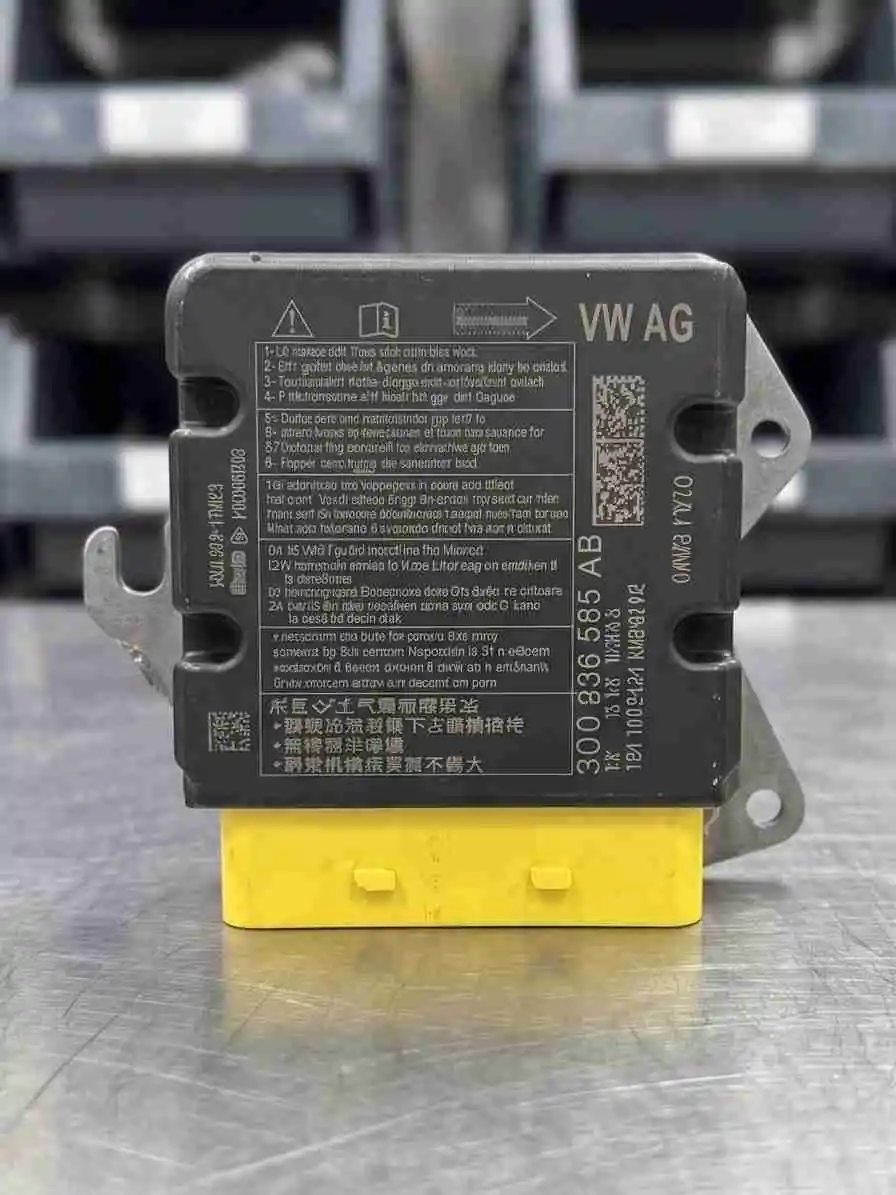
The airbag control module in an Audi is the unsung hero of the vehicle's safety system. Indispensable in vehicle operation, it uses various sensors placed throughout the car to constantly monitor and make decisions in milliseconds that could save lives in a crash. Built to Audi standards of performance, this module exemplifies brand dedication to the safety of all occupants. The seamless integration with other vehicle systems ensures that protection is always ready so drivers can remain safely focused on the Audi driving experience.
For the Audi enthusiast, the concern is not just safety but the preservation of a properly functioning safety system. This module is small in size but with major returns when it comes to giving peace of mind on every journey.
Product Overview: The Heart of Your Audi's Safety System
The Audi airbag control module is a critical part of the vehicle's passive safety system. This compact but powerful unit processes information from the array of sensors throughout the vehicle, including accelerometers and impact sensors.
Within milliseconds of an impact, the module evaluates the severity and type of impact, determining which airbags to deploy and with what force. The sophisticated algorithm uses variables like seat occupants, seat belt usage, and crash dynamics to tune responses for maximum protection.
The module continuously runs self-diagnostics for system readiness. It captures useful crash data, which is stored and can be retrieved for analysis. This helps in the continuous process of safety improvement in Audi vehicles.
Why Reset Is Required
After any airbag deployment event, the module:
Stores deployment fault codes that won't clear without reset
Reset Event Data Recorder: Clear previous crash data
Configuration reset: Return to factory-like state
Some modules require: Specialized hardware-level reset
Reset Service Options
MyAirbags (Recommended for Many Audi Modules)
Specialized SRS reset service: Established business
Mail-in service: Send module, receive reset
Cost: Typically $50-100
Turnaround: 1-3 business days typical
Website: myairbags.com
Audi Dealer Reset
VAS diagnostic tool: Can clear codes
Cost: $100-200 typical
Local service: No mailing required
Combines with installation: Dealer can install and reset
Specialized SRS Shops
Various reset services available
Quality varies: Verify reputation
Cost: $50-150 typical
DIY with VCDS
VAG-COM Diagnostic System (Ross-Tech)
Some modules can be reset with VCDS
Risk: Software/coding mistakes possible
Cost: Free if you own VCDS
Reset Required Before Installation
Do NOT install used module without reset. The vehicle's SRS warning light will remain on, and the airbag system will NOT deploy in a crash if codes are not cleared.
VIN Coding for Modern Audi Modules
Modern Audi airbag modules (typically 2000s+) require VIN coding:
Why VIN Coding
Vehicle-specific configuration: Module stores vehicle data
Equipment configuration: Sunroof, side airbags, occupancy sensors
VIN-locked: Module won't work without proper coding
Anti-theft feature: Prevents module swapping
VIN Coding Process
VAS diagnostic tool required (Audi dealer)
VCDS can sometimes code (with specific files)
Cost: $100-200 typical at dealer
Time: 30 minutes to 1 hour
Older Modules (Pre-2000)
May not require VIN coding: Like the 1988 Coupe Quattro per pa_compatibility
Simpler reset process: Often just clear codes
About the SRS Control Module Function
Continuous Monitoring
Sensor readiness: Continuously checks all SRS sensors
Self-diagnostics: Detects faults before crash
Warning light control: Illuminates if fault detected
System health check: Every key cycle
Real-Time Data Analysis
Instant processing: Sensor data evaluated in milliseconds
Multiple input streams: Acceleration, occupant, seatbelt data
Algorithm execution: Crash type identification
Critical Decisions in Milliseconds
Decision time: 20-30 milliseconds from impact
Crash severity assessment: Light, moderate, severe
Crash type identification: Front, side, rear, rollover
Deployment commands: Which airbags, what force
Adaptive Crash Response
Variable deployment force: Based on severity
Occupant size adjustment: Based on occupancy sensors
MyAirbags, Audi dealer, specialized SRS shops, VCDS
Price
$349.00
Nathan Hayes
Upgraded to the new airbag control module from Vaz Auto Solutions in my Audi, and the difference is remarkable. The module is a perfect fit and integrates seamlessly with the vehicle's safety system. It provides reliable and consistent airbag deployment, enhancing overall safety.
Jeremy Miller
It fits well and functions as expected, with no issues during installation. While it does its job in managing airbag deployment, the upgrade doesn't offer any extraordinary improvements beyond the standard functionality. It's a solid replacement if you need a new module.
What does "crash data reset" mean for a used airbag control module?
This is critical information for any used airbag module purchase: What Happens in a Crash Module detects crash: From sensor inputs Stores fault codes: Permanently in non-volatile memory Records EDR data: Crash event details Locks deployment: Won't fire again without reset Why Reset Is Required Permanent fault codes: Block normal operation SRS warning light: Stays on continuously Won't deploy in new crash: Without reset Installation impossible: Without proper reset Reset Process 1. Send module to MyAirbags or specialized service 2. Or take to dealer for reset with VAS tool 3. Or use VCDS if you have equipment 4. Verify codes cleared: Module ready for installation Cost MyAirbags: $50-100 typical Dealer: $100-200 typical VCDS DIY: $0 (if you have equipment) Don't Skip This Step A used airbag module without reset will NOT function properly. Plan for reset service before installation.
How do I know if my module needs VIN coding?
VIN coding depends on the age of your Audi: Older Audi (Pre-2000) Generally no VIN coding required Simpler module architecture Reset only typically needed Newer Audi (2000+) VIN coding usually required Module stores vehicle-specific data Dealer programming typically required How to Tell Check service documentation for your specific Audi Consult Audi dealer before purchase Look at module part number: Specific suffixes indicate coding requirement If VIN Coding Required Add to budget: $100-200 at dealer VAS tool required: Audi dealer or specialized indie Not a DIY task: For most owners
Can I install the airbag control module myself?
Strongly recommend professional installation. SRS components require: Safety Procedures Battery disconnection: Required for safety Capacitor discharge time: 10+ minutes typical Static electricity protection: Anti-static wrist strap Proper torque: For mounting hardware Technical Requirements Reset service completed first: Module must be reset VIN coding ready: If applicable Scan tool: For post-installation verification Knowledge of SRS systems: Specific to your Audi Risk Factors for DIY Improper installation: SRS may not deploy in crash Damage during installation: Module is sensitive Cannot clear codes: Without scan tool Insurance implications: Improper installation Recommended Installers Audi dealer: Most expensive but most reliable Independent Audi specialist: Often best value Certified SRS shop: Specialized expertise
Where can I get the module reset?
Several reset service options: MyAirbags (Recommended Mail-In Service) Website: myairbags.com Service: Mail-in airbag module reset Cost: $50-100 typical Turnaround: 1-3 business days Reputation: Well-established in SRS reset industry Audi Dealer Tool: VAS diagnostic tool Cost: $100-200 typical Time: 30 minutes to 1 hour Benefit: Combines with installation Specialized SRS Reset Shops Various services available Quality varies: Verify reputation Cost: $50-150 typical May offer: Other SRS services DIY with VCDS VAG-COM Diagnostic System (Ross-Tech) Software: Specific to Audi/VW Hardware: HEX-V2 or similar interface Initial cost: $200-400 for equipment Subsequent uses: $0 Skill required: Some VAG-specific knowledge
Does this module have crash data from the donor vehicle?
Yes, used modules typically contain donor vehicle crash data: What's Stored EDR data: Last 5-10 crash events typically Fault codes: From donor vehicle Configuration data: Vehicle-specific settings Sometimes deployment history: If donor had crash Privacy Note EDR data: Generally not personally identifiable No GPS or driver info: Typically Vehicle data only: Speed, throttle, brake Reset Removes All EDR data: Clean slate for new vehicle Fault codes: All cleared Configuration: Returned to default Buyer's Responsibility Plan for reset: Before installation Choose reset service: MyAirbags, dealer, VCDS Budget for reset: $50-200 additional cost
What if the donor vehicle had a deployment event?
This is important information about the module's history: Module History Disclosure Donor history documented: Where possible Deployment status disclosed: At time of purchase No crash modules: Generally avoided in inventory Resettable vs Non-Resettable Most modules: Can be reset after deployment Some severe cases: Module may be permanently locked MyAirbags assessment: Can verify reset feasibility Pre-Purchase Discussion Call (240) 301-0095: Discuss donor history VIN trace: We can check available history Photo verification: Before purchase
How long does an airbag module last?
Service life considerations: Typical Service Life 15-20+ years: Most modules last vehicle lifetime Throughout vehicle life: For most modern Audi Failure rare: Compared to mechanical components Failure Factors Water damage: Most common failure cause Capacitor degradation: Age-related Connector corrosion: Environmental damage Crash damage: Even if module didn't deploy Replacement Triggers SRS warning light: Most common trigger System fault codes: Diagnostic indication Post-crash inspection: Recommended replacement Failed annual safety inspection: Where applicable
How does shipping work?
Free shipping to all 50 US states. The Audi airbag control module weighs approximately 1 lb (0.5 kg). Typical transit 3-7 business days via UPS/FedEx Ground. Module is packaged with anti-static protection and protective material to prevent damage to electronics and connectors in transit. Adult signature recommended for valuable electronic components.
15 Day Replacement Warranty
Covered:
Physical defects discovered at delivery (visible case damage at delivery
Severely bent or damaged connector pins at receipt
Water damage at delivery
Missing pins not disclosed prior to shipping)
Not Covered:
Improper installation damage
Installation without proper crash data reset
Vin coding errors during installation
Srs warning light issues from improper installation
Donor vehicle crash codes (buyer responsibility to reset)
Freight damage
Modifications to module. note: this product is safety-critical and federal regulations require professional installation. buyer is responsible for arranging crash data reset (myairbags
Dealer
Or specialized service) and vin coding (if required) before installation. vaz auto solutions strongly recommends installation by audi-specialist with reset service completed first
Contact (240) 301-0095 within 15 days.
For Audi B3 Chassis Era SRS: 1988 Audi Coupe Quattro and compatible
Physical Condition Verified: No visible damage
Connector Pins Inspected: No corrosion, no bent pins
Case Integrity Verified: No cracks, no water damage
Donor History Documented: Where possible
CAN Bus Communication: Standard protocol
Event Data Recorder: EDR functionality
-40°C to +85°C Range: Operating temperature
Crash Data Reset Required: Honest disclosure
Reset Service Recommendations: MyAirbags, dealer, VCDS guidance
VIN Coding Information: Provided to buyer
Professional Installation Required: Safety-critical SRS