

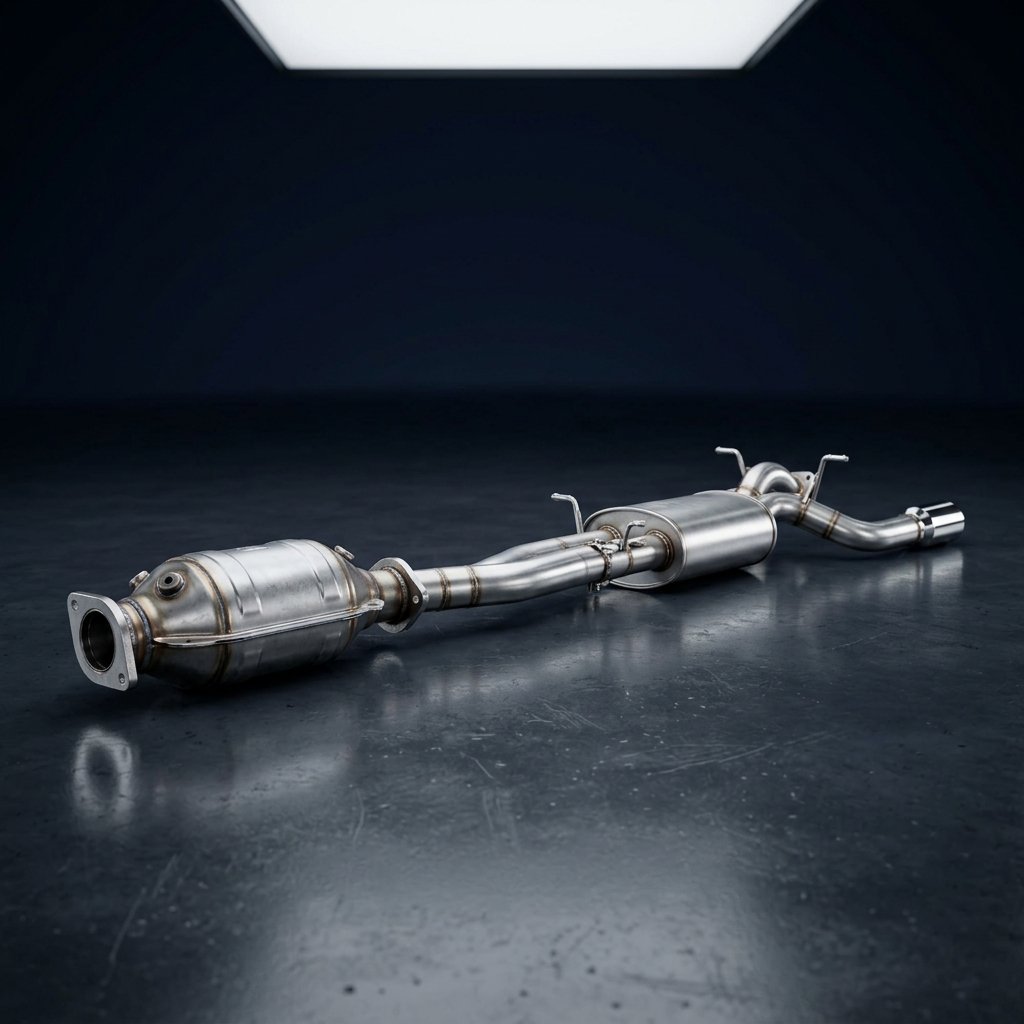
A replacement catalytic converter costs between $300 and $2,500 or more in 2026, depending on your vehicle and the type of converter. A universal aftermarket converter for a common car sits at the low end. A direct-fit converter for a late-model vehicle, or a factory OEM unit for a truck or European car, sits at the high end. Some vehicles have two, three, or four converters, which multiplies the cost. Add $75 to $400 for installation labor. This guide breaks down the price by converter type and vehicle, explains why the range is so wide, and covers what you legally can and cannot do when replacing one.
Catalytic Converter Cost by Type
There are three main types of replacement catalytic converter, and the type is the biggest single factor in what you pay. Here are typical 2026 US prices for the part itself, before installation.
| Converter Type | Typical Cost | What It Is |
|---|---|---|
| Universal aftermarket | $100 to $500 | Generic unit welded into the exhaust, must meet emissions standards |
| Direct-fit aftermarket | $300 to $1,200 | Bolt-in unit made for a specific vehicle, easier install |
| OEM (factory) | $800 to $2,500+ | Exact factory part from the manufacturer |
A universal converter is the cheapest part but requires cutting and welding into the exhaust, which adds labor and requires the correct converter for your emissions standard. A direct-fit converter bolts in where the old one was, which most owners and shops prefer. An OEM converter is the exact factory part, the most expensive option, and sometimes the only one available for newer or specialized vehicles.
Why the Price Range Is So Wide
Few parts vary in price as much as catalytic converters. Five factors explain the spread.
The Precious Metals Inside
A catalytic converter contains small amounts of platinum, palladium, and rhodium, the metals that make the emissions reaction work. These are among the most valuable metals in the world, and their market prices feed directly into what a converter costs.
Emissions Standard: Federal vs California
Vehicles certified to California emissions standards require converters that meet CARB standards. A CARB-compliant converter costs more than a federal EPA-compliant one, and installing the wrong one causes an emissions test failure. Your vehicle’s emissions family is tied to its VIN, which is why matching matters.
Number of Converters on the Vehicle
Many modern vehicles have more than one catalytic converter. A V6 or V8 often has one per cylinder bank, plus additional converters downstream. A vehicle with four converters costs far more to fully service than a four-cylinder car with a single unit.
Direct-Fit vs Universal
The convenience of a bolt-in direct-fit unit costs more than a universal converter that must be welded in, but it saves labor and reduces the chance of a poor fit.
Vehicle Make and Model
Converters for trucks, diesels, hybrids, and European vehicles cost more than those for common economy cars, both because the units are larger or more complex and because factory parts carry higher prices.
Cost by Vehicle Example
Here is roughly what a single converter replacement runs across different vehicle categories, part plus typical installation. These are general ranges, not quotes for a specific vehicle.
| Vehicle Category | Typical Total (Part + Labor) |
|---|---|
| Compact economy car (single converter) | $300 to $900 |
| Mid-size sedan (single or dual) | $500 to $1,500 |
| Full-size truck or SUV | $800 to $2,500 |
| European or luxury vehicle | $1,200 to $3,500 |
| Hybrid | $1,400 to $3,500 |
If a vehicle needs more than one converter replaced at once, multiply accordingly. This is why a full converter job on a V8 truck or a European SUV can reach several thousand dollars.
Why Some Converters Cost Thousands
When an owner is quoted $3,000 or more for catalytic converter work, the sticker shock is real. Usually one or more of these is behind it: the vehicle has multiple converters, it requires CARB-compliant units, it needs OEM parts because no quality aftermarket option exists, or it is a hybrid or European vehicle with expensive factory components. On higher-mileage vehicles, this is a moment to weigh the repair cost against the value of the vehicle.
What You Legally Can and Cannot Do
Catalytic converters are emissions control devices, and federal law governs them. It is worth being clear on this before you shop, because it shapes your options.
What You CAN Do
- Replace a failed converter with a new EPA-compliant aftermarket converter
- Replace with a CARB-compliant converter where your state requires it
- Replace with an official OEM factory converter from the manufacturer
What You CANNOT Do
- Legally remove the catalytic converter entirely
- Install a straight pipe or test pipe in its place
- Use any type of defeat device or electronic simulator
- Tampering with or removing a converter is prohibited under the Clean Air Act
The practical takeaway is simple. When a converter fails, the legal and lasting fix is a compliant replacement. Match the converter to your vehicle and your state’s emissions standard, and confirm it is EPA or CARB compliant before you buy.
A Note on Used Catalytic Converters
Buyers often ask whether a used catalytic converter is an option, since a used part is usually the cheapest route with other components. Catalytic converters are a special case, and the answer is more limited.

Need the Right Catalytic Converter for Your Vehicle?
Call Vaz Auto Solutions at (240) 301-0095 with your VIN and your state. We will match a compliant converter to your specific vehicle and emissions standard, confirm how many your vehicle needs, quote a delivered price with free US shipping, and email the warranty terms before you pay. We sell compliant replacement converters only.
