

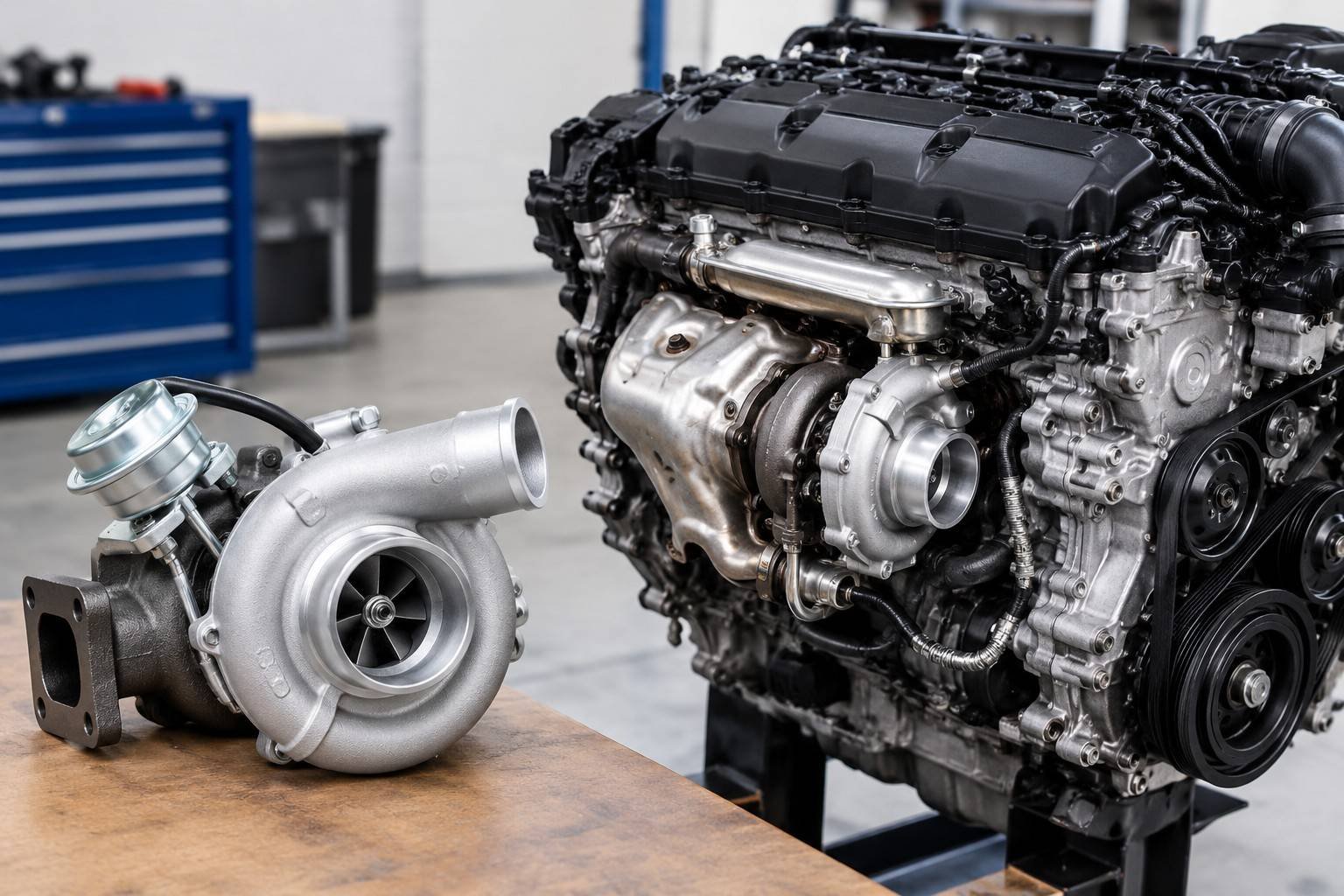
A replacement turbocharger costs between $400 – $3,500+ in 2026, depending on your vehicle and the type of turbo. A used or aftermarket turbo for a common car sits at the low end. An OEM turbo for a diesel truck or a European performance vehicle sits at the high end, and vehicles with twin turbos double the part cost. Installation adds $400 – $1,500 in labor because a turbo is buried in the exhaust and oil systems. Just as important as the price is why the turbo failed, because if the underlying cause is not fixed, a new turbocharger can fail the same way. This guide breaks down the cost and what drives it.
Turbocharger Cost by Type
There are four main ways to buy a replacement turbocharger, and the type is a major factor in what you pay. Here are typical 2026 US prices for the part itself, before installation.
| Turbo Type | Typical Cost | What It Is |
|---|---|---|
| Used OEM | $300 – $1,500 | Unit pulled from a donor vehicle, no internal work done |
| Remanufactured | $500 – $2,000 | Rebuilt to spec with new internal wear parts, balanced |
| Aftermarket new | $400 – $2,000 | New unit from an aftermarket manufacturer |
| OEM new | $1,000 – $3,500+ | New factory turbo from the manufacturer |
Cost by Vehicle Example
Here is roughly what a single turbocharger replacement runs across vehicle categories, part plus typical installation. These are general ranges, not quotes for a specific vehicle.
| Vehicle Category | Typical Total (Part + Labor) |
|---|---|
| Compact turbo car (single turbo) | $800 – $2,000 |
| Mid-size or performance car (single turbo) | $1,200 – $3,000 |
| European vehicle (single or twin) | $1,800 – $5,000 |
| Diesel truck (single) | $1,500 – $4,000 |
| Twin-turbo vehicle (both units) | $2,500 – $7,000 |
What Drives the Price Up or Down
Single vs Twin Turbo
The most significant factor. A vehicle with two turbochargers costs far more to fully service than a single-turbo vehicle, both in parts and in labor.
Turbo Type and Vehicle
Diesel truck turbos and European performance turbos are larger, more complex, and more expensive than the small turbos on economy cars. Variable-geometry turbos, common on diesels, cost more than simple fixed-geometry units.
New vs Reman vs Used
The same turbo can vary widely in price depending on whether you buy new OEM, aftermarket new, remanufactured, or used.
Access and Labor
Some turbos are relatively accessible. Others are buried under the intake or exhaust, or require removing significant components to reach. Labor hours, and therefore cost, follow access.
Associated Parts
A turbo replacement is rarely just the turbo. Oil feed and drain lines, gaskets, and sometimes the intercooler or charge pipes should be replaced or inspected at the same time, which adds to the total.
Why Installation Costs What It Does
Turbo labor runs higher than many owners expect, typically $400 – $1,500, because of where the turbo sits and what it connects to. The turbo is bolted into the exhaust stream and fed by pressurized engine oil, sometimes coolant as well. Removing it means disconnecting hot-side exhaust components, oil lines, coolant lines, and boost plumbing, often in a tight space.
Several finishing steps are essential and add time. Skipping them is a frequent cause of a new turbo failing early, which is why they belong in the quote.
Replace or Clean the Oil Feed Line
A partially blocked oil line is a common turbo killer, so it should be replaced or thoroughly cleaned.
Change the Engine Oil and Filter
Fresh, clean oil protects the new unit's bearings from the contamination that often caused the original failure.
Prime the Engine Before First Start
The new turbo must receive oil before it spins at full speed on first start.
Why the Turbo Failed Matters as Much as the Price
This is the point that separates a lasting repair from a repeat failure. Turbochargers rarely fail for no reason. The most common causes trace back to oil: a lack of clean oil at the right pressure, or contamination in the oil supply.
Oil Supply Problems
A blocked or restricted oil feed line, extended oil change intervals, or oil starvation at startup.
Contamination from a Failing Engine
A failing engine can allow debris into the oil, which reaches the turbo bearings.
Boost Leaks
A boost leak forces the turbo to overwork, shortening its life.
A Note on Used Turbochargers
A used turbocharger is the cheapest option and can be a reasonable choice, but turbos warrant more caution than many used parts because their remaining life is hard to judge from the outside. A used turbo that looks fine can have worn bearings or shaft play that will shorten its life.
Check Before Buying Used
- Documented donor mileage
- Confirmation the unit was checked for shaft play
- Confirmation it was checked for oil leakage
- Clear warranty terms in writing
Why Reman Often Wins on Turbos
- Often only modestly more than a used unit
- New bearings and seals, the parts that actually fail
- Rebalanced rotating assembly
- Remaining life is known, not inherited from a donor
We can quote both a used and a remanufactured turbo for your vehicle and tell you which makes more sense. On a high-mileage vehicle the math often works like it does with a used engine: the cheapest part is not always the cheapest repair.
Get a Delivered Price Today
Call Vaz Auto Solutions at (240) 301-0095 with your VIN. We will match a turbo to your specific vehicle, walk through whether used, remanufactured, or new is the better fit, quote a delivered price with free US shipping, and email the warranty terms before you pay. If your vehicle has twin turbos, we will help you weigh replacing one versus both.
