

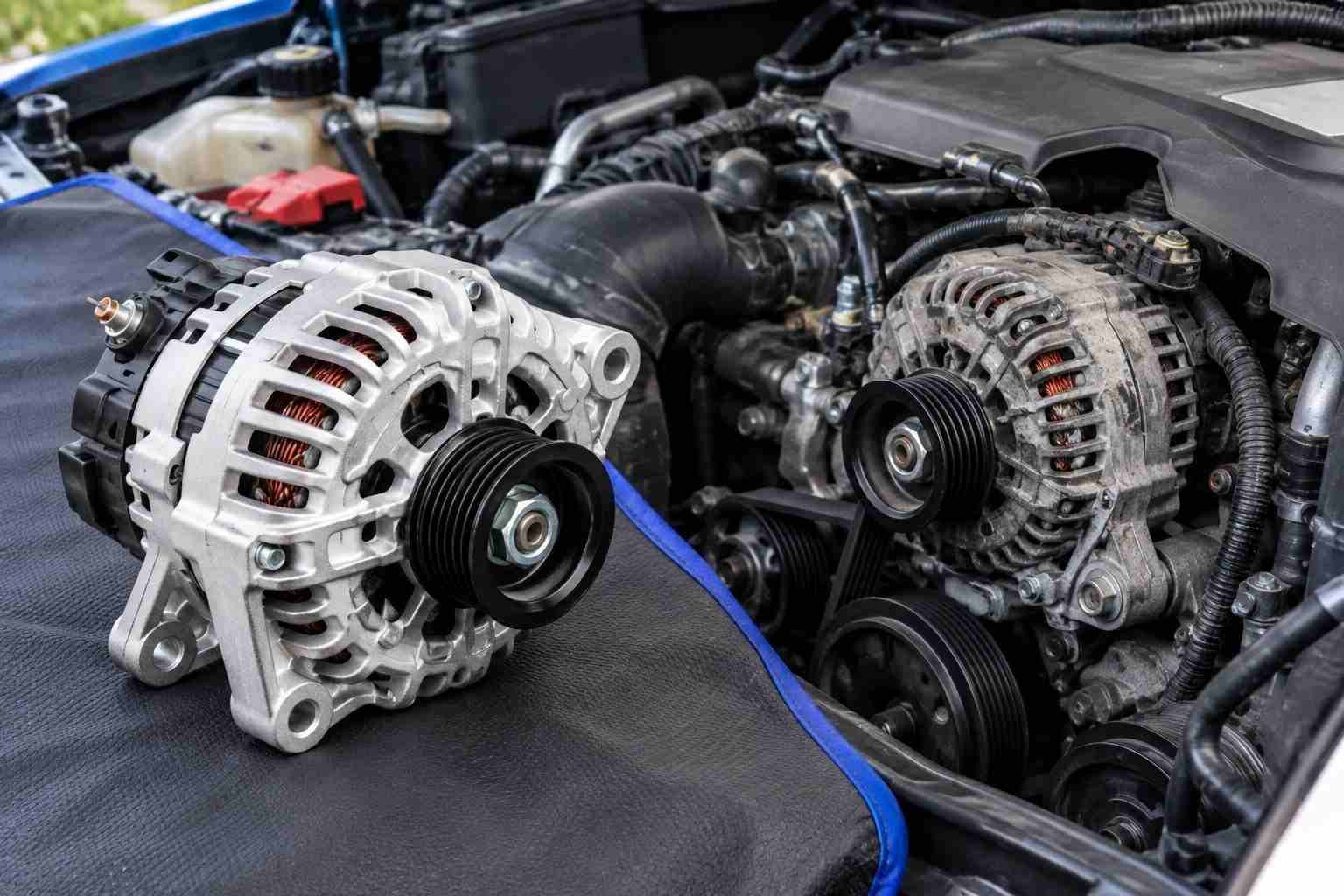
An alternator costs between $100 and $800 or more in 2026, depending on your vehicle and whether you buy remanufactured, new aftermarket, or new OEM. Most common vehicles fall in the $150 to $400 range for the part. Installation adds $100 to $400 in labor on most vehicles, more if the alternator is hard to reach. Before you spend anything, though, make sure the alternator is actually the problem. A dead car is misdiagnosed constantly, and the alternator, the battery, and the starter get blamed for each other's failures. This guide covers what an alternator costs and how to make sure you are replacing the right part.
Alternator cost by type
There are three main ways to buy a replacement alternator, and the type is the biggest factor in the price. Here are typical 2026 US prices for the part itself, before installation.
|
Alternator Type |
Typical Cost |
What It Is |
|
Remanufactured |
$100 to $400 |
Rebuilt to spec with new wear parts, tested |
|
New aftermarket |
$150 to $500 |
New unit from an aftermarket manufacturer |
|
New OEM |
$300 to $800+ |
New factory part from the manufacturer |
Unlike many parts, a used alternator is not usually the go-to budget option, because remanufactured alternators are widely available, affordable, and come with new wear parts and a warranty. For most buyers the practical choice is between remanufactured and new. More on why below.
Cost by vehicle example
Here is roughly what a single alternator replacement runs across vehicle categories, part plus typical installation. These are general ranges, not quotes for a specific vehicle.
|
Vehicle Category |
Typical Total (Part + Labor) |
|
Compact or mid-size car |
$250 to $600 |
|
Full-size truck or SUV |
$300 to $800 |
|
European or luxury vehicle |
$500 to $1,200 |
|
High-output or dual-alternator vehicle |
$600 to $1,500 |
Higher-output alternators, and vehicles where the alternator is buried or requires removing other components to reach, push toward the top of the range. European vehicles tend to cost more for both the part and the labor.
Why remanufactured dominates the alternator market
Alternators are one of the parts where remanufactured is genuinely mainstream, not a budget compromise. There is a good reason. An alternator is a well-understood unit with a specific set of wear parts, the brushes, bearings, voltage regulator, and diodes, that account for most failures. A quality remanufacture replaces those parts and tests the unit.
Because the failure points are well known and the rebuild process is standardized, a remanufactured alternator delivers most of the reliability of new at a lower price, which is why it is a common choice for shops and DIYers alike. As with any rebuilt part, quality varies by rebuilder, so a reman unit with a solid warranty from a reputable source is what you want. A new alternator makes sense when reman availability is limited for your vehicle, or when you want maximum service life on a vehicle you plan to keep a long time.
Installation cost
Alternator labor is moderate on most vehicles, typically $100 to $400, and depends mostly on access. On many vehicles the alternator is reachable and the job is straightforward: loosen the belt tensioner, disconnect the wiring, unbolt the unit, and reverse. On others it sits low or behind other components and takes longer.
One related item worth noting: the serpentine belt is removed to replace the alternator, so if the belt is worn, replacing it at the same time is efficient since the labor overlaps. A worn belt can also mimic charging problems by slipping, so it is worth inspecting either way.
Make sure it is the alternator first
This is the most important part of this article, because the alternator is one of the most commonly misdiagnosed parts on a vehicle. The alternator, the battery, and the starter are all part of the same starting and charging system, and a failure in one produces symptoms that look like the others.
● Battery vs alternator. A car that will not start may have a dead battery or a failed alternator that stopped charging it. Replacing the alternator when the battery was the problem, or vice versa, is a common and expensive mistake.
● The two can kill each other. A failing alternator can drain and damage a good battery, and a failing battery can overwork an alternator. Sometimes both need replacement, which is why diagnosis matters.
● Starter vs the rest. A no-start with a click, or an engine that will not crank, can be the starter rather than the battery or alternator. Different part, different cost.
The good news is that testing is cheap and widely available. Many auto parts stores test the battery and alternator for free, and a proper test tells you which part actually failed before you buy anything. We cover this in detail in our guides on telling whether the alternator is bad and on sorting out the alternator, starter, and battery.
The full cost picture
Here is what a complete alternator replacement typically looks like. Figures below are illustrative for a common vehicle.
|
Line Item |
Illustrative Cost |
|
Remanufactured alternator, delivered |
$220 |
|
Installation labor (1.5 hours at $125 per hour) |
$190 |
|
Serpentine belt, if replaced at the same time |
$40 |
|
Total |
About $450 |
Illustrative example only. Actual costs vary by vehicle, alternator type, access, region, and shop rate.
An alternator replacement is a moderate repair on most vehicles, and because the part is not especially expensive, it is usually worth doing rather than walking away from the vehicle, unlike a major engine or transmission repair on a high-mileage car.
Need the right alternator for your vehicle?
Call Vaz Auto Solutions at (240) 301-0095 with your VIN. We will match the correct alternator to your specific vehicle, including the right output rating, help you choose between remanufactured and new, quote a delivered price with free US shipping, and email the warranty terms before you pay. If you are not sure whether the alternator, battery, or starter is the real problem, we can help you sort that out first.
