

The seven most common signs
These are the signs drivers notice most often when an alternator is failing. Several together are more telling than any one alone.
- Dimming or flickering headlights. The alternator powers the electrical system while the engine runs. When it weakens, lights can dim, flicker, or brighten and dim with engine speed.
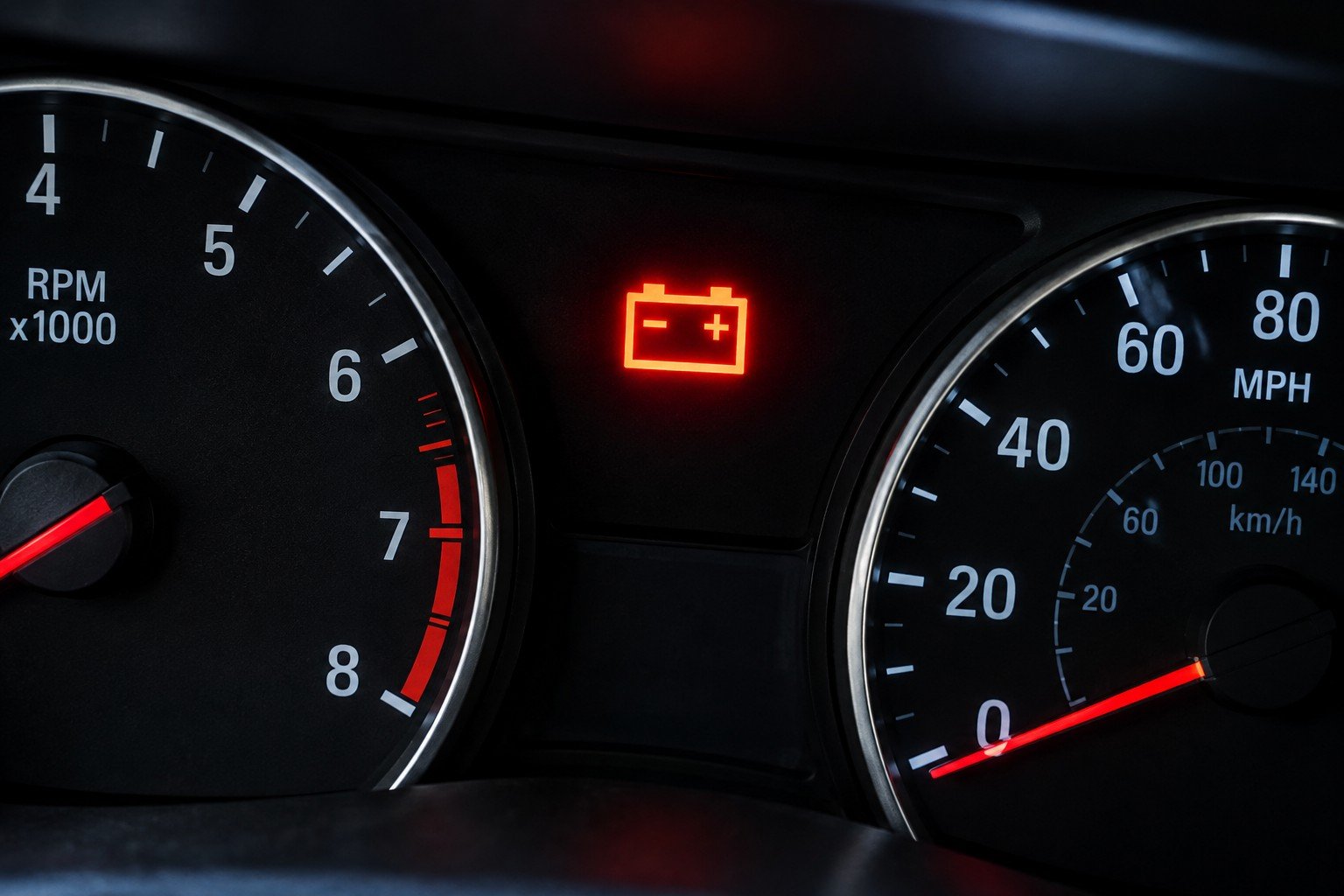
- Battery or charging warning light. Many vehicles have a battery-shaped light that actually indicates a charging system problem. If it comes on while driving, the alternator is a prime suspect.
- A battery that keeps dying. If a good battery repeatedly goes dead, the alternator may not be charging it. A battery that dies again soon after a jump is a classic alternator sign.
- Electrical accessories acting up. Slow windows, a weak-sounding stereo, or flickering dash lights can appear when the alternator cannot supply enough power.
- Whining or growling noise. Worn alternator bearings can produce a whine or growl. A failing belt or pulley can also make noise related to the alternator.
- Burning rubber or hot electrical smell. A slipping belt or an overworked alternator can produce a burning smell. This warrants prompt attention
- Stalling shortly after starting. If the car starts but then dies, the alternator may not be sustaining the electrical system once the battery’s initial charge is used.
The clearest tell: starts then dies
If you take one thing from this article, take this. When a car starts normally but then stalls or struggles a short time later, the alternator is a strong suspect. Here is why: the battery has enough stored charge to start the engine and run briefly. Once that initial charge is used, the alternator is supposed to take over and power everything. If the alternator has failed, the car runs down and dies even though it started fine.
Contrast that with a car that will not start at all after sitting overnight, then starts fine after a jump and stays running. That pattern points more toward the battery. Neither is a certainty, but the starts-then-dies pattern is the signature of a charging problem.
Why the battery gets confused with the alternator
The battery and the alternator work together, and they can cause each other's symptoms, which is why they are mixed up so often.
| Symptom | Battery | Alternator |
|---|---|---|
| Car will not start after sitting | Likely | Possible |
| Starts, then dies while driving | Less likely | Likely |
| Battery dies repeatedly | Possible | Likely |
| Dimming lights while driving | Less likely | Likely |
| Charging or battery warning light | Possible | Likely |
Complicating things further, a failing alternator can damage a good battery, and a failing battery can strain the alternator, so sometimes both need replacing. The only way to be sure which failed is to test, which is easy and often free. We cover the full three-way distinction, including the starter, in our guide on the alternator, starter, and battery.
A simple test you can do yourself
There is a quick, rough check that can point you in the right direction, though it is not a substitute for a proper test.
The headlight test:
With the engine running and in park, turn on your headlights. Then have someone rev the engine, or gently rev it yourself. If the headlights get noticeably brighter as the engine speeds up and dimmer at idle, that suggests the alternator is struggling to maintain steady voltage. Steady, consistent brightness is a better sign.
For a real answer, a proper voltage test is the way to go. With the engine off, a healthy battery reads around 12.6 volts. With the engine running, a working alternator typically raises system voltage to roughly 13.5 to 14.5 volts. A reading that stays low with the engine running points to a charging problem. Many auto parts stores perform this test for free, and it takes only a few minutes.
What to do before replacing the alternator
Get the battery and alternator tested
Free at many parts stores. This single step prevents the most common mistake, replacing the wrong part.
Check the battery terminals and cables
Corroded or loose connections cause charging-like symptoms and are cheap to fix.
Inspect the serpentine belt
A worn or slipping belt can prevent the alternator from spinning properly and mimic a failing alternator.
Check the grounds
A poor ground can cause electrical symptoms that look like an alternator problem.
Match the alternator to your vehicle
If the alternator is confirmed bad, get the correct unit with the right output rating for your specific vehicle.
Once you have confirmed the alternator is the problem, call Vaz Auto Solutions at (240) 301-0095 with your VIN. We will match the correct alternator to your specific vehicle, including the right output rating, help you choose between remanufactured and new, quote a delivered price with free US shipping, and email the warranty terms before you pay.
