
The most common signs of a bad catalytic converter are a check engine light, reduced engine performance and acceleration, a rotten egg or sulfur smell from the exhaust, lower fuel economy, a rattling noise from underneath, and a failed emissions test. A converter can fail in two ways: it can clog and restrict exhaust flow, or its internal coating can stop reacting so it no longer cleans emissions. The catch is that several of these symptoms have other causes, and a converter often fails because of an underlying problem elsewhere. This guide covers the symptoms and, just as importantly, what to check before you spend money on a converter.
The Seven Most Common Symptoms
These are the signs drivers notice most often when a catalytic converter is failing. One symptom alone is rarely conclusive, but several together point strongly toward the converter.
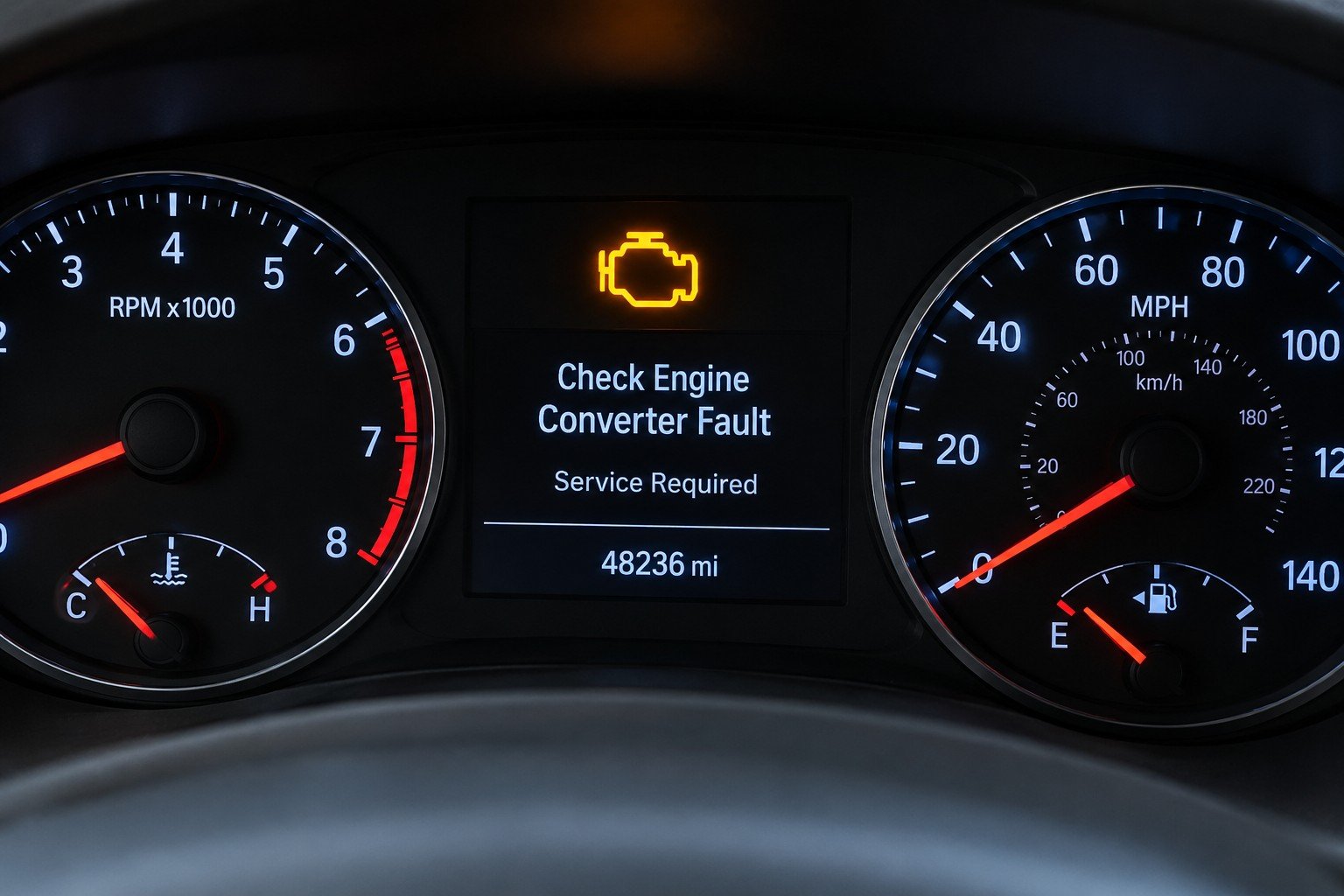
Check Engine Light
The most common and most reliable early sign, especially when it comes with a converter-efficiency trouble code such as P0420 or P0430.
Reduced Performance and Sluggish Acceleration
A clogged converter restricts exhaust flow, which chokes the engine. The car may feel gutless, hesitate on acceleration, or struggle on hills.
Rotten Egg or Sulfur Smell
A failing converter can stop processing the sulfur compounds in fuel, producing a distinct rotten egg odor from the exhaust.
Lower Fuel Economy
A restricted or failing converter forces the engine to work harder, and mileage drops.
Rattling Noise from Underneath
When the internal honeycomb structure breaks apart, the loose pieces rattle, often loudest at startup or idle.
Failed Emissions Test
A converter that has stopped reacting will fail an emissions or smog test even if the car seems to drive fine.
Dark Exhaust Smoke Under Load
A struggling converter can contribute to visible exhaust and odor, particularly when the engine is working hard.
The Two Ways a Converter Fails
Understanding how a converter fails helps make sense of the symptoms, and helps you talk to a shop.
Clogging
The internal honeycomb becomes blocked, restricting exhaust flow. This produces the performance symptoms: sluggish acceleration, poor high-speed power, reduced fuel economy, and sometimes stalling. Clogging is frequently caused by an engine running rich, burning oil, or a misfire dumping unburned fuel into the exhaust, which is why the underlying cause matters.
Loss of Catalytic Function
The precious-metal coating that drives the emissions reaction degrades or becomes contaminated, so the converter no longer cleans the exhaust effectively. The car may drive normally, but it triggers an efficiency code and fails an emissions test. This is the failure mode behind most P0420 and P0430 codes.
Why the Check Engine Light Matters Most
Of all the symptoms, the check engine light with a stored trouble code is the most useful, because it tells you something specific. The codes P0420 and P0430 mean the engine computer has detected that the converter on that bank is operating below its efficiency threshold. That is the computer directly reporting a converter problem.
What Often Gets Misdiagnosed as a Bad Converter
Catalytic converters are expensive, which makes misdiagnosis costly. Several cheaper problems produce converter-like symptoms or trigger converter codes.
| Symptom or Code | Could Also Be |
|---|---|
| P0420 or P0430 code | A failing oxygen sensor, exhaust leak, or engine issue |
| Rotten egg smell | A rich-running engine or fuel system problem |
| Rattling underneath | Loose heat shields or exhaust hardware |
| Poor performance | Misfires, fuel delivery, or air intake problems |
| Failed emissions test | Oxygen sensors, EGR, or evaporative system faults |
What to Do Before You Replace It
Before spending money on a converter, take these steps. They can save you from replacing a part that was not the real problem.
Get the Codes Read
Many auto parts stores read codes for free. A P0420 or P0430 is a starting point, not a verdict.
Have a Mechanic Confirm the Diagnosis
A proper diagnosis checks the oxygen sensors, looks for exhaust leaks, and rules out engine causes before condemning the converter. This is worth paying for given the cost of a converter.
Ask Why the Converter Failed
If the converter is genuinely bad, ask the shop what caused it. Fixing the root cause protects the replacement.
Confirm How Many Converters Your Vehicle Has
Many vehicles have more than one. Know which one is being replaced.
Match the Replacement to Your Emissions Standard
Whether you need an EPA-compliant or CARB-compliant converter depends on your vehicle and state. The wrong one causes an emissions failure.
This article describes common symptoms for general information. It is not a diagnosis of your specific vehicle. A qualified mechanic with the car in front of them is the right person to confirm what is actually wrong.
Get a Compliant Replacement Quoted
Call Vaz Auto Solutions at (240) 301-0095 with your VIN and your state. We will match a compliant replacement converter to your specific vehicle and emissions standard, confirm how many your vehicle needs, quote a delivered price with free US shipping, and email the warranty terms before you pay. We sell compliant replacement converters only.
