

What each option actually means
Used
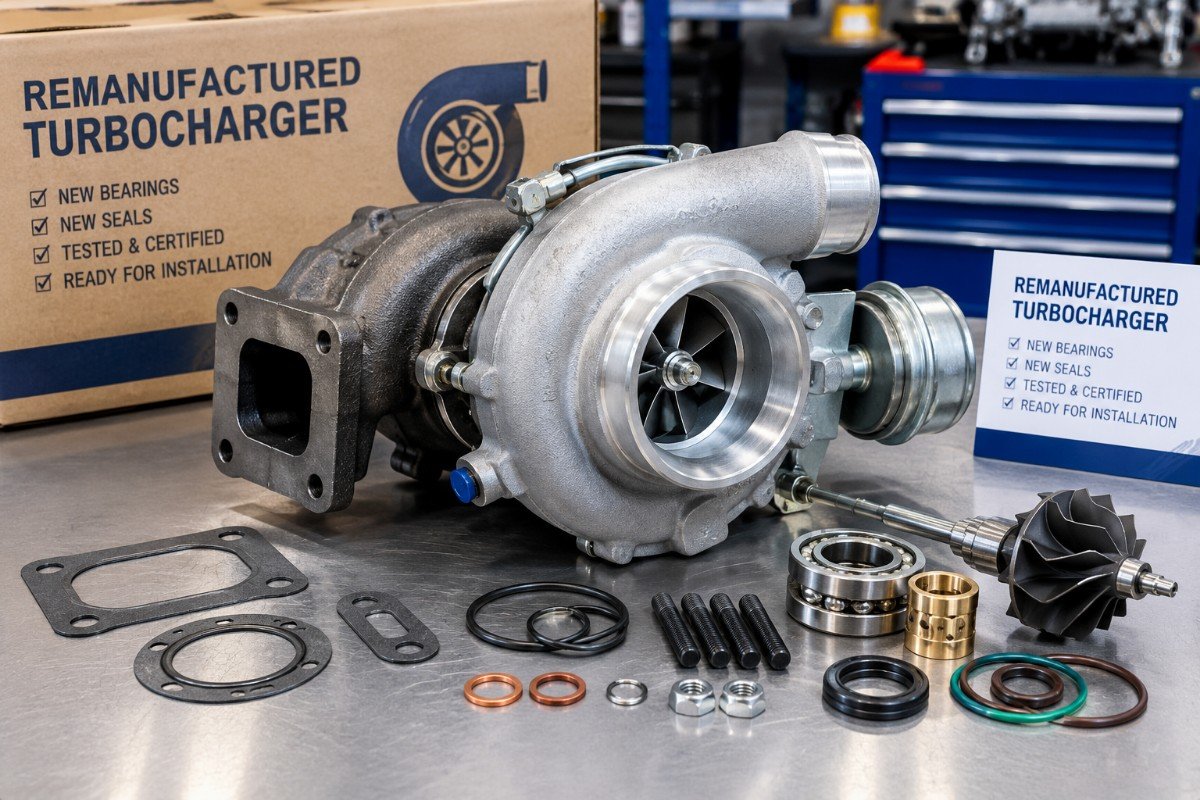
Remanufactured
New
Why remanufactured is often the best value on turbos
If you researched used engines or transmissions, you may have concluded that used is usually the budget choice and remanufactured is a premium option for people who want a longer warranty. On turbochargers, the logic shifts, and it is worth understanding why.
A turbocharger is a simple machine with a specific set of failure points. It is essentially a shaft with a turbine wheel on one end and a compressor wheel on the other, spinning on bearings and lubricated by engine oil. When a turbo fails, it is almost always the bearings or the seals that go, sometimes taking the wheels with them. Those are exactly the parts a remanufacture replaces.
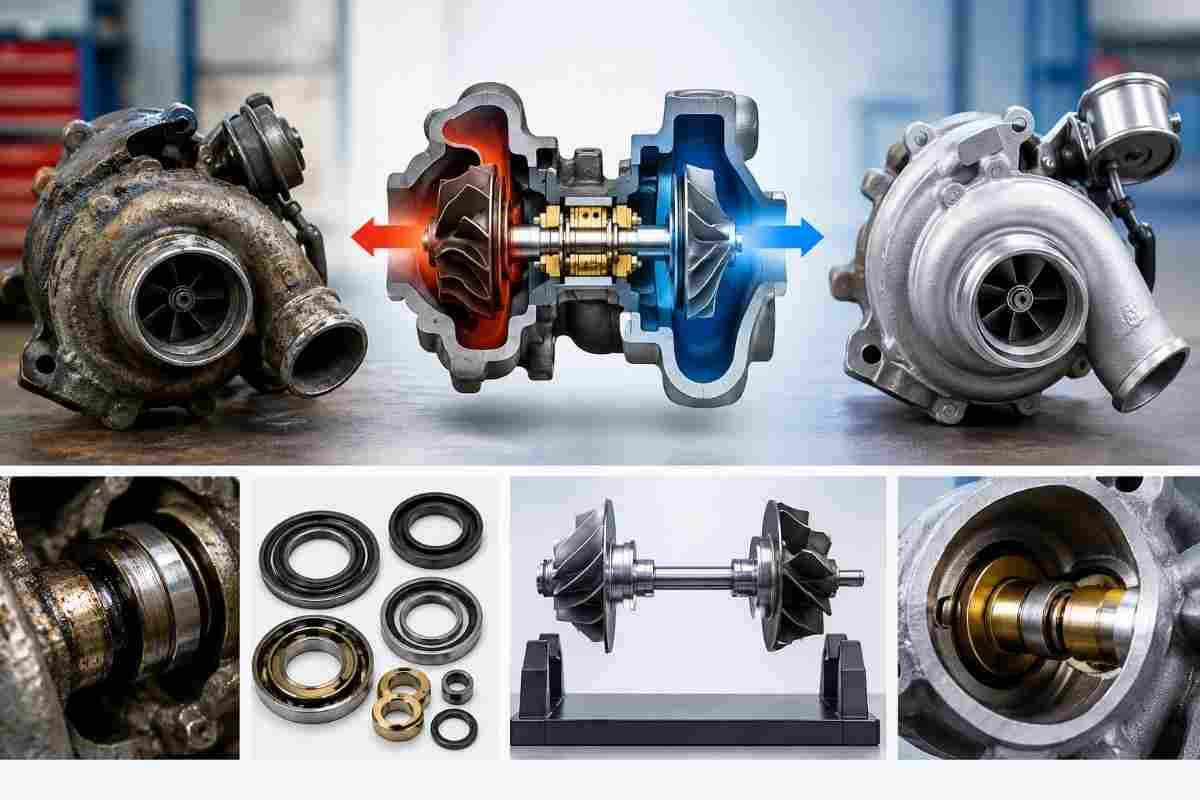
That means a remanufactured turbo is not a lightly refreshed used unit. It is a turbo whose failure-prone components have been renewed and whose rotating assembly has been rebalanced, which is critical at the speeds a turbo reaches. A used turbo, by contrast, still carries all of its original wear on exactly those parts. For a modest amount more than a used unit, a reman addresses the specific things that were most likely to fail. That is why, on turbos more than on most parts, remanufactured is frequently the sensible default.
Side-by-side comparison
| Factor | Used | Remanufactured | New |
|---|---|---|---|
| Typical cost | $300 to $1,500 | $500 to $2,000 | $400 to $3,500+ |
| Bearings and seals | Original, worn | New | New |
| Rotating assembly | As-is from donor | Rebalanced | New |
| Condition certainty | Hard to judge | Rebuilt to spec, tested | New |
| Typical warranty | 15 days to 1 year | 1 to 2 years common | Manufacturer |
| Best for | Tight budget, older vehicle | Most replacements | Newer vehicles, long-term keep |
When used makes sense
A used turbo is not the wrong answer in every case. It makes sense when:
- The vehicle is older and you want the lowest possible upfront cost.
- A low-mileage used unit with documented donor mileage is available.
- The seller has checked the unit for shaft play and oil leakage and will confirm it in writing.
- The price gap to a remanufactured unit is large for your specific turbo.
When new or OEM is worth it
New, and particularly new OEM, earns its higher price in specific situations:
- The vehicle is newer or near warranty, where an OEM part avoids warranty questions.
- No quality remanufactured or used unit is available for the vehicle yet.
- The vehicle has a known turbo weakness that a newer OEM revision addresses.
- You plan to keep the vehicle long term and want maximum service life from the part.
New aftermarket units sit in between and can be a good middle option when they come from a reputable manufacturer with a solid warranty. As with any aftermarket part, quality varies by brand, so the warranty and the manufacturer's reputation matter.
The one thing that matters whichever you choose
No matter which option you buy, the single most important factor in whether it lasts is the same: fixing why the original turbo failed. Turbos rarely fail without a cause, and the cause is almost always oil-related, a restricted oil feed line, degraded or contaminated oil, oil starvation at startup, or debris from a failing engine. A boost leak can also overwork a turbo.
Install the best new OEM turbo money can buy into a vehicle with a partially blocked oil feed line, and it will fail the same way the last one did. This is why the choice between used, reman, and new is genuinely secondary to correcting the root cause. Before you buy any turbo, make sure the shop has identified why the old one failed and is fixing it as part of the job. Replacing the oil feed line, changing the oil, and priming the new turbo before startup are cheap steps that protect whatever unit you install.
Not sure whether used, remanufactured, or new is right for your vehicle?
Call Vaz Auto Solutions at (240) 301-0095 with your VIN. We will identify the correct turbo for your vehicle, walk through the honest trade-offs among used, remanufactured, and new for your specific situation, quote a delivered price with free US shipping, and email the warranty terms before you pay. We will tell you plainly when a used unit is a false economy and when it is a smart buy.