
Why converters are a target
The reason comes down to the metals inside. A catalytic converter uses platinum, palladium, and rhodium to drive the chemical reaction that cleans exhaust gases. These metals are rare and valuable, and at times rhodium has traded well above the price of gold by weight. Even the small quantities in a single converter are worth money to a scrap buyer.
Two other factors make converters attractive to thieves. First, until recently converters carried no identifying marks, making a stolen unit hard to trace. Second, they sit on the underside of the vehicle in the open air, outside the locked cabin. A thief does not need to break into the vehicle or defeat any security system to reach one. The combination of high value and easy external access is what drove the surge in thefts over recent years.
Which vehicles tend to be targeted
Some categories of vehicle are targeted more often than others, and knowing whether yours falls into a higher-risk group helps you judge how much prevention is worth.
Taller vehicles and trucks
Vehicles with more ground clearance are generally more exposed underneath than low sedans.
Hybrids
Hybrid converters often contain a higher concentration of precious metals because of how the system operates, which makes them a higher-value target.
Older high-clearance models
Some older trucks and SUVs are targeted more often, partly because of accessibility and partly because certain converters carry more valuable metal content.
Vehicles parked in the open
Regardless of make, a vehicle left in an unmonitored public area is more exposed than one in a locked garage.
How to protect your catalytic converter
No single measure guarantees protection, but layering a few of these meaningfully reduces your risk and improves recovery odds.
Park strategically
Whenever possible, park in a locked garage. If you park outside, choose well-lit areas with foot traffic or camera coverage. In a driveway, parking close to a wall or another vehicle reduces easy access. At work or in public lots, park near entrances and cameras rather than in isolated corners.
Install a converter shield or guard
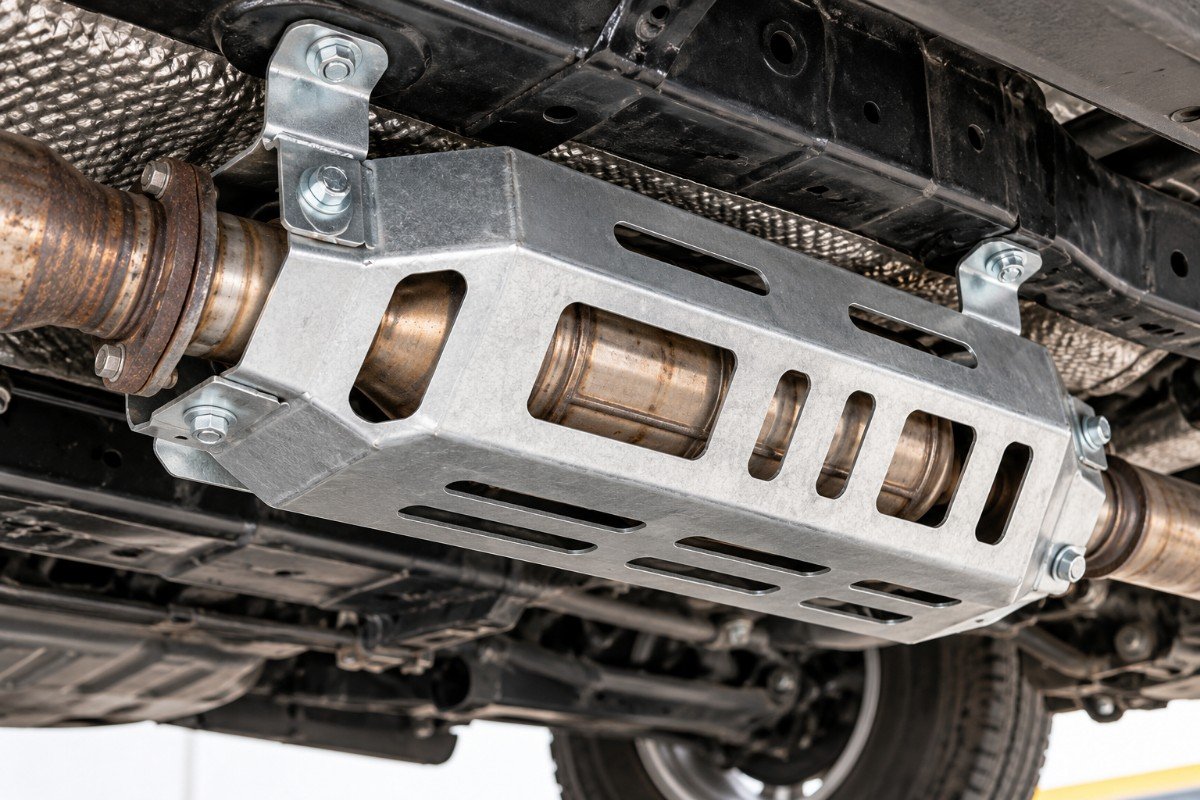
Aftermarket shields, cages, and guard plates are made for many popular vehicles. They bolt over or around the converter and add time and difficulty to any theft attempt, which is often enough to make a thief move on to an easier target. A muffler or exhaust shop can advise on and install the right one for your vehicle.
Have your converter marked or etched
Etching your VIN or a marking onto the converter, or applying a high-temperature marking paint, makes a stolen unit easier to trace and less appealing to a scrap buyer. Some police departments and community groups run free marking events. A marked converter is a less attractive target.
Use vehicle security that detects tampering
An alarm sensitive to vibration or tilt can deter a theft in progress. A dashcam with parking mode that records motion around the vehicle can capture evidence. Motion-activated lights where you park at home add another layer.
Check for local marking programs and by-laws
Many areas have introduced measures aimed at reducing converter theft, from free marking programs to tighter rules on scrap buyers accepting loose converters. Your local police department is a good place to ask what is available in your area.
What to do if yours is stolen
A stolen converter is usually obvious the moment you start the engine. The exhaust becomes extremely loud, often a deep roar, because the section of exhaust that muffled and cleaned the gases is gone. If that happens, take these steps.
- Do not keep driving it. Running the vehicle with the converter missing is loud, illegal in most places, and can allow exhaust fumes and heat to affect areas they should not. Shut it off and arrange a tow if needed.
- File a police report. You will need it for insurance, and reports help authorities track theft patterns in your area.
- Contact your insurer. If you carry comprehensive coverage, converter theft is often covered, subject to your deductible. More on this below.
- Arrange a compliant replacement. The converter must be replaced with a unit that meets your emissions standard. This is the point at which we can help.
- Consider prevention on the replacement. Thieves sometimes return to the same vehicle. Installing a shield and marking the new converter at the same time as the replacement is efficient and sensible.
Does insurance cover catalytic converter theft
Catalytic converter theft is generally covered under the comprehensive portion of an auto insurance policy, which handles theft and vandalism, rather than under collision coverage. If you carry comprehensive coverage, a stolen converter is usually a covered claim, subject to your deductible.
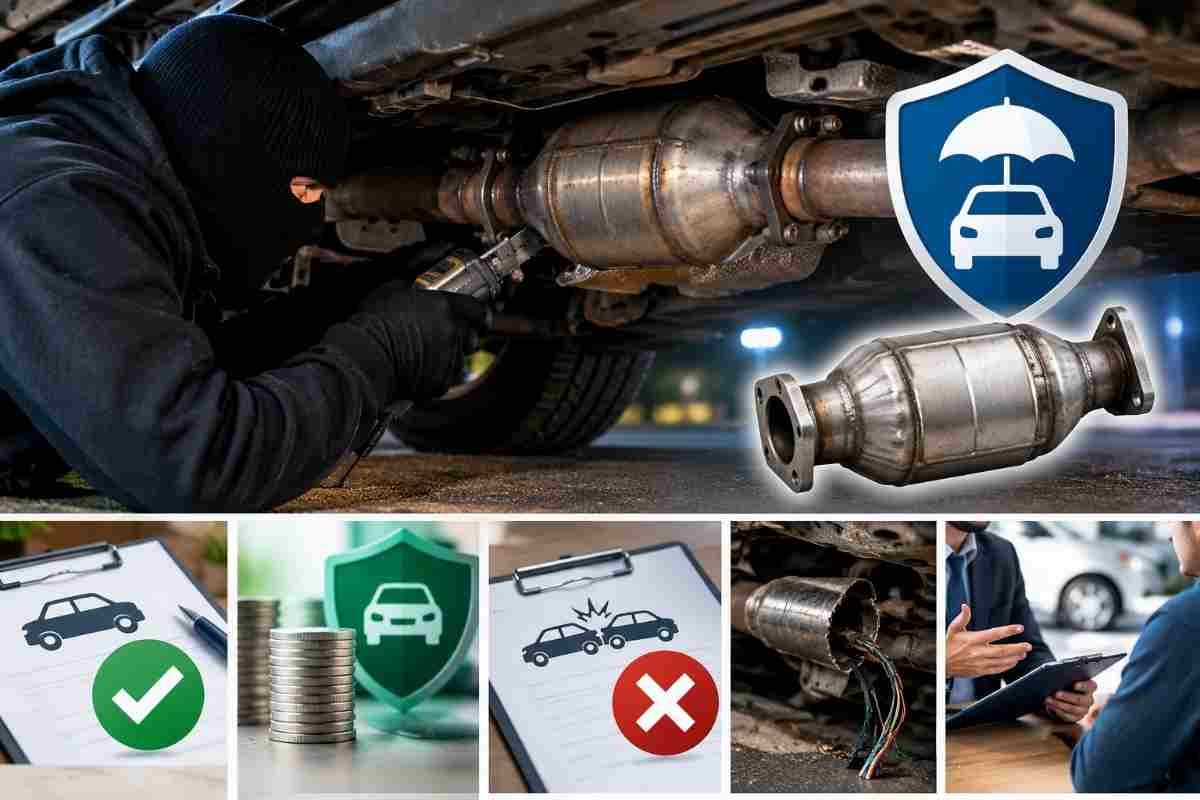
A few things to keep in mind. If your deductible is close to or higher than the replacement cost, filing may not be worthwhile. If you carry only liability coverage, theft is generally not covered. Any related damage the thief caused to the exhaust or wiring may factor into the claim. Because policies and situations differ, confirm the specifics with your own insurer. This is general information, not insurance advice.
Get Your Quote Today
If your converter was stolen or has failed, call Vaz Auto Solutions at (240) 301-0095 with your VIN and your state. We will match a compliant replacement converter to your specific vehicle and emissions standard, confirm how many your vehicle needs, quote a delivered price with free US shipping, and email the warranty terms before you pay. We sell compliant replacement converters only.
