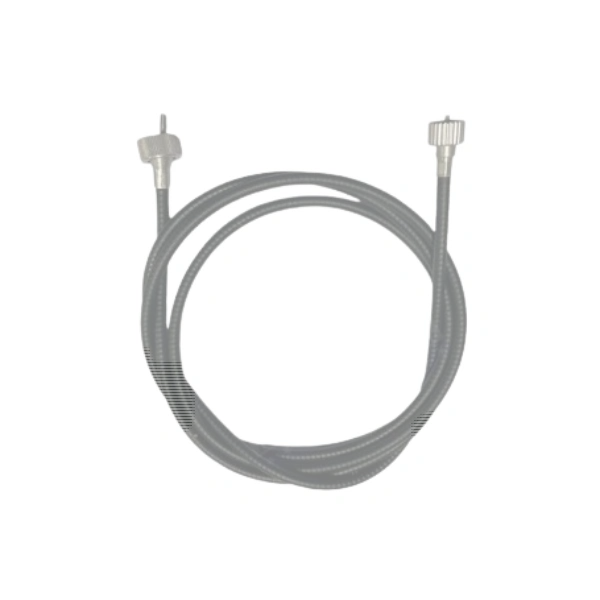
About the GMC Truck 2500 Series Speedometer Cable
Direct fit GMC C/K 2500 Series 3/4-ton heavy duty pickup truck GMT400 era 1988-1998 (10 years US production, the most relevant era for speedometer cable applications because pre-1996 OBD-II federal mandate, all GMC trucks used mechanical speedometer cables). GMT800 era 1999+ uses electronic VSS Vehicle Speed Sensor not mechanical cable (not applicable to this listing).
GMC C/K 2500 positioning: 3/4-ton heavy duty truck above GMC 1500 (1/2-ton light duty) and below GMC 3500 (1-ton heavy duty) in pickup hierarchy. Heavy-duty applications including heavy towing (~10,000 lbs conventional), heavy hauling, construction, agriculture, fleet/utility work. Sister vehicle Chevrolet C/K 2500 (identical mechanical vehicle - Chevrolet was primary brand, GMC was 'Professional Grade' sister brand with similar specifications across most parts).
C-Series vs K-Series naming: C-Series = 4x2 rear-wheel-drive (C2500), K-Series = 4x4 four-wheel-drive (K2500). Same truck different drivetrain. Engines: 4.3L Vortec V6 (light applications), 5.0L Small Block V8 L03 305ci (mainstream gas lighter duty), 5.7L Small Block V8 350ci (most common heavy-duty gas - TBI L05 early then Vortec 5700 L31 multi-port injection later GMT400), 7.4L Big Block V8 (L21 454ci Vortec 7400 the famous 'Big Block' heavy-duty workhorse for towing), 6.2L Detroit Diesel V8 (naturally aspirated early 1990s), 6.5L Detroit Diesel V8 turbo (late 1990s the common GM diesel of era, predecessor to 6.6L Duramax modern diesel).
Transmissions: 700R4 4-speed overdrive automatic (early GMT400, the famous 700R4), 4L60E 4-speed electronic automatic (mid-late GMT400), 4L80E heavy-duty 4-speed electronic automatic (heavy towing big block/diesel applications), TH400 3-speed automatic (earlier heavy-duty Turbo-Hydramatic 400), NV4500 5-speed manual (the famous heavy-duty manual for diesel), NV3500 5-speed manual (lighter applications). 4x2 or 4x4 with transfer cases NP241 common.
Body styles: Regular Cab (2-door commercial/work), Extended Cab (3-door or 4-door 'Extended' with rear-hinged smaller doors GMT400 era), Crew Cab (less common GMT400 era, more common GMT800 1999+ era). Bed lengths short ~6.5 ft or long ~8 ft. Trim levels Sierra, Sierra Classic, SLE, SLT.
Speedometer cable: mechanical drive cable connecting transmission tail housing to speedometer head unit on dashboard. Construction: outer steel-wound flexible black housing with threaded brass/steel fittings at each end, inner tightly-wound steel wire cable with square-shaped tip fittings (~0.083 inch typical). Drive end fits speedometer drive gear at transmission output, speedo end fits speedometer head unit coupling behind dashboard.
Operation: transmission drive gear rotates proportional to vehicle speed, cable rotation transmits motion to speedometer head unit where magnetic drive moves needle through aluminum cup/disk mechanism, same rotation drives mechanical odometer counter showing total miles. Common failures: broken inner cable (most common - needle stops working), frayed cable (needle bounces/erratic), stripped square tip, lubrication failure, noisy whirring/squealing operation.
GMC C/K 2500 Heritage
- Production: GMT400 era 1988-1998 (10 years)
- Position: 3/4-ton heavy duty (above 1500, below 3500)
- Sister: Chevrolet C/K 2500 (identical mechanical)
- Pre-OBD-II Era: Mechanical speedometer (1996+ electronic VSS)
- Famous Big Block: 7.4L L21 Vortec 7400 (454ci)
- Common Diesel: 6.5L Detroit Diesel V8 turbo
Speedometer Cable Function
- Outer Housing: Flexible steel-wound tubing with threaded fittings
- Inner Cable: Tightly wound steel wire with square tips
- Drive End: Square tip into transmission speed gear
- Speedo End: Square tip into speedometer coupling
- Operation: Cable rotation drives magnetic speedo and odometer
- Replacement: Easy DIY 30-60 minutes
Vehicle Compatibility
GMC C/K 2500 Coverage:
| Detail | Description |
|---|
| GMC C2500 1988-1998 (GMT400 4x2) | RWD heavy duty pickup |
| GMC K2500 1988-1998 (GMT400 4x4) | 4WD heavy duty pickup |
| GMC Suburban C/K 2500 | 3/4-ton full-size SUV variant |
| Transmission Specific: | |
| With 700R4 Transmission | Specific cable for 4-speed overdrive auto |
| With 4L60E Transmission | Specific cable for electronic 4-speed |
| With 4L80E Transmission | Heavy-duty cable for big block/diesel |
| With TH400 Transmission | Specific cable for 3-speed Turbo-Hydramatic |
| With NV4500 Manual | Specific cable for 5-speed manual |
| With NV3500 Manual | Specific cable for lighter 5-speed manual |
| Body Style Affects Routing Length: | |
| Regular Cab Models | Shorter cable length |
| Extended Cab Models | Standard cable length |
| Crew Cab Models | Longer cable length (GMT400 less common) |
| Sister Vehicle (Same Cable): | |
| Chevrolet C/K 2500 1988-1998 | Same cable typically |
| Chevrolet Suburban 2500 | Same cable typically |
| Chevrolet/GMC 1500 Some Years | May share cable specs |
| Chevrolet/GMC 3500 Same Era | May share cable specs |
| NOT Compatible: GMT800 1999+ | Electronic VSS not mechanical cable |
| NOT Compatible: Different Transmission Models | Specific to transmission gear |
Fitment Assistance
Call (240) 301-0095. Critical questions: (1) Year (1988-1998 GMT400 era - confirm pre-OBD-II mechanical speedo). (2) Transmission (700R4/4L60E/4L80E/TH400/NV4500/NV3500 - different cable specs). (3) Body style (Regular/Extended/Crew Cab - affects routing length). (4) Drivetrain (C2500 RWD or K2500 4WD - usually same cable). (5) Engine (less critical for cable but verify configuration).
Condition and Inspection
- Inner cable rotates freely inside housing Critical functional test
- No fraying of inner cable wire
- Square tip fittings intact at both ends Not rounded off
- Outer housing not crushed or damaged
- Threaded brass/steel fittings present and threaded properly
- Inner cable length matches application
- Cable lubrication adequate Pre-lubed or relubrication needed
- Year/transmission/body style verified
- Donor vehicle disclosed
- Cleaned of road grime/debris
Why Buy from Us
- For GMC C/K 2500 speedometer cable
- GMT400 era coverage 1988-1998
- Pre-OBD-II mechanical speedometer expertise
- Sister Chevrolet C/K 2500 cross-compatibility knowledge
- 3/4-ton heavy duty positioning context
- 1996 OBD-II federal mandate context
- Electronic VSS successor knowledge
- Big Block 7.4L Vortec 7400 heritage
- Small Block 5.7L 350ci heritage
- 6.5L Detroit Diesel V8 heritage
- Detroit Diesel to Duramax succession context
- Transmission-specific cable matching
- 700R4/4L60E/4L80E/TH400 automatic expertise
- NV4500/NV3500 manual transmission expertise
- Body style routing length differences
- C-Series vs K-Series drivetrain context
- Trim level knowledge (Sierra/SLE/SLT)
- Mechanical speedometer cable theory
- Inner cable rotation testing
- Square tip integrity verification
- Outer housing inspection
- Donor vehicle disclosed
- Good salvage donor pool
- Free shipping all 50 states
- 15 day warranty
- No core charge
Why do older GMC trucks use mechanical speedometer cables?
Pre-1996 GMC trucks (and most American vehicles) used MECHANICAL SPEEDOMETER CABLES because: (1) HISTORICAL TECHNOLOGY - cables had been used in automobiles since early 1900s, proven simple technology for nearly 100 years before electronic alternatives became viable for mass production. (2) NO ELECTRONIC COMPONENTS REQUIRED - mechanical cables required no microprocessors, no electronic sensors, no control modules. Simple mechanical motion transmission. (3) RELIABLE WITHIN LIMITS - typical service life 100,000+ miles with periodic lubrication. Reliable for primary purpose of indicating vehicle speed. (4) STANDARDIZED across American truck manufacturers - similar designs across Ford, GM (Chevrolet/GMC), Chrysler/Dodge, AMC trucks. Aftermarket cables widely available, repairs/replacements simple. (5) RELATIVELY INEXPENSIVE - $20-50 typical replacement cost, lower than electronic alternatives. (6) GOOD ENOUGH PRECISION - speedometers indicated speed within reasonable accuracy (typically +/- 5-10% accuracy, sometimes calibrated specifically). (7) MECHANICAL INTEGRATION - speedometer head units were mechanical instruments designed to be driven by cables, integrated naturally with mechanical odometer counters. (8) NO POWER REQUIRED - mechanical cable required no electrical power, worked even with battery dead (vehicle could be towed and speedometer would register movement). (9) 1996 OBD-II FEDERAL MANDATE - changed everything because: (a) OBD-II (On-Board Diagnostics II) standard required Vehicle Speed Sensor (VSS) signal for diagnostic standardization across all vehicles. (b) Allowed standardized scan tools to read speed-related diagnostic codes. (c) Required electronic interface that mechanical cables couldn't provide. (d) Pushed all manufacturers to electronic VSS by 1996+. (10) GMC TRANSITION - GMT400 era trucks (1988-1998) overlap with OBD-II mandate transition: (a) 1988-1995 GMT400 trucks: mechanical speedometer cable (pre-OBD-II). (b) 1996-1998 GMT400 trucks: transition to electronic VSS (post-OBD-II). (c) GMT800 1999+ era: fully electronic VSS, no mechanical cable. (11) ENTHUSIAST PREFERENCE - some classic truck enthusiasts prefer mechanical cables because: (a) Simpler to diagnose/repair. (b) No electronics to fail. (c) Visual mechanical operation. (d) Easier modification/calibration for tire size changes. (e) No dependence on electronic systems. (12) FOR THIS PRODUCT - GMC 2500 GMT400 era cables are available for the pre-1996 (and some early post-1996) mechanical speedometer trucks needing cable replacement.
What's the difference between GMC and Chevy C/K 2500?
The GMC C/K 2500 and Chevrolet C/K 2500 are SISTER VEHICLES (essentially identical mechanical vehicles): (1) PARENT COMPANY - both made by GENERAL MOTORS, originally produced at same plants from same designs. GMC was 'Professional Grade' sister brand to Chevrolet, marketed primarily to commercial/fleet customers and slightly upmarket retail customers. (2) MECHANICAL IDENTITY: (a) Same C/K-series body structure. (b) Same chassis/frame. (c) Same suspension. (d) Same engines (4.3L V6, 5.0L/5.7L V8, 7.4L Big Block, 6.2L/6.5L Detroit Diesel). (e) Same transmissions (700R4, 4L60E, 4L80E, TH400, NV4500, NV3500). (f) Same drivetrain (C-Series 4x2, K-Series 4x4). (g) Same speedometer cable (this product). (3) DIFFERENCES (Cosmetic/Marketing Only): (a) GRILLE DESIGN - distinctive GMC grilles vs Chevrolet grilles (same opening, different decorative inserts). (b) HEADLIGHT BEZELS - different chrome/black trim styling. (c) EXTERIOR BADGING - 'GMC' vs 'Chevrolet' badges on tailgate, hood, fenders. (d) WHEEL DESIGNS - sometimes different wheel patterns/finishes (functionally same). (e) INTERIOR FINISHES - sometimes different woodgrain, leather color options. (f) TRIM PACKAGE NAMES - GMC used Sierra/SLE/SLT names, Chevrolet used Cheyenne/Silverado/etc names. (g) MARKETING POSITIONING - GMC pitched 'Professional Grade' commercial focus, Chevrolet pitched mainstream consumer truck. (4) PRICE - similar pricing across both brands, sometimes GMC priced slightly higher for premium positioning. (5) PARTS INTERCHANGE - extensive parts interchange between GMC and Chevrolet C/K 2500: (a) Engines and drivetrains share. (b) Most mechanical components share. (c) Many body panels share (different decorative trim). (d) Speedometer cables typically interchange. (e) Trim/interior pieces may differ. (6) DEALER NETWORK - GMC and Chevrolet had separate dealer networks (some dealers combined as Chevrolet-GMC). (7) HERITAGE - both brands continued through GMT400 era 1988-1998, and continue today as GMC Sierra and Chevrolet Silverado modern equivalents. (8) FOR USED MARKET - both GMC and Chevy C/K 2500 trucks of same era are essentially identical purchases. Buyer preferences based on: brand loyalty, dealer relationships, specific trim/option availability, cosmetic preferences. (9) FOR SPEEDOMETER CABLE specifically - same cable works in GMC or Chevy C/K 2500 of matching transmission/body style. Cross-compatibility excellent.
How do I install a speedometer cable?
GMC C/K 2500 speedometer cable installation is RELATIVELY EASY DIY task: (1) PREP: (a) Park on level surface, set parking brake. (b) Disconnect battery for safety (precaution for working under dash). (c) Gather tools: socket wrench, screwdriver, flashlight, gloves (cable can be greasy). (2) PHOTOGRAPH ROUTING - take photos of cable routing through engine bay and through firewall to dashboard before disconnecting. (3) DISCONNECT AT TRANSMISSION END: (a) Locate cable connection at transmission tail housing (typically on top or side of transmission). (b) Use wrench to unscrew threaded nut securing cable outer housing to transmission. (c) Pull cable out of transmission gear coupling carefully. (d) Note orientation of square drive tip. (4) DISCONNECT AT SPEEDOMETER END (Behind Dash): (a) May need to remove dashboard knee panel or dash cover for access. (b) Reach up behind speedometer cluster. (c) Locate cable connection at back of speedometer head unit. (d) Unscrew threaded coupling or pull off depending on design. (e) Be careful not to bend speedometer mounting. (5) REMOVE OLD CABLE: (a) Trace cable routing through engine bay. (b) Note any retainers, clips, or routing brackets. (c) Pull cable carefully through firewall grommet (lubricate firewall grommet with soap if cable binds). (d) Remove old cable from vehicle. (6) COMPARE OLD/NEW CABLES: (a) Verify outer housing length matches. (b) Verify both square tips are same size and orientation. (c) Verify threaded fittings match transmission and speedometer connections. (d) Verify rotation direction matches. (7) PRE-LUBRICATE NEW CABLE: (a) If not pre-lubed, apply graphite lubricant or specialized speedometer cable lubricant. (b) Pull inner cable out of housing slightly, lubricate, work into housing. (c) Avoid using grease (too thick, causes binding). (8) INSTALL NEW CABLE: (a) Route new cable through firewall grommet first. (b) Position cable in engine bay matching original routing. (c) Install at transmission end: insert drive tip into transmission gear coupling, thread coupling nut hand-tight, verify cable rotates freely. (d) Install at speedometer end: connect square tip into speedometer coupling, secure threaded fitting. (e) Verify cable not kinked or pinched anywhere along routing. (f) Restore any routing retainers or clips. (9) RECONNECT BATTERY. (10) TEST: (a) Start vehicle. (b) Test speedometer in driveway by slowly driving and watching needle. (c) Verify speedometer reads accurately. (d) Drive at known speed (GPS or other reference) and verify speedometer matches. (e) Listen for noise (should be silent). (11) ADJUST IF NEEDED: (a) If speedometer reads inaccurate, check cable rotation direction. (b) Some cables specific to tire size - verify donor truck's tire size matches yours. (c) Periodic lubrication recommended every 50,000 miles for longevity. 30-60 minutes typical DIY. TIPS: take photos before disassembly, work slowly under dash, don't force connections.
What is the 7.4L Big Block V8?
The 7.4L V8 (454 cubic inches) BIG BLOCK is one of GMC's most famous heavy-duty engines: (1) ENGINE FAMILY - GM 'BIG BLOCK' V8 family designation. The '454' is famous in GM and broader automotive enthusiast culture as the maximum displacement of GM's heavy-duty V8 platform. (2) BIG BLOCK vs SMALL BLOCK - GM had TWO V8 engine families: (a) SMALL BLOCK - 4.3L V6, 5.0L V8 (305ci), 5.7L V8 (350ci) for general/light-duty applications. (b) BIG BLOCK - 7.4L V8 (454ci) for heavy-duty applications. Different physical engine architecture, different cylinder bore spacing, different heads, different blocks. Different parts not interchangeable. (3) APPLICATIONS - 7.4L Big Block used in: (a) GMC C/K 2500/3500 heavy duty pickup trucks (this listing's vehicle and related). (b) GMC Suburban 2500/3500 heavy SUV. (c) GMC vans (some configurations). (d) Chevrolet Silverado/C/K 2500/3500 (sister vehicle). (e) Class C motorhomes (chassis cab applications). (f) Earlier 1960s-1970s muscle cars and trucks. (4) GMT400 ERA 7.4L V8 (1988-1998): (a) L21 Vortec 7400 designation. (b) Multi-port fuel injection (modern Vortec era). (c) Approximately 290 HP and 410 lb-ft torque. (d) Cast iron block and cast iron heads (durability). (e) Naturally aspirated. (f) Marketed for: heavy towing, heavy hauling, RV chassis applications. (5) WHY BIG BLOCK FOR HEAVY DUTY: (a) HIGH TORQUE at low RPM (more low-end pulling power for towing). (b) BUILT FOR HEAVY DUTY USE (thick castings, robust internals). (c) LARGER COOLING CAPACITY (handles heat from heavy work). (d) DURABILITY for commercial applications. (6) FUEL ECONOMY DRAWBACK - 7.4L V8 typically gets 8-12 mpg in heavy-duty trucks (low fuel economy due to large displacement and heavy truck weight). Acceptable for commercial use, less practical for daily driving. (7) DISCONTINUED FOR LIGHT TRUCKS - 7.4L V8 phased out for pickup trucks early 2000s as: (a) Emissions regulations forced smaller-displacement turbocharged engines. (b) Diesel engines took over heavy-duty roles. (c) Smaller V8s with EFI became powerful enough. (8) HERITAGE STATUS - 7.4L Big Block is COLLECTOR/ENTHUSIAST engine today: (a) Sought after for vintage truck builds. (b) Common in pre-1999 heavy-duty trucks. (c) Aftermarket parts widely available. (d) Reliable when maintained. (9) FOR SPEEDOMETER CABLE - 7.4L Big Block-equipped GMC C/K 2500 trucks use same speedometer cable as 5.7L V8 or other engine variants. Engine doesn't directly affect cable spec (transmission and body style affect cable, not engine).
How do I tell if my speedometer cable is failing?
GMC 2500 speedometer cable failure has DISTINCTIVE SYMPTOMS allowing early diagnosis: (1) PROGRESSIVE FAILURE STAGES: (a) STAGE 1 (Early) - cable becomes dry/binding from lubrication loss. Symptoms: minor squealing/whirring noise from behind dashboard, especially when cold. (b) STAGE 2 (Mid) - cable begins binding, slight jumping needle. Symptoms: speedometer needle bounces 1-3 mph during steady driving, occasional needle stick at certain speeds. (c) STAGE 3 (Late) - cable significantly worn, frayed strands. Symptoms: speedometer needle jumps erratically, ranges from accurate to wildly inaccurate, often loudest noise. (d) STAGE 4 (Failure) - cable breaks completely or strips tip. Symptoms: speedometer needle stops moving entirely, odometer stops counting miles, complete loss of speed indication. (2) SPECIFIC SYMPTOMS to identify cable problems: (a) NEEDLE BOUNCING - cable binding or frayed inner cable. Most common pre-failure symptom. Needle jumps up/down during steady speed driving. (b) NEEDLE STICKING - cable binding at specific point. Needle may stick at certain speeds before suddenly snapping to actual reading. (c) WHIRRING NOISE - dry cable or beginning failure. Coming from behind dashboard near speedometer. Sometimes mistaken for transmission noise. (d) SQUEALING NOISE - severe cable wear or lubrication failure. Louder than whirring. (e) NEEDLE OSCILLATING - regular up/down pattern at fixed amplitude indicates cable issues. (f) GRADUAL ACCURACY LOSS - speedometer reads incorrectly compared to GPS. Could indicate cable wear or stretching. (g) ODOMETER MILES STOPPED ACCUMULATING - cable broken (same cable drives both speedo and odo). (h) DEAD SPEEDOMETER - cable completely failed. Most obvious symptom. (3) DIAGNOSIS STEPS: (a) Visual inspection: locate cable, check for damage to outer housing, check threaded fittings for tightness. (b) Listen test: with vehicle running, listen behind dashboard at speedometer area for noises. (c) Movement test: with vehicle in neutral, manually rotate cable at transmission end (using pliers carefully) and observe if speedometer needle moves. (d) Disconnect and test: remove cable at transmission end, manually rotate cable. Inner cable should rotate smoothly. Check for frayed wires emerging from outer housing. (e) Tip inspection: check square tip drive ends at both ends. Should be sharp square corners, not rounded. (4) WHEN TO REPLACE: (a) If needle bouncing started, cable replacement before complete failure recommended. (b) If noise present, lubrication may help initially but replacement likely needed soon. (c) If complete failure, immediate replacement required for legal/safety reasons. (d) Don't drive long-term with broken speedometer (illegal in some jurisdictions, dangerous for speed-sensitive driving). (5) LUBRICATION FIRST APPROACH: (a) If cable just dry/noisy, lubrication may extend life. (b) Disconnect cable, pull inner out slightly, apply graphite or specialized speedo cable lubricant. (c) Work in by sliding back and forth. (d) Reconnect and test. (6) WHEN LUBRICATION DOESN'T WORK - replacement needed.
How does the GMT400 era relate to GMT800 successor?
The GMT400 (1988-1998) and GMT800 (1999-2007) represent successive generations of GM full-size truck platforms: (1) GMT400 ERA (1988-1998): (a) 10 years US production. (b) Successor to GMT400 was 'Square Body' era 1973-1987. (c) New aerodynamic styling compared to earlier square bodies. (d) Carry-over chassis architecture but new bodies. (e) Featured: 4.3L V6 through 7.4L V8 engines, mechanical speedometer cable, hydraulic clutch (manual), conventional transmissions (700R4 → 4L60E, TH400 → 4L80E). (f) Body styles: Regular Cab, Extended Cab, Crew Cab (less common). (g) Available C2500 (RWD) or K2500 (4WD). (h) Trims: Sierra, SLE, SLT for GMC; Cheyenne, Scottsdale, Silverado for Chevy. (2) GMT800 ERA (1999-2007): (a) 9 years US production. (b) MAJOR REDESIGN with new chassis, new body, new interior. (c) New aerodynamic styling further evolved. (d) ELECTRONIC SPEEDOMETER with VSS (Vehicle Speed Sensor) replacing mechanical cable. (e) NEW transmissions: 4L60E continued briefly then 4L65E, 4L80E continued for heavy duty, ALLISON 1000/2000 for heavy duty diesel. (f) NEW engines: continued 4.3L V6, 4.8L/5.3L/6.0L Vortec V8 small block (LS engine family), 8.1L Vortec 8100 big block (HD applications), 6.6L DURAMAX DIESEL (new joint Isuzu/GM diesel). (g) Allison transmission for Duramax (heavy-duty automatic). (h) ENHANCED features: stability control, traction control, modern airbags, modern interiors. (i) IMPROVED reliability and capability. (3) KEY DIFFERENCES: (a) Speedometer: mechanical (GMT400) vs electronic (GMT800). (b) Diesel: Detroit Diesel 6.2L/6.5L (GMT400) vs Duramax 6.6L (GMT800). (c) Big Block: 7.4L 454ci (GMT400) vs 8.1L 8100 (GMT800). (d) Transmission HD: 4L80E (both) plus Allison (GMT800 diesel). (e) Electronics: minimal (GMT400) vs extensive OBD-II (GMT800). (f) Crew Cab: rare (GMT400) vs common (GMT800). (4) PARTS COMPATIBILITY: (a) GMT400 and GMT800 share VERY FEW parts (almost completely different platforms despite continuous production). (b) Different speedometer cables (GMT400 mechanical) vs none (GMT800 electronic). (c) Different transmissions (some carryover briefly). (d) Different engines (different families). (5) FOR SPEEDOMETER CABLE specifically - mechanical speedometer cable applies only to GMT400 era (1988-1998 pre-OBD-II portion). GMT800 era (1999-2007) and modern GMT900/K2XX eras use electronic VSS and have no mechanical speedometer cable. (6) USED MARKET: (a) GMT400 trucks - vintage/classic truck enthusiast market. (b) GMT800 trucks - more modern use, still common as daily drivers. (c) Both periods have strong used truck markets.
What if my GMC 2500 is post-1996 with electronic VSS?
If your GMC C/K 2500 is post-1996 (or early 1996 OBD-II equipped), you may have ELECTRONIC VSS instead of mechanical speedometer cable: (1) IDENTIFICATION - check your vehicle: (a) Year of manufacture - 1996 onwards likely has OBD-II/VSS. (b) OBD-II diagnostic port (16-pin connector typically under dash) - present indicates electronic systems including VSS. (c) Look at speedometer cluster - if rectangular electronic display or digital readout, electronic. If round mechanical analog with needle and odometer drums, may still be cable-driven. (d) Check vehicle documentation. (2) WHAT YOU LIKELY HAVE INSTEAD: (a) VSS (Vehicle Speed Sensor) at transmission tail housing - electrical sensor that generates pulses proportional to wheel speed. (b) Electrical wiring from VSS to ECU/PCM/BCM. (c) Electronic speedometer cluster (still may look analog with needle but driven by stepper motor controlled electronically). (d) NO mechanical cable connection between transmission and speedometer. (3) IF YOU NEED VSS - this listing's product (speedometer cable) is NOT what you need. You need: (a) Vehicle Speed Sensor (VSS) - electrical sensor. (b) Wiring harness if damaged. (c) Speedometer cluster if cluster failed. (4) HOW TO TELL - quick test: (a) Look for cable from transmission to speedometer area - if mechanical cable visible, mechanical system. (b) If only electrical wires from transmission to dash, electronic system. (c) Most reliable: check year and look up vehicle's wiring diagram. (5) TRANSITIONAL YEARS (1996-1998 GMC C/K 2500): (a) Some vehicles had mechanical cable continuing. (b) Some vehicles transitioned to electronic VSS. (c) Different transmissions may have different speed sensing systems. (d) Verify your specific vehicle configuration before ordering. (6) IF YOU HAVE ELECTRONIC VSS - we can source: (a) Vehicle Speed Sensor (VSS) sensors. (b) Wiring harnesses. (c) ECU/PCM control units. (d) Speedometer clusters (electronic). (e) Contact us at (240) 301-0095 for VSS components. (7) FOR PRE-1996 MECHANICAL CABLE - this listing is correct. Mechanical cable applies to: (a) 1988-1995 GMC C/K 2500 (pre-OBD-II era). (b) Early 1996 specific configurations. (c) Verify by inspecting cable presence on your vehicle.
How does shipping work?
Free shipping to all 50 US states. GMC speedometer cable is small/lightweight (0.5-1 lb) shipped in padded envelope or small box. USPS or UPS Ground typical (3-7 days transit). Good salvage donor pool from GMT400 era (1988-1998) high-volume truck production with Chevrolet C/K 2500 cross-compatibility doubling available sources. Specific transmission applications (NV4500 manual diesel especially) may take slightly longer to source than common 4L60E automatic cables. Aftermarket new cables widely available ($15-45) if used OE not preferred.