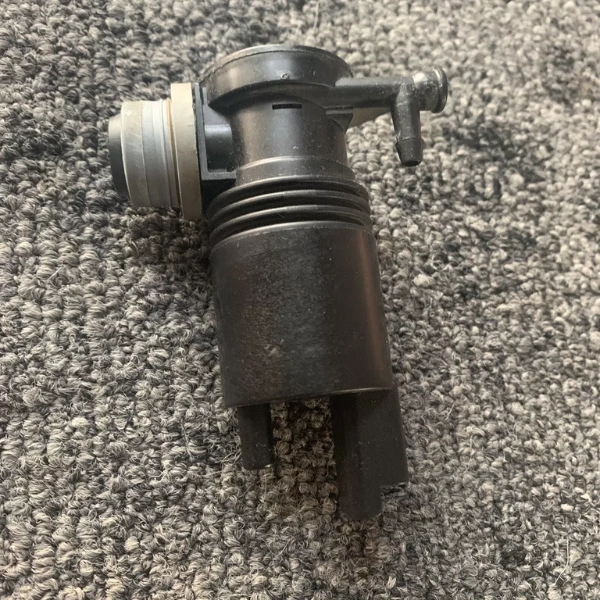
About the Infiniti Q50 Windshield Washer Motor
Direct fit Infiniti Q50 luxury sport sedan 2014-current (10+ years production). Successor to Infiniti G37 launched 2014 as part of Infiniti's naming reorganization 2013+ (sedans got 'Q' prefix). Built on Nissan FM (Front Midship) platform same as Nissan 370Z and Q60 coupe.
Infiniti brand heritage: Nissan's luxury division established 1989 as direct competitor to Lexus and Acura. Q50 specific positioning: premium sport sedan targeting BMW 3-Series/Mercedes C-Class/Audi A4/Lexus IS/Acura TLX buyers wanting performance and refinement at slightly lower price than German competition with Japanese reliability.
Engines: 3.7L VQ37VHR V6 naturally aspirated (2014-2015 ~328 HP same as 370Z), 2.0L Mercedes-sourced turbo I4 (2016+ ~208 HP built by Mercedes-Benz via Renault-Nissan-Mercedes cooperation alliance), 3.0L VR30DDTT twin-turbo V6 (2016+ ~300 HP base or ~400 HP in Red Sport 400 - brand-new Nissan engine specifically developed for Q50/Q60), 3.5L V6 hybrid (~360 HP combined).
Famous Q50 Red Sport 400 performance variant: 3.0L twin-turbo V6 ~400 HP and ~350 lb-ft torque, Brembo brakes, sport-tuned suspension. Industry-first technology: DIRECT ADAPTIVE STEERING (DAS) drive-by-wire steering system - FIRST in mass-market production vehicle, customizable steering feel through software (controversial among enthusiasts who preferred mechanical feel, but innovative). Plus Predictive Forward Collision Warning, Active Lane Control, Around-View Monitor 360-degree cameras.
Transmissions: 7-speed automatic (Jatco/Nissan). RWD or AWD. 4-door sport sedan body only. Windshield washer motor: 12V DC electric pump mounted to washer fluid reservoir, activated by steering column switch, pumps fluid through tubing at ~30 PSI to windshield nozzles. May include single outlet (front only) or dual outlet (front plus rear or headlight washers some Q50 models).
Q50 Heritage
- Production: 2014-current (10+ years)
- Successor To: Infiniti G37 (replaced 2014)
- Platform: Nissan FM (Front Midship) - same as 370Z
- Top Performance: Red Sport 400 (~400 HP twin-turbo V6)
- Famous Tech: Direct Adaptive Steering (DAS) drive-by-wire
- Brand: Infiniti (Nissan luxury division 1989+)
Q50 Engine Lineup
- 3.7L VQ37VHR V6: 2014-2015 ~328 HP naturally aspirated
- 2.0L Mercedes Turbo I4: 2016+ ~208 HP entry-level
- 3.0L VR30DDTT Twin-Turbo V6: ~300 HP / ~400 HP Red Sport 400
- 3.5L V6 Hybrid: ~360 HP combined eco-performance
Vehicle Compatibility
Q50 Coverage:
| Detail | Description |
|---|
| Infiniti Q50 2014-Current | All years 10+ years production |
| Q50 Base (Initial) | 3.7L VQ37VHR V6 |
| Q50 3.0T | 3.0L Twin-Turbo V6 ~300 HP |
| Q50 Red Sport 400 | 3.0L Twin-Turbo V6 ~400 HP performance |
| Q50 2.0t (Base 2016+) | 2.0L Mercedes Turbo I4 |
| Q50 Hybrid | 3.5L V6 + Electric hybrid |
| Q50 Signature Edition | Special trim levels |
| Q50 with Headlight Washers | Dual outlet motor (front plus headlight) |
| Q50 without Headlight Washers | Single outlet motor (front only) |
| AWD Variants | Same washer system |
| RWD Variants | Same washer system |
| Sister Vehicle: | |
| Infiniti Q60 Coupe 2017+ | Same FM platform Batch 55 vaz514 |
| NOT Compatible: Infiniti G37 (Pre-2014) | Different vehicle (predecessor) |
| NOT Compatible: Other Infiniti Models | Different platforms |
| NOT Compatible: Nissan Models | Different brand variations |
Fitment Assistance
Call (240) 301-0095. Critical questions: (1) Year (2014-current). (2) Q50 variant (3.0T, Red Sport 400, Hybrid, 2.0t). (3) Single outlet or dual outlet (with or without headlight washer system). (4) Drivetrain (RWD or AWD) - same washer system but for verification.
Condition and Inspection
- Motor operates when 12V applied Critical functional test
- Impeller spins freely
- No leaks from pump body
- Electrical connector intact No corrosion
- Mounting grommet intact
- Outlet configuration verified Single or dual
- Year/variant verified
- Cleaned of washer fluid residue
- Donor vehicle disclosed
Why Buy from Us
- For Infiniti Q50 washer motor
- 10+ year production coverage
- Q50 luxury sport sedan expertise
- G37 to Q50 transition 2014 context
- Infiniti naming strategy reorganization knowledge
- Nissan FM Front Midship platform context
- 370Z platform sibling knowledge
- VQ37VHR V6 engine heritage
- VR30DDTT twin-turbo V6 modern Nissan engine
- Mercedes 2.0L turbo via Renault-Nissan-Mercedes alliance context
- V6 hybrid eco-performance knowledge
- Red Sport 400 performance variant context
- Brembo brakes performance heritage
- Direct Adaptive Steering DAS pioneer technology
- Drive-by-wire steering industry-first
- Infiniti brand 1989+ heritage (Nissan luxury)
- Premium Japanese luxury brand trio (Lexus/Acura/Infiniti)
- Sport sedan competitive context
- Single vs dual outlet washer configuration
- Motor functional testing
- No leaks verified
- Donor vehicle disclosed
- Good salvage donor pool
- Free shipping all 50 states
- 15 day warranty
- No core charge
What is the Infiniti Q50?
The Infiniti Q50 is INFINITI's PREMIUM SPORT SEDAN produced 2014-current (10+ years US production): (1) ORIGIN - Q50 launched 2014 as SUCCESSOR TO INFINITI G37, part of Infiniti's naming strategy reorganization 2013+ where: (a) All Infiniti SEDANS got 'Q' prefix designation. (b) All Infiniti COUPES got 'Q60' designation. (c) Replacing previous G37 (sedan and coupe) naming convention. (2) PLATFORM - NISSAN FM (Front Midship) architecture - engine mounted behind front axle for improved weight distribution. Same platform family as: Nissan 370Z, Infiniti Q60 coupe (Batch 55 vaz514), Infiniti EX/QX50 crossover (some generations). (3) INFINITI BRAND HERITAGE - Nissan's luxury division established 1989 as DIRECT COMPETITOR to LEXUS and ACURA (Japanese premium brand trio established late 1980s/early 1990s). Targeting BMW/Mercedes/Audi luxury buyers wanting Japanese reliability with European-style performance. (4) BODY STYLE - 4-door sport sedan only. No coupe (that's separate Q60 model). No convertible. No wagon. (5) ENGINES across production: (a) 3.7L VQ37VHR V6 naturally aspirated (2014-2015, ~328 HP, same engine as 370Z, Nissan's VQ engine family). (b) 2.0L Mercedes-sourced turbo I4 (2016+, ~208 HP, built by Mercedes-Benz via Renault-Nissan-Mercedes cooperation alliance - notable for Mercedes engine in Japanese luxury sedan). (c) 3.0L VR30DDTT twin-turbo V6 (2016+, ~300 HP or ~400 HP in Red Sport 400 variant, brand-new Nissan engine specifically developed for Q50/Q60). (d) 3.5L V6 hybrid (eco-performance, ~360 HP combined). (6) TRANSMISSIONS - 7-speed automatic (Jatco/Nissan). (7) DRIVETRAIN - RWD or AWD optional. (8) PERFORMANCE VARIANT Q50 RED SPORT 400 - top variant with 3.0L twin-turbo V6 ~400 HP, Brembo brakes, sport-tuned suspension, sport seats. The 'Red Sport 400' designation is famous Infiniti performance variant. (9) INDUSTRY-FIRST TECH - Direct Adaptive Steering (DAS) drive-by-wire steering, first in mass-market production vehicle. (10) RIVALS - BMW 3-Series, Mercedes C-Class, Audi A4, Lexus IS, Acura TLX, Cadillac ATS (discontinued), Tesla Model 3.
What is the Q50 Red Sport 400?
The Q50 Red Sport 400 is INFINITI's TOP-TIER PERFORMANCE Q50 VARIANT: (1) ENGINE - 3.0L VR30DDTT twin-turbo V6 producing ~400 HP and ~350 lb-ft torque. Same VR30DDTT V6 as base 3.0T but with HIGHER POWER TUNE through: (a) Increased boost pressure. (b) Optimized turbocharger calibration. (c) Performance ECU mapping. (d) Strengthened internal components. (2) PERFORMANCE: 0-60 mph in ~4.5 seconds, top speed ~155 mph governed. Competitive with BMW M340i, Mercedes-AMG C43, Audi S4. (3) SPECIFICATIONS - distinguishing features: (a) BREMBO BRAKES (4-piston front, 2-piston rear) for performance braking. (b) Sport-tuned suspension with specific spring rates and dampers. (c) Sport-tuned electronic differential. (d) Sport-specific Direct Adaptive Steering tuning. (e) Larger wheels (19-20 inch) with performance tires. (f) Aggressive aerodynamics body kit. (4) INTERIOR - SPORT SEATS with red accents, premium leather options, Red Sport-specific badging, performance gauges. (5) TRANSMISSION - 7-speed automatic with sport-specific calibration, paddle shifters, manual mode. (6) DRIVETRAIN - available RWD or AWD (AWD popular for snow belt customers). (7) MSRP - $51,000-65,000+ depending on options and AWD (significantly more than base Q50 ~$40,000). (8) MARKET POSITION - performance flagship for Q50 lineup. Targets buyers wanting BMW M340i or Mercedes C43 AMG-level performance at slightly different price/positioning. (9) RED SPORT DESIGNATION - Infiniti's performance branding similar to Mercedes 'AMG' or BMW 'M' or Audi 'S/RS'. Red Sport 400 number refers to power output. (10) PRODUCTION - Red Sport 400 introduced 2016+ (when VR30DDTT engine launched), continuing through current production. (11) AS USED VEHICLE - Red Sport 400 holds value well due to performance heritage, lower production volumes vs base Q50. (12) RELIABILITY - generally good but performance tune adds stress to engine and turbo. Watch for: turbocharger wear, transmission issues under aggressive driving. (13) FOR WASHER MOTOR specifically - Red Sport 400 has same washer system as other Q50 variants. No performance-specific washer components.
What was the Direct Adaptive Steering?
DIRECT ADAPTIVE STEERING (DAS) was INFINITI's INDUSTRY-FIRST DRIVE-BY-WIRE STEERING system on Q50: (1) BACKGROUND - traditional vehicle steering used mechanical linkage: (a) Steering wheel connected to steering column. (b) Column connects to rack/pinion or steering box. (c) Mechanical linkage to front wheels. (d) Driver feels road feedback through linkage. (e) Power assistance hydraulic or electric but linkage maintained. (2) DAS REVOLUTION - Q50's DAS removed mechanical linkage between steering wheel and front wheels: (a) Steering wheel sends ELECTRONIC SIGNAL to control unit. (b) Control unit calculates desired wheel angle. (c) Electric motors at front wheels execute the angle. (d) Software controls feel, response, ratio. (e) Backup mechanical linkage remained for failsafe (in case electronic system failed). (3) FIRST IN MASS-MARKET - DAS was FIRST drive-by-wire steering in mass-market production vehicle. Aircraft had used fly-by-wire for decades, luxury concept cars had explored drive-by-wire, but Q50 brought to consumer production. (4) ADVANTAGES: (a) CUSTOMIZABLE FEEL - software-controlled steering response: light, medium, heavy modes. (b) ADAPTIVE TO CONDITIONS - response varies based on driving mode/conditions. (c) ISOLATED FROM ROAD SHOCK - no mechanical linkage means road bumps don't transmit to steering wheel. (d) FUTURE-READY for autonomous driving features (no mechanical linkage to override). (e) PRECISE - electronic control allows variable steering ratios for different speeds. (5) DISADVANTAGES (Controversial Among Enthusiasts): (a) ARTIFICIAL FEEL - lacked traditional mechanical road feel that driving enthusiasts crave. (b) LATENCY - small delay between input and response (microseconds but noticeable to skilled drivers). (c) UNUSUAL ON-CENTER feel. (d) Enthusiast journalists often criticized DAS as 'feeling artificial' or 'numb'. (6) USER REACTION - mixed: (a) Average drivers found DAS acceptable or didn't notice difference. (b) Performance enthusiasts often disliked DAS. (c) Some Q50 buyers chose models without DAS or after-market replacement. (7) INFINITI RESPONSE - over years, Infiniti updated DAS software to provide more 'natural' feel: improved calibration, optional configurations, gradual feel improvements. Some later Q50s offer DAS as option not standard. (8) INDUSTRY IMPACT - while DAS didn't become industry standard, the technology pioneered: aspects later seen in autonomous driving development, electronic steering refinements, future drive-by-wire applications. (9) FOR Q50 OWNERS - DAS-equipped vehicles need: software updates for steering improvements, electronic system maintenance (sensors), failsafe backup checks. (10) FOR WASHER MOTOR specifically - DAS is unrelated to washer motor function. Washer motor is simple electric pump regardless of DAS configuration.
How is the Q50 related to the Q60?
The Infiniti Q50 and Infiniti Q60 are SISTER VEHICLES sharing platform but different body styles: (1) Q50 - 4-door SPORT SEDAN 2014-current (this listing's vehicle). (2) Q60 - 2-door SPORT COUPE 2017-2022 (Batch 55 vaz514 documented). (3) BOTH SHARE: (a) Nissan FM (Front Midship) platform. (b) Most engine options (VQ37VHR V6, VR30DDTT twin-turbo V6). (c) 7-speed automatic transmission. (d) RWD or AWD options. (e) Many interior components. (f) Direct Adaptive Steering (DAS) some variants. (g) Around-View Monitor camera systems. (4) DIFFERENCES: (a) BODY STYLE - Q50 sedan with 4 doors, Q60 coupe with 2 doors. (b) WHEELBASE - Q50 ~112 inches, Q60 ~112 inches similar but different stretch. (c) LENGTH - Q50 ~189 inches sedan, Q60 ~184 inches coupe. (d) HEIGHT - Q60 lower than Q50 (sportier proportions). (e) Q60 NO HYBRID OPTION (only Q50 has hybrid). (f) Q60 NO 2.0L MERCEDES OPTION (Q60 uses 3.7L V6 then 3.0L V6 only). (5) PRODUCTION TIMING: (a) Q50 launched 2014 (10+ years production). (b) Q60 launched 2017 (about 6 years production). (c) Q50 continues 2024+. (d) Q60 discontinued after 2022 model year due to low sales. (6) NAMING CONVENTION - Infiniti's 2013+ reorganization: sedans got 'Q' prefix (Q50, Q70 documented earlier batches), coupes got 'Q60' designation (after sedan number), crossovers got 'QX' prefix (QX50, QX60, QX70, QX80). (7) PARTS INTERCHANGE - extensive interchange between Q50 and Q60: most mechanical components, drivetrain, electrical, interior (some). Different body panels, glass, body-specific trim. (8) MARKET POSITIONING: (a) Q50 - premium sport sedan competing with BMW 3-Series, Mercedes C-Class, Audi A4. (b) Q60 - premium sport coupe competing with BMW 4-Series, Mercedes C-Class Coupe, Audi A5. (c) Both target similar buyer demographics. (9) WASHER SYSTEM - Q50 and Q60 likely use similar washer motor (same platform, similar systems). However components may be configured for sedan vs coupe specific layout. Verify when ordering.
What is the VR30DDTT engine?
The Nissan VR30DDTT is MODERN TWIN-TURBO V6 ENGINE specifically developed for Q50/Q60: (1) NAMING: VR30DDTT decoded - (a) VR = V-engine, Real (or Renewed) - Nissan engine family designation. (b) 30 = 3.0L displacement. (c) DD = Dual Direct Injection. (d) TT = Twin-Turbocharged. (2) SPECIFICATIONS: 3.0L V6 (2,997cc), Aluminum block and heads, 60-degree V angle, Twin turbochargers (one per cylinder bank), Direct injection, Variable Valve Timing, ~300-400 HP depending on tune. (3) DEVELOPMENT - clean-sheet design specifically for Q50/Q60 application 2016+. Replaced older VQ37VHR naturally aspirated V6 in performance variants. Nissan's response to industry trend toward turbocharged smaller-displacement engines. (4) POWER OUTPUTS: (a) ~300 HP base tune (Q50 3.0T, Q60 3.0T variants). (b) ~400 HP performance tune (Q50 Red Sport 400, Q60 Red Sport 400). (c) Same engine, different software/calibration/turbo settings. (5) ADVANTAGES vs Naturally Aspirated VQ37VHR: (a) MORE TORQUE - twin-turbocharging adds significant low-end torque (300+ lb-ft vs ~270 lb-ft naturally aspirated). (b) BETTER FUEL ECONOMY - turbo allows smaller displacement to make more power. (c) MORE POWER POTENTIAL - 400 HP from 3.0L vs 328 HP from 3.7L. (d) MODERN TECHNOLOGY - direct injection, electronic wastegate control, advanced cooling. (6) APPLICATIONS - the VR30DDTT used in: (a) Infiniti Q50 3.0T and Red Sport 400. (b) Infiniti Q60 3.0T and Red Sport 400. (c) Some Infiniti QX50/QX60 variants. (d) Not in Nissan-branded vehicles (Infiniti-exclusive engine). (7) PERFORMANCE CHARACTERISTICS: (a) Smooth power delivery despite turbocharging. (b) Linear acceleration. (c) Adequate cooling for sustained high-power operation. (d) Modern emissions compliance. (e) Reasonable fuel economy for performance V6. (8) RELIABILITY - generally good but: (a) Turbochargers add complexity. (b) Direct injection has carbon buildup issues over time. (c) Higher-tune Red Sport 400 stresses components more. (d) Proper maintenance important (synthetic oil, regular intervals). (9) FUTURE - Nissan continues VR30DDTT development. May appear in future Infiniti models. Possibly hybrid/electrified versions in future. (10) FOR WASHER MOTOR specifically - engine doesn't affect washer system. Same washer motor regardless of engine variant in Q50.
How is the Q50 related to Infiniti G37?
The Infiniti Q50 is DIRECT SUCCESSOR to Infiniti G37: (1) INFINITI G-SERIES HERITAGE: (a) G35 (2003-2007) - first 'G' sedan/coupe on FM platform. (b) G37 (2008-2013) - 2nd gen G-Series sedan and coupe (Coupe was famous Infiniti coupe). (c) Q50 (2014+) - replaced G37 sedan. (d) Q60 (2017+) - replaced G37 coupe. (2) NAMING STRATEGY CHANGE 2013+ - Infiniti reorganized model names: (a) All SEDANS got 'Q' prefix (Q40, Q50, Q70 documented earlier batches). (b) All COUPES got 'Q60' designation. (c) All CROSSOVERS got 'QX' prefix (QX30, QX50, QX60, QX70, QX80). (d) Old names retired: G37, M37, EX37, FX37, JX35, QX56. (3) Q50 vs G37 SEDAN COMPARISON: (a) PLATFORM - both used Nissan FM (Front Midship) architecture. (b) Q50 chassis slightly updated but same family. (c) ENGINES - G37 had 3.7L VQ37VHR V6 (the engine continued into Q50 2014-2015). Then Q50 added 2.0L Mercedes turbo (2016+) and 3.0L VR30DDTT (2016+). G37 didn't have these later options. (d) STYLING - Q50 significantly updated body and interior styling vs G37. (e) TECHNOLOGY - Q50 introduced Direct Adaptive Steering (G37 didn't have), Around-View Monitor (Q50 added), Predictive Forward Collision Warning. (f) PERFORMANCE - Q50 Red Sport 400 added 400 HP variant (G37 didn't have equivalent). (4) TRANSITION YEAR 2013-2014 - G37 production ended 2013, Q50 launched 2014, brief overlap. (5) PARTS INTERCHANGE - some interchange between G37 and Q50: (a) Some mechanical components share. (b) Many engine components share (VQ37VHR). (c) Some suspension components share. (d) Different body panels, interior, electronics. (6) MARKET RECEPTION - Q50 received as evolution of G37: same premium sport sedan positioning, more modern technology, broader engine range, refined approach. Some G37 enthusiasts preferred older mechanical steering vs Q50 DAS. (7) USED VEHICLE MARKET - both G37 and Q50 popular as used premium sport sedans. G37 prices generally lower (older), Q50 prices reflect newer technology. (8) FOR WASHER MOTOR specifically - G37 and Q50 likely have DIFFERENT washer motors (different bodies, possibly different mounting). Verify vehicle when ordering. The G37 washer motor is separate part not interchangeable with Q50.
How do I install a washer motor?
Infiniti Q50 windshield washer motor installation is RELATIVELY SIMPLE DIY task: (1) PREP - park on level surface, open hood, allow engine to cool. (2) LOCATE WASHER RESERVOIR - typically in engine bay (some on driver side, some passenger side near front). Identify reservoir, washer pump motor location. (3) DRAIN RESERVOIR if needed (or have catch pan ready for spilled fluid). (4) DISCONNECT BATTERY for safety (precaution for electrical work). (5) DISCONNECT WASHER PUMP MOTOR: (a) Disconnect electrical connector from pump motor (squeeze tab and pull, may need plastic pry tool). (b) Disconnect washer fluid hoses from pump (pull hose off fitting carefully). (c) Pull pump motor straight out of reservoir grommet (motor sits in rubber grommet). (d) Allow any remaining fluid to drain. (6) COMPARE OLD/NEW PUMPS: (a) Verify outlet count matches (single vs dual outlet). (b) Verify electrical connector matches. (c) Verify mounting style matches. (d) Verify size/shape compatible. (7) INSTALL NEW PUMP: (a) Verify mounting grommet on reservoir is clean and undamaged. (b) Insert new pump motor into grommet (push firmly until fully seated). (c) Connect washer fluid hoses (push onto fittings, may need to wet with washer fluid for lubrication). (d) Connect electrical connector (should click into place). (8) RECONNECT BATTERY. (9) Refill washer reservoir with washer fluid. (10) TEST: (a) Activate washer pump from steering column switch. (b) Verify pump operates (you should hear pump and see fluid spray). (c) Check for leaks at pump body and hose connections. (d) Repeat several times to ensure proper operation. (11) ADJUST NOZZLES if needed for proper spray pattern. 30-60 minutes typical. TIPS: have rags ready for any washer fluid spills, take photos before disassembly for reference, dealer recommended Nissan washer fluid (or quality equivalent), keep pump electrical connector dry.
How does shipping work?
Free shipping to all 50 US states. Infiniti Q50 washer motor is small/lightweight (0.5-1 lb) shipped in padded box. UPS or FedEx Ground typical (3-7 days transit). Good salvage donor pool from 10+ years Q50 production. Performance variants (Red Sport 400) may take slightly longer to source due to lower production volumes vs base Q50. Same washer motor across performance variants typically (no Red Sport 400 specific washer motor). Aftermarket replacement washer pumps widely available if used OE not preferred.