

Volvo 240 Brake Booster for Sale | Vacuum-Assisted Servo for Iconic Volvo 240 Sedan and Wagon

Code: vaz550

Product Overview & Specifications

  • In Stock, 240 and 260 Series Variants Available
  • Free Shipping to All 50 States via UPS or FedEx Ground, 3 to 7 Business Days
  • Sedan and Wagon Body Styles Covered (240 DL, GL, Turbo, 260)
  • Production Year Range 1974 to 1993 (20-Year Coverage)
  • All Engine Variants Compatible (B20, B21, B23, B230, B204 Turbo, B280F V6)
  • Diaphragm Integrity Tested (Holds Vacuum Under Load)
  • Check Valve Function Verified
  • Master Cylinder Mounting Studs Inspected
  • 100% Fitment Verified Before Every Order Ships
  • 15 Day Replacement Warranty on Bench Test Failures

$199.00

In Stock
100% Fitment Assistance
15 Days Replacement Warranty
Free & Fast Shipping

Description

About the Volvo 240 Brake Booster

The Volvo 240 is one of the most iconic vehicles in Volvo history and one of the longest-produced car models ever made. Produced continuously from 1974 to 1993 (20 model years), approximately 2.86 million Volvo 240 and 260 series vehicles were built worldwide. The boxy upright styling, the famous brick-like profile, and the reputation for safety, longevity, and reliability made the 240 the quintessential US-market Volvo of the 1970s and 1980s. Associated with educated middle-class buyers, doctors, and college professors, the 240 became an enduring cultural icon. Body styles include the 4-door sedan (240 DL, GL, Turbo trims), the famous 5-door wagon (one of the longest-lived station wagon models ever), and 2-door variants in early years.

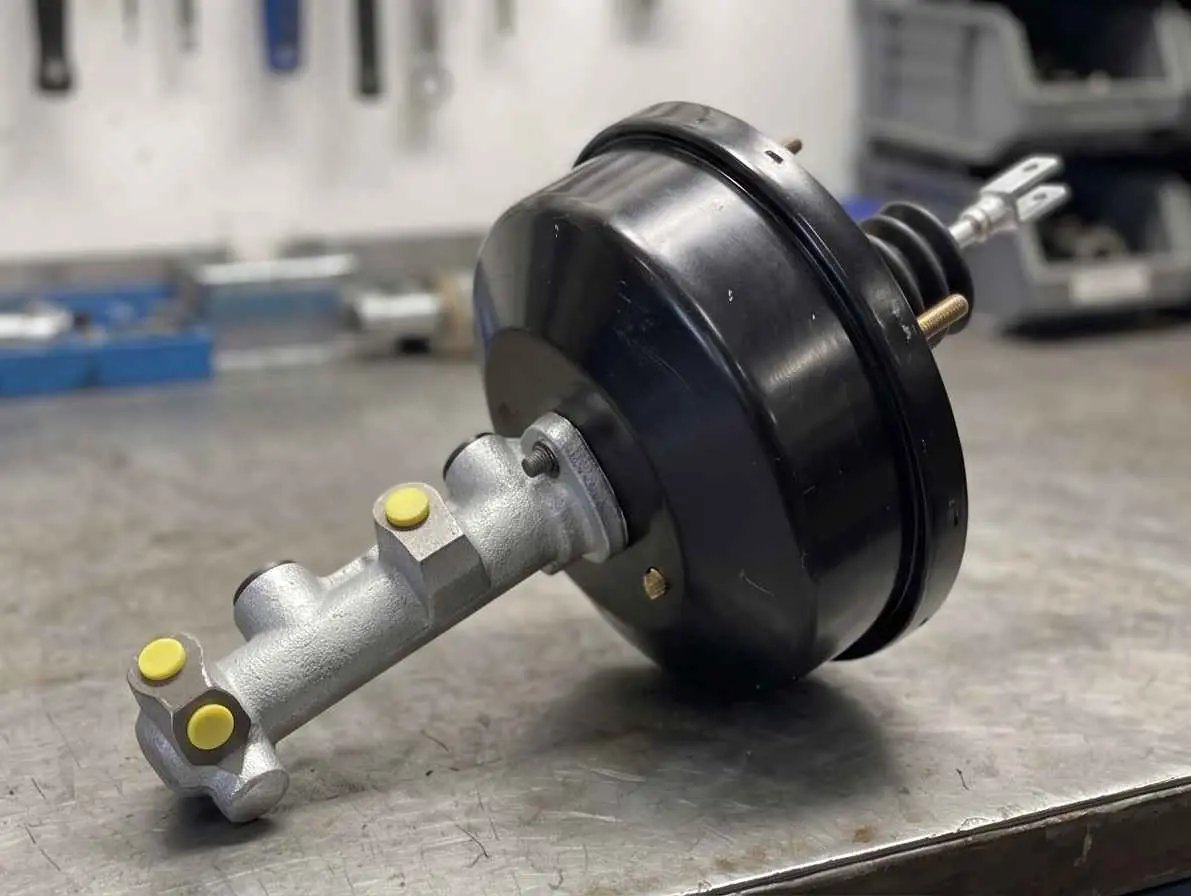
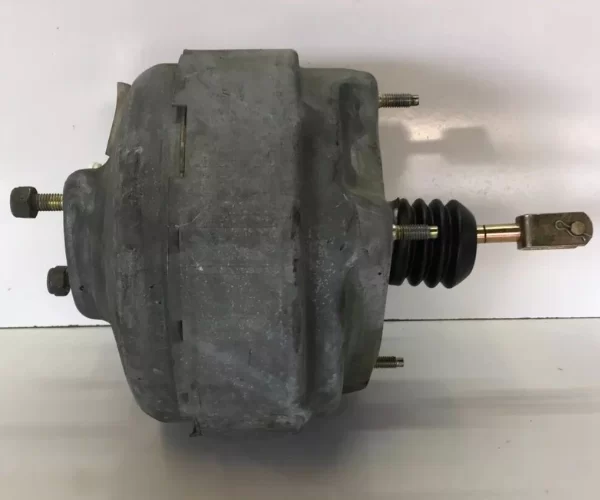
The brake booster is a vacuum-assisted servo that amplifies driver pedal force using engine vacuum, providing the power-assisted braking that makes modern cars easy to stop without excessive pedal pressure. On the 240, the booster mounts to the firewall with the master cylinder bolted to its front face. The booster receives vacuum from the intake manifold through a rubber hose with a one-way check valve to retain vacuum even when the engine is off. When the brake pedal is pressed, internal valves admit atmospheric pressure to one side of an internal diaphragm, which uses the pressure differential against engine vacuum on the other side to multiply pedal force into the master cylinder. The 240 sister vehicle 260 series (1974 to 1985) used essentially the same brake booster with V6 engine adaptations.

Why 240 Owners Replace the Brake Booster

The most common reasons 240 owners replace the brake booster are: internal diaphragm leak causing a hard or stiff brake pedal even when the engine is running and producing vacuum (the most obvious symptom), check valve failure causing the booster to lose vacuum within seconds of engine shut-off (test by pumping the brakes after stopping the engine, should have at least 2 to 3 power-assisted presses), hissing sounds from the booster when the pedal is pressed (vacuum leak from torn diaphragm or worn poppet valve), or external body rust at the firewall mounting points after 30+ years.

Less commonly, the booster can be damaged by extended operation with brake fluid contamination if the master cylinder seal fails internally (allowing brake fluid into the booster through the pushrod seal, causing internal damage). The 240 brake booster is relatively reliable when the brake system is maintained properly, but after three decades of service most original units have reached or exceeded their service life. Our used OE booster at $89 saves significant money over a $180 to $350 new replacement when combined with proper brake system service.

240 NA vs 240 Turbo vs 260 V6 Booster

DetailDescription
240 NA (Naturally Aspirated)Standard vacuum booster for B21A, B21F, B23F, B230F naturally aspirated I4 engines. Single diaphragm design. Direct vacuum connection to intake manifold.
240 Turbo (1981 to 1985, 1988 to 1991 returning)Same physical booster as NA 240 but with check valve sized for turbo intake characteristics. Turbo engines produce less vacuum than NA at boost, so check valve retention is more critical. Confirm year and turbo status when ordering.
260 V6 (1974 to 1985)Different vacuum characteristics from PRV V6 (Peugeot-Renault-Volvo joint V6 engine). Booster is similar but vacuum hose routing and check valve differ. Confirm 260 V6 application when ordering.

Things to Confirm Before Ordering

  • Year (1974 to 1993)
  • Series (240 or 260)
  • Body style (sedan, wagon, or 2-door)
  • Engine code (B20, B21A, B21F, B23F, B230F, B204 Turbo, B230FT Turbo, B280F V6)
  • NA or Turbo (affects check valve specification)
  • Original Volvo part number from old booster if available (best fit confirmation)
  • Whether you are also replacing master cylinder (often done together)

What Is Included, What Is Not Included

DetailDescription
INCLUDEDThe complete brake booster assembly with internal diaphragm, valves, pushrod, mounting studs for firewall, mounting studs for master cylinder, vacuum check valve. Sealed unit ready to install on the firewall and accept the master cylinder.
NOT INCLUDEDMaster cylinder (separate part), vacuum hose to intake manifold (replace if cracked or hardened, often a good idea after 30+ years), mounting nuts (reuse originals or source new from hardware store), brake pedal pushrod adapter, brake fluid, brake lines.
Tools You NeedMetric and SAE socket sets (240 uses mostly metric but some imperial), brake line wrenches for master cylinder connections, brake fluid catch pan, vacuum gauge for testing (optional but helpful), torque wrench, jack and stands or lift. Bench bleeding the master cylinder before reinstalling is recommended.

Vehicle Compatibility

The Volvo 240 brake booster is compatible with the following 240 and 260 series variants. Confirm year, series, and engine before ordering.

DetailDescription
Volvo 240 DL Sedan (1974 to 1993)Standard trim 4-door sedan, NA I4 engines
Volvo 240 GL Sedan (1974 to 1993)Higher trim 4-door sedan, NA I4 engines, more options
Volvo 240 Turbo Sedan (1981 to 1985, 1988 to 1991)Turbocharged variant with B21FT or B230FT engine
Volvo 240 DL Wagon (1974 to 1993)The famous boxy Volvo wagon, 5-door, NA I4
Volvo 240 GL Wagon (1974 to 1993)Higher trim wagon, NA I4
Volvo 240 Turbo WagonTurbocharged wagon variant
Volvo 240 2-Door (1974 to ~1984)Less common 2-door variant, mostly early years
Volvo 260 Sedan (1974 to 1985)V6 variant with PRV engine (B27/B28/B280)
Volvo 260 Wagon (1974 to 1982)V6 wagon variant, rare in US market

Not compatible with Volvo 140 series (1966 to 1974 predecessor of 240) which used a different booster design. Also not compatible with Volvo 740/760 (1982 to 1992 sister/successor) which used updated booster design with different mounting pattern. Volvo 940 (1991 to 1998 direct 240 successor) used a different booster too. Some 240 boosters interchange with 740 of certain years but always confirm part number. Call (240) 301-0095 if uncertain.

Fitment Assistance

Not sure if this Volvo 240 brake booster fits your car? Call (240) 301-0095 with your year (1974 to 1993), series (240 or 260), body style (sedan, wagon, or 2-door), and engine code (especially important between NA and Turbo, and between I4 and V6 on 260). Our team confirms the right booster for your specific 240 or 260 application before we ship.

Condition and Inspection

This used OE Volvo 240 brake booster has been bench-tested and inspected before listing. Quality control includes:

  • Vacuum hold test (applies vacuum, verifies no leakage over 60 seconds)
  • Pedal pushrod function tested (smooth movement, no binding)
  • Diaphragm integrity confirmed (no air bypass between vacuum and atmospheric chambers)
  • Check valve function verified (one-way operation, holds vacuum)
  • Master cylinder mounting studs inspected (no thread damage)
  • Firewall mounting studs inspected (straight, no bend, threads good)
  • Vacuum port intact, no cracks or damage
  • External body inspection (no severe rust corrosion, no impact damage)
  • Donor vehicle had functioning brakes at time of teardown

Each booster ships with a label identifying the donor vehicle year, engine, and turbo status. We recommend replacing the vacuum hose to the intake manifold during install if your hose is cracked or hardened (a $15 part that prevents check valve issues). Master cylinder bench bleeding before reinstallation is recommended for proper brake system performance.

Why Buy from Us

Why Buy From Vaz Auto Solutions

  • Used OE Volvo 240 brake booster at $89, fraction of new replacement cost
  • Bench tested for vacuum hold and diaphragm integrity before shipping
  • 20-year production run coverage (1974 to 1993)
  • All body styles supported: sedan, the famous wagon, 2-door variants
  • All engine variants compatible: NA I4, Turbo I4, PRV V6 (260)
  • NA vs Turbo distinction (different check valve characteristics)
  • 240/260 sister series identification
  • Iconic boxy Volvo expertise and parts knowledge
  • Free shipping to all 50 states, 3 to 7 business day transit
  • Classic Volvo specialist support team
  • 15 day replacement warranty on bench test failures
  • Real human on the phone who knows 240 brake system specifics

Additional information

application

Volvo 240 and 260 series classic

Year Range

1974 to 1993 (20-year production run)

Production Total

Approximately 2.86 million 240 and 260 vehicles produced worldwide

body-styles

2-door (early years), 4-door sedan (DL, 5-door wagon, GL, Turbo)

engine-compatibility

B20, B204 Turbo, B21A/B21F/B23F/B230F I4 NA, B230FT Turbo, B280F V6 (260)

drivetrain

Rear-wheel drive (RWD) all variants

booster-type

Vacuum-assisted single diaphragm servo

Diaphragm Size

9 to 10 inches

vacuum-source

Intake manifold via hose with check valve

Master Cylinder Interface

2 studs, 240-specific master cylinder, Front face

Firewall Mounting

4 studs to firewall

Sister Series

Volvo 260 (V6 variant 1974 to 1985)

successor

Volvo 940 (1991 to 1998)

predecessor

Volvo 140 series (1966 to 1974)

Cultural Note

"the boxy Volvo", Iconic US-market Volvo of the 1970s and 1980s

warranty

15 day replacement on bench test failure

Shipping

Free UPS or FedEx Ground to all 50 states

Reviews

There are no reviews yet.

Be the first to review “Volvo 240 Brake Booster for Sale | Vacuum-Assisted Servo for Iconic Volvo 240 Sedan and Wagon”

Your email address will not be published. Required fields are marked *

Frequently Asked Questions

What is the Volvo 240 and what years was it produced?

The Volvo 240 is one of the most iconic vehicles in Volvo history, produced from 1974 to 1993 for a full 20 model years. Approximately 2.86 million 240 and sister 260 series vehicles were built worldwide. Body styles include the 4-door sedan (DL, GL, and Turbo trims), the famous 5-door wagon (one of the longest-lived station wagon designs ever), and 2-door variants in early years. The boxy upright styling, brick-like profile, and exceptional safety and reliability made the 240 the quintessential US-market Volvo of the 1970s and 1980s. The 240 replaced the 140 series and was replaced by the 940 in 1991 (sold alongside for a brief period).

How do I know if my 240 brake booster is failing?

Common symptoms include: hard or stiff brake pedal even when the engine is running (lost vacuum assist), hissing sound from the booster when pedal is pressed (internal vacuum leak), brake pedal pulses or feels inconsistent, only 1 power-assisted brake press after engine shut-off (failed check valve, should have 2 to 3), or visible rust corrosion at firewall mounting. Test the check valve by pumping the brakes after stopping the engine, you should feel 2 to 3 firm power-assisted presses before the pedal becomes hard.

Is the 240 brake booster the same as the 260?

Essentially yes for I4 240 versus V6 260, with minor differences in vacuum hose routing and check valve specification. The mounting pattern and master cylinder interface are the same. The PRV V6 in the 260 produces different vacuum characteristics than the I4 engines in the 240, so the check valve is sometimes specified differently. Call (240) 301-0095 for cross-compatibility confirmation if you have a 260 V6.

Does the 240 Turbo need a different booster than NA 240?

Same physical booster but the check valve specification may differ since turbo engines produce less vacuum during boost than NA engines at full throttle. Most turbo 240s use the same booster as NA with a turbo-specific check valve. When ordering, mention if you have a 240 Turbo (B21FT or B230FT engine) so we can verify check valve compatibility. Same applies for the rare B204 Turbo variant.

Can I install a 240 brake booster myself?

Yes, a 240 brake booster replacement is a 2 to 4 hour DIY job for an experienced home mechanic. You need: metric and SAE socket sets, brake line wrenches (flare nut wrenches recommended to avoid rounding the brake line fittings), brake fluid catch pan, fresh DOT 4 brake fluid, jack and stands or lift, and patience to access the master cylinder mounting bolts (under the dash on the brake pedal pushrod side, sometimes tight access). Bench bleed the master cylinder before reinstalling. Always bleed the entire brake system after install.

How long should a used OE booster last?

A bench-tested used OE booster from a salvage donor typically gives 5 to 15 years of additional service when installed in your 240. Lifespan depends on engine vacuum quality (a 240 with worn intake or vacuum leaks shortens booster life), brake fluid maintenance (failed master cylinder seal can damage the booster), and climate (humid coastal climates promote external rust). Our 15 day warranty covers initial bench-test failures.

Do I need to replace the master cylinder when replacing the booster?

Not strictly required if your master cylinder is in good condition, but many 240 owners do both at the same time as preventive maintenance since both are over 30 years old and the labor to access them is similar. If your brake fluid has been dirty, or you see external corrosion on the master cylinder, replacement is wise. The master cylinder bolts to the front face of the booster and shares 240-specific dimensions.

How does shipping work?

Free shipping to all 50 US states via UPS or FedEx Ground. Typical transit is 3 to 7 business days. Boosters ship in protective packaging with mounting studs wrapped and vacuum port sealed against contamination. Donor vehicle year, engine, and turbo status labeled on the box. Insurance and tracking included.

Product Warranty

15 Day Replacement Warranty

Covered:

  • Booster does not hold vacuum on installation (immediate leak)
  • Diaphragm leak causes hard pedal even with engine running
  • Check valve fails to retain vacuum after engine shut-off
  • Hissing or air leak detectable on first installation
  • Wrong booster shipped due to our fulfillment error

Not Covered:

  • Damage from improper installation (cross-threaded master cylinder studs, over-tightened mounting nuts)
  • Compatibility issues from unconfirmed year, series, or engine variant
  • Damage from contaminated vacuum source (oil consumption, dirty intake)
  • Damage from brake fluid contamination (failed master cylinder seal allowing fluid into booster)
  • Vacuum hose failures (separate part, replace during install if hardened)
  • Wear from continued use after the 15 day warranty window

To file a claim, contact us within 15 days of delivery at (240) 301-0095 or support@vazautosolutions.com with the original order number, photos of the installed booster, vacuum gauge readings if available, and a description of the symptom. We process most warranty replacements within 48 hours.
Trust Badges

  • Bench Tested, Vacuum hold and diaphragm integrity verified
  • 20-Year Coverage, 1974 to 1993 240 series classic
  • All Body Styles, Sedan, the famous wagon, 2-door variants
  • Engine Variants, B20/B21/B23/B230 I4, B204 Turbo, B230FT Turbo, B280F V6
  • NA vs Turbo, Check valve specification verified for your application
  • Iconic Boxy Volvo, The quintessential US-market 1970s and 1980s Volvo
  • Free Shipping All 50 States, UPS or FedEx Ground, 3 to 7 days
  • 15 Day Warranty, Bench test failures covered from delivery