









Dodge Van 100 Outside Door Handle for Sale | Used Dodge B100 Van Exterior Door Release Lever

Code: vaz520

Product Overview & Specifications

  • In Stock, 1971-1978 B100 Era Coverage
  • Free Shipping to All 50 States, 3-7 Business Day Transit
  • Dodge B100 Van 1971-1978 8 years B100 designation
  • Donor Vehicle Disclosed
  • Good Salvage Donor Pool
  • 15 Day Replacement Warranty

$99.00

In Stock
100% Fitment Assistance
15 Days Replacement Warranty
Free & Fast Shipping

Description

About the Dodge Van 100 Outside Door Handle

Direct fit Dodge B-Series Van with B100 designation 1971-1978 (pre-1979 naming era). The Dodge B-Series Van produced 1971-2003 (33 years, the LONGEST-PRODUCED Dodge vehicle single generation without major body redesign). B100 designation applied to first 8 years before 1979 rename to B150 (B150/B250/B350 matched Dodge pickup truck numbering Ram 150/250/350). Same vehicle continued 1979-2003 as B150 documented Batch 56 vaz519.

Dodge B-Series original design replaced earlier A-Series Van (1964-1970 ‘A100’ Van with cab-over-engine design similar to VW Microbus). The B-Series 1971 was MAJOR REDESIGN with engine-forward layout closer to conventional pickup truck architecture, better aerodynamics, larger cabin, more standard American drivetrain components. The new design established format that continued 33 years without major redesign.

B100 positioning: 1/2-ton light duty van (above B200 3/4-ton and B300 1-ton in pre-1979 naming hierarchy). Same light-duty position as later B150 1979+. Applications same as later B150: cargo van (Tradesman), passenger van (Sportsman up to 15-passenger), conversion van base, fleet commercial use, ambulance/commercial build-ups, Class B motorhome conversions. 1970s saw rise of conversion van industry beginning (predecessor to 1980s-1990s golden age with Glaval/Mark III/Explorer/Starcraft/Centurion).

Engines 1971-1978 B100 era: 225 Slant-Six I6 (the FAMOUS Chrysler ‘Leaning Tower of Power’ inline-6 with cylinders tilted 30 degrees, ultra-reliable workhorse, base engine), 318 LA V8 (5.2L mainstream Chrysler V8 most common in B100), 360 LA V8 (5.9L heavier duty), 440 RB V8 (Big Block limited production heavy duty, the famous Mopar 440 of muscle car heritage). Transmissions: 727 TorqueFlite legendary heavy-duty 3-speed automatic with cast iron case (bulletproof reliability), 904 TorqueFlite lighter-duty 3-speed (Slant-Six/lighter V8), 3-speed manual (column or floor shift). IMPORTANT: A500/A518 4-speed automatics were NOT yet introduced until mid-1980s, so NOT available on pre-1979 B100 vans. RWD only throughout entire B-Series 33-year production.

Body styles: Tradesman (commercial/cargo configuration with painted steel interior and plywood-lined cargo floor), Sportsman (passenger with windows and seating up to 15-passenger), Maxivan (extended length variant ~127.6 inch wheelbase vs standard ~109.6 inch).

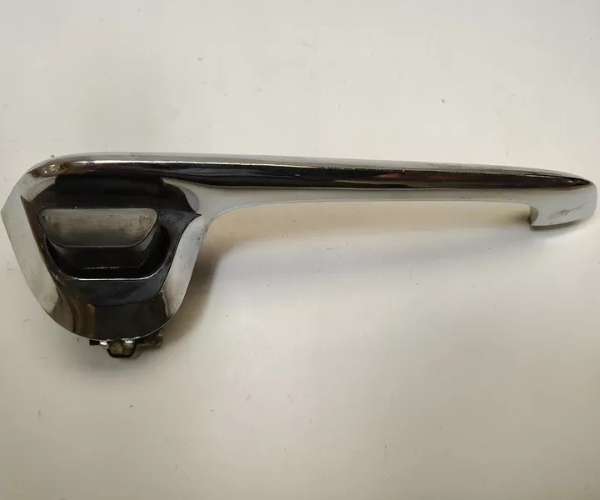
Outside door handle definition: exterior door release lever that operates the door latch from outside vehicle. The B100 van has multiple outside door handles: front door handles (driver and passenger side, most frequently used), side cargo door handle (on sliding side door if equipped), rear barn door handles (both left and right rear cargo doors for loading/unloading). Construction: cast zinc/pot metal typical 1970s era (sometimes called ‘pot metal’ for cast zinc alloy), chrome-plated for cosmetic appearance, mechanical squeeze lever or push button mechanism, internal return spring, 2-3 mounting bolts through door skin to backing.

Common failures vintage handles: chrome peeling/oxidizing (cosmetic issue with 1970s chrome quality after decades of UV/weather), broken lever (snaps from years of use especially driver door), worn return spring (loses tension), stuck/frozen mechanism (corrosion or debris), broken mounting brackets, pot metal corrosion (internal crystallization of zinc castings over decades may cause sudden breakage). Replacement is easy (30-60 minutes typical DIY) for front doors: remove door panel, disconnect linkage, remove mounting bolts, install new handle, test operation, reinstall panel.

Vintage Mopar restoration market active: many B100 handles available either from used OE salvage donors (this listing’s source), reproduction parts from companies like Year One Restoration (specialty Mopar), Original Parts Group (OPG), Auto Body Specialties Inc. (ABS), 1971-Up Restoration Vendors, or NOS (New Old Stock) sometimes available rare/expensive.

Dodge B100 Heritage

  • Production: 1971-1978 (8 years B100 designation)
  • Naming: B100 pre-1979 → renamed B150 in 1979
  • Total B-Series: 33 years 1971-2003 longest Dodge
  • Position: 1/2-ton light duty (above B200/B300)
  • Predecessor: Dodge A100 Van 1964-1970 cab-over
  • Engines: Slant-Six, 318 LA V8, 360 LA V8, 440 RB Big Block
  • Transmissions: 727 TorqueFlite, 904 TorqueFlite (pre-A500/A518)
  • Drivetrain: RWD only (no 4WD ever)
  • Body Styles: Tradesman, Sportsman, Maxivan

Outside Door Handle

  • Locations: Front (driver/passenger), side cargo, rear barn doors
  • Construction: Cast zinc/pot metal, chrome-plated
  • Mechanism: Squeeze lever or push button activates latch
  • Return Spring: Internal for handle reset
  • Mounting: 2-3 bolts through door skin
  • Common Failure: Chrome peeling, broken lever, pot metal corrosion
  • Replacement: Easy DIY 30-60 minutes front doors

Vehicle Compatibility

Dodge B100 Coverage:

DetailDescription
Dodge B100 Van 1971-19788 years B100 designation
Transition 1979-1980B100/B150 names overlapping some configurations
Door Location Specific:
Front Driver Door (Most Used)Specific handle (mirror of passenger)
Front Passenger DoorSpecific handle
Side Cargo Sliding Door (If Equipped)Different handle style
Rear Left Barn DoorSpecific to rear door
Rear Right Barn DoorMirror of left rear
Body Style Specific:
Tradesman (Cargo) ModelsStandard handles, painted possible
Sportsman (Passenger) ModelsChrome handles typical
Maxivan (Extended) ModelsSame handles as standard length
Sister Configurations:
Dodge B200 Van 3/4-Ton (Pre-1979)Often same handles
Dodge B300 Van 1-Ton (Pre-1979)Often same handles
Late B100/Early B150 1978-1980Same handle (transition era)
Same Handle Continued B150 (1979+)Batch 56 vaz519 reference vehicle
Pre-Conversion or Conversion VansStandard B100 handles used
NOT Compatible: Dodge A100 Van (1964-1970)Different generation handles
NOT Compatible: Dodge Sprinter (Post-2003)Mercedes-sourced different platform

Fitment Assistance

Call (240) 301-0095. Critical questions: (1) Year (1971-1978 B100 era, or 1979-1980 transition years). (2) Door location (driver front, passenger front, side cargo, rear left, rear right – DIFFERENT handles). (3) Body style (Tradesman/Sportsman/Maxivan – similar handles but verify). (4) Engine/trim (helps confirm vehicle configuration). (5) Restoration project specifics (level of finish preferred). (6) Original chrome vs reproduction preference.

Condition and Inspection

  • Lever operates smoothly No binding or stuck mechanism
  • Return spring functional Lever returns to rest position
  • Mounting bolts thread properly Not stripped
  • No broken portions of lever or body
  • Pot metal not crystallized Internal corrosion check
  • Chrome condition assessed Used condition typical for 1970s
  • Linkage connection point intact Where rod connects from handle to latch
  • No bent components
  • Year/door location verified
  • Donor vehicle disclosed
  • Cleaned of grime

Why Buy from Us

  • For Dodge B100 Van outside door handle
  • 1971-1978 B100 era coverage (8 years)
  • Pre-1979 naming era expertise
  • B100 to B150 rename 1979 context
  • Same vehicle as later B150 Batch 56 vaz519
  • Total B-Series 33-year heritage knowledge
  • Longest-produced Dodge vehicle context
  • Dodge A100 predecessor (cab-over-engine 1964-1970) context
  • B-Series major 1971 redesign heritage
  • 1/2-ton light duty positioning
  • RWD only throughout production
  • Tradesman/Sportsman/Maxivan body styles
  • Slant-Six ‘Leaning Tower of Power’ heritage
  • LA-Series engine family (318/360/440)
  • 440 RB Big Block muscle car heritage
  • 727 TorqueFlite legendary heavy-duty automatic
  • 904 TorqueFlite lighter-duty automatic
  • Pre-A500/A518 era knowledge
  • Pre-Magnum era (LA-series only)
  • Door location specifics (front/side/rear)
  • Cast zinc/pot metal construction context
  • 1970s chrome plating quality context
  • Pot metal corrosion failure mode
  • Vintage Mopar restoration market knowledge
  • Year One/OPG/ABS reproduction vendor context
  • NOS (New Old Stock) availability context
  • Lever operation testing
  • Return spring verification
  • Donor vehicle disclosed
  • Good salvage donor pool
  • Free shipping all 50 states
  • 15 day warranty
  • No core charge

Additional information

part-type

Exterior door release lever / outside door handle

Vehicle

Dodge B100 Van (1971-1978 pre-1979 naming era)

Same Vehicle 1979+

B150 (Batch 56 vaz519 reference)

Total B-Series

1971-2003 (33 years longest Dodge)

position

1/2-ton light duty van

predecessor

Dodge A100 Van (1964-1970 cab-over-engine)

engines

225 Slant-Six, 318/360 LA V8, 440 RB Big Block

Transmissions

727/904 TorqueFlite (pre-A500/A518 era)

drivetrain

RWD only

body-styles

Maxivan, Sportsman, Tradesman

Door Locations

Front (driver/passenger), rear barn (left/right), side cargo

construction

Cast zinc/pot metal, chrome-plated

Mechanism

Squeeze lever or push button

mounting

2-3 bolts through door skin

common-failure

broken lever, Chrome peeling, pot metal corrosion

approximate-weight

0.5 to 1 lb

installation-difficulty

30-60 minutes, Easy

Reproduction Vendors

ABS, OPG, vintage Mopar specialists, Year One

NOS Availability

Rare/expensive when available

Reviews

There are no reviews yet.

Be the first to review “Dodge Van 100 Outside Door Handle for Sale | Used Dodge B100 Van Exterior Door Release Lever”

Your email address will not be published. Required fields are marked *

Frequently Asked Questions

What's the difference between B100 and B150?

The Dodge B100 and B150 are SAME VEHICLE with different naming conventions: (1) B100 NAMING ERA (1971-1978): (a) Pre-1979 Dodge truck/van numbering system. (b) 100/200/300 numbering for 1/2-Ton/3/4-Ton/1-Ton: B100, B200, B300. (c) Matched pre-1979 pickup truck numbering: D100, D200, D300 pickup trucks. (d) 8 years of B100 designation. (2) B150 NAMING ERA (1979-2003): (a) 1979 rename to match industry standard numbering. (b) 150/250/350 numbering for 1/2-Ton/3/4-Ton/1-Ton: B150, B250, B350. (c) Matched 1979+ pickup truck rename: D150, D250, D350 (later Ram 150, 250, 350). (d) 25 years of B150 designation. (e) Ram Van branding added 1981+. (3) SAME MECHANICAL VEHICLE: (a) Body structure essentially identical 1971-2003. (b) Same engines available (Slant-Six, 318/360 LA V8, 440 RB V8 early, later Magnum era 1992+). (c) Same chassis architecture. (d) Most parts interchange between B100 and early B150. (4) MINOR DIFFERENCES Over Time: (a) Mid-1970s emissions equipment added (catalytic converters 1975+, EGR systems). (b) Late 1970s lighting updates. (c) 1980s minor styling refreshes. (d) Late 1980s introduction of 4-speed automatics (A500/A518). (e) Early 1990s introduction of Magnum engines (5.2L/5.9L MPFI replaced 318/360 LA V8). (f) Late 1990s minor updates. (5) NAMING CONVENTION CONTEXT: (a) Why rename? – Industry standardization (Ford E-150, GM 1500 used 150 designations). (b) Dodge’s pickup trucks renamed 1979 (D100 → D150). (c) Vans followed same convention. (d) Marketing consistency across truck/van lineup. (6) RAM BRANDING 1981+: (a) Dodge adopted ‘Ram’ identity across truck lineup. (b) Pickup trucks became ‘Dodge Ram’ (Ram 150, 250, 350). (c) Vans became ‘Dodge Ram Van’ (Ram Van 150, 250, 350). (d) Marketing focused on toughness/utility theme. (e) Later (2010) Ram became separate brand within Stellantis (formerly FCA/Chrysler). (7) FOR DOOR HANDLES specifically: (a) B100 and early B150 (1979-1980 transition years) likely share same door handles. (b) Same mechanical doors, same handle mounting, same handle design typically. (c) Specific door handle should fit B100 1971-1978 AND B150 1979-early 1980s without modification. (d) Later 1980s+ may have slightly different handle designs (verify). (e) For complete restoration, original handles for specific year preferred. (8) IDENTIFICATION OF YEAR: (a) VIN year code position (specific to your vehicle). (b) Door jamb sticker. (c) Title documentation. (d) Engine identification. (e) Distinctive 1970s vs 1980s styling cues. (9) USED MARKET – B100 and B150 vans coexist in used market: (a) B100 is older (1971-1978), often more collector/vintage interest. (b) B150 is later (1979-2003), more practical/daily-driver. (c) Both have parts interchange for major components. (d) Door handles often interchange across both naming eras. (10) FOR THIS LISTING – B100 designation specifically targeting 1971-1978 vans, but compatible with early B150 1979-1980 transition era and similar handles continued through later B150 production.

What is the Dodge A100 predecessor?

The Dodge A100 was the FIRST Dodge full-size van (1964-1970, 7 years), predecessor to the B-Series: (1) PRODUCTION 1964-1970 – 7 years US production at Chrysler. (2) DESIGN – CAB-OVER-ENGINE configuration: (a) ENGINE BETWEEN DRIVERS AND PASSENGER (under doghouse cover between front seats). (b) Similar to VW Microbus design philosophy. (c) Cab forward design with no engine compartment in front. (d) Short hood/long body proportions. (e) Front passengers sit directly above front axle. (3) APPLICATIONS – similar to later B-Series: (a) Cargo van for commercial use. (b) Passenger van. (c) Custom conversion van. (d) Plumbers, electricians, contractors. (4) ENGINES: (a) Slant-Six I6 (170 then 225 cubic inches). (b) 273 LA V8 (early variant). (c) 318 LA V8 (mainstream). (d) Limited V8 options vs later B-Series. (5) TRANSMISSIONS: (a) 3-speed manual column shift. (b) TorqueFlite 3-speed automatic. (c) 4-speed manual some configurations. (6) DRIVETRAIN: (a) Rear-wheel-drive only. (b) Solid front axle. (c) Leaf spring rear suspension. (7) WHY REDESIGN TO B-SERIES 1971: (a) SAFETY CONCERNS – cab-over-engine vans had reputation for poor frontal crash protection (driver directly behind front grille with no crumple zone). (b) MARKET PREFERENCE – American buyers preferred conventional engine-forward design. (c) COOLING – cab-over engine had cooling challenges in cab. (d) NOISE/HEAT – engine in cab caused noise and heat issues. (e) PACKAGING – conventional engine-forward allowed: more interior space, easier engine access for service, better heating/cooling for passengers, better visibility through windshield. (8) B-SERIES 1971 IMPROVEMENTS: (a) Engine moved forward of B-pillar (between driver/passenger area but more forward). (b) Better crash protection. (c) Quieter interior. (d) Better climate control. (e) More conventional truck-derived design. (f) Larger cab area. (g) More truck-like driving experience. (9) A100 vs B100 CONTRAST: (a) A100 – cab-over-engine, shorter overall length, distinctive 1960s styling. (b) B100 – engine forward, longer overall length, 1970s styling. (c) DIFFERENT MARKETS – A100 more like compact van, B100 more like full-size van. (d) Different mechanical platforms (different chassis, different bodies). (10) COLLECTOR STATUS – Dodge A100 today: (a) VINTAGE CULT FOLLOWING – distinctive cab-over design appeals to enthusiasts. (b) Famous Dodge A100 Pickup variant (rare). (c) Lower production volumes than B-Series. (d) Custom van scene appreciation. (e) ‘Little Red Wagon’ famous wheelie-pulling drag racing A100 pickup (Bill ‘Maverick’ Golden) is automotive legend. (11) FOR PARTS COMPATIBILITY – A100 and B100 share VERY FEW parts: (a) Completely different platforms despite both being Dodge vans. (b) Different mechanical layouts. (c) DIFFERENT DOOR HANDLES (A100 handles do not fit B100). (d) Engines and transmissions different applications. (e) Verify your vehicle (A-Series vs B-Series) before ordering parts. (12) FOR THIS LISTING – applies to B100 1971-1978 vans, NOT compatible with earlier A100 (1964-1970).

What is pot metal and why does it corrode?

POT METAL (also called WHITE METAL, MONKEY METAL, or DIE-CAST ZINC) is alloy commonly used for vintage automotive trim: (1) COMPOSITION: (a) Primarily ZINC (Zn) – usually 90-95% by weight. (b) Plus ALUMINUM (Al) – 4-5%. (c) Plus COPPER (Cu) – 1-3%. (d) Sometimes magnesium, lead, or other metals. (e) Specific alloy compositions vary by manufacturer/era. (2) WHY USED FOR DOOR HANDLES: (a) LOW MELTING POINT – 700-900°F (vs steel 2,500°F+), easy to cast. (b) GOOD FOR DIE-CASTING – flows well into intricate molds. (c) STRONG ENOUGH for moderate use applications. (d) ACCEPTS CHROME PLATING well. (e) RELATIVELY INEXPENSIVE – cheaper than brass or steel for cast parts. (f) FAST PRODUCTION – die-casting was quick mass production method. (g) DECORATIVE CAPABILITY – chrome plating gave premium appearance. (3) APPLICATIONS – pot metal used for: (a) Door handles (outside and inside). (b) Trunk handles. (c) Hood ornaments. (d) Body trim/molding. (e) Dashboard knobs and small parts. (f) Grille components. (g) Light bezels. (h) Mirror housings. (i) Drawer pulls (older furniture too). (4) AUTOMOTIVE HERITAGE: (a) Heavy use 1930s-1980s in American cars and trucks. (b) Particularly common 1950s-1970s era. (c) Replaced increasingly by plastic in 1980s+ (cheaper, no corrosion issues). (d) Some applications still use pot metal today (less common). (5) CORROSION PROBLEM: (a) PURITY ISSUE – 1970s pot metal had impurities (especially lead and tin) that cause internal crystallization over decades. (b) TIME-DELAYED FAILURE – looks fine for years then suddenly breaks or shows pitting. (c) UNPREDICTABLE – some parts last 80+ years, others fail in 20 years. (d) EXPANSION – internal corrosion can cause swelling/distortion. (e) BRITTLE FRACTURE – cracking under normal stress without warning. (f) PEELING CHROME – chrome plating delaminates from substrate. (6) WHY 1970s POT METAL WAS PROBLEMATIC: (a) IMPORTED RAW MATERIALS quality concerns. (b) COST-CUTTING – lower-purity alloys used to reduce costs. (c) MASS PRODUCTION speed prioritized over metallurgical quality. (d) ENVIRONMENTAL FACTORS – acid rain, salt air, UV exposure over decades. (7) IDENTIFICATION: (a) Magnetic test – pot metal NOT magnetic (zinc base). (b) Weight – pot metal moderately heavy. (c) Chrome appearance – typically has chrome plating. (d) Sound when struck – duller than steel. (e) Surface texture – smooth machined finish under chrome. (8) ALTERNATIVES TO POT METAL: (a) STEEL – magnetic, heavier, more durable, costs more. (b) BRASS – golden color, expensive, premium. (c) STAINLESS STEEL – corrosion-resistant, modern. (d) PLASTIC – lightweight, can be chromed, modern dominant material. (e) ALUMINUM – light, corrosion-resistant, can be polished. (9) RESTORATION CONSIDERATIONS: (a) ORIGINAL VS REPRODUCTION – original pot metal handles may have decades of remaining life or imminent failure. (b) REPRODUCTION HANDLES often use better metallurgy (more pure zinc, modern alloys). (c) RECHROMING – original pot metal can be rechromed but may continue degrading. (d) REPLACEMENT – sometimes best option for safety/reliability. (10) FOR DODGE B100 DOOR HANDLES specifically: (a) Most B100 handles are pot metal with chrome plating. (b) Inspect for: peeling chrome (cosmetic, may indicate beginning failure), pitting/oxidation, signs of internal crystallization, hairline cracks. (c) For driver door (most-used), consider new reproduction if original shows wear. (d) For passenger/cargo doors (less use), original may last with care. (11) MODERN REPRODUCTION OPTIONS available from Year One, OPG, ABS, and vintage Mopar specialists often use updated metallurgy.

How do I remove and install an outside door handle?

Dodge B100 outside door handle replacement is EASY DIY task (30-60 minutes for front doors): (1) PREP/TOOLS NEEDED: (a) Phillips and flat-head screwdrivers. (b) Socket wrench set. (c) Trim removal tools (or substitutes). (d) Inner door panel removal tool. (e) Flashlight. (f) Patience for vintage vehicle work. (2) REMOVE INNER DOOR PANEL: (a) Roll down window if equipped (or position for access). (b) Remove door panel armrest screws (Phillips screws typically). (c) Remove window crank handle (if manual windows – spring clip behind handle, or screw). (d) Remove door lock knob (unscrew or remove retaining clip). (e) Remove interior door pull handle screws. (f) Remove door panel retaining clips (around perimeter – use trim removal tool). (g) Pull panel away from door carefully (may have clips you can’t see). (h) Disconnect any electrical connectors (older B100 may have none). (i) Set panel aside. (3) ACCESS WATER BARRIER: (a) Plastic or paper sheet behind door panel. (b) Carefully peel back to access door internals. (c) Don’t damage if you want to reuse. (d) Note original positioning for reinstallation. (4) IDENTIFY HANDLE ASSEMBLY: (a) Look at outside door from inside via access holes. (b) Find handle mounting bolts (2-3 bolts typically). (c) Locate linkage rod connecting handle to door latch. (d) Visualize how everything connects. (5) DISCONNECT LINKAGE: (a) Pop linkage rod off handle connection point (usually plastic clip). (b) Note rod orientation and routing. (c) Don’t bend or kink rod. (6) REMOVE MOUNTING BOLTS: (a) Use socket wrench to remove handle mounting bolts (typically 2-3 bolts). (b) Hold handle from outside to prevent fall. (c) Note any spacers or washers. (7) REMOVE OLD HANDLE: (a) Pull handle away from door outside. (b) Inspect for any remaining connections. (c) Note gasket/sealing position. (8) COMPARE OLD/NEW: (a) Verify size and mounting bolt pattern matches. (b) Verify lever orientation matches. (c) Check linkage attachment point compatible. (d) Verify return spring functional on new handle. (e) Test lever operation. (9) INSTALL NEW HANDLE: (a) Position from outside (apply gasket or sealing material if available). (b) Insert mounting bolts from inside. (c) Hand-tighten to ensure alignment. (d) Verify handle sits flush against door. (e) Reconnect linkage rod (snap into place). (f) Torque mounting bolts to spec (typically 5-10 ft-lbs for vintage vehicles). (10) TEST: (a) Operate handle from outside. (b) Verify door latch releases. (c) Test multiple operations. (d) Verify return spring works (handle returns to rest). (e) Test door opening/closing. (f) Verify door stays latched when closed. (11) REINSTALL: (a) Reposition water barrier. (b) Carefully position inner door panel. (c) Reconnect electrical (if any). (d) Snap door panel clips back into place. (e) Install retaining screws. (f) Reinstall window crank, door lock knob, armrest. (g) Test door panel security. (12) FINAL TEST: (a) Operate door multiple times. (b) Verify both interior and exterior handles work. (c) Test door lock function. (d) Verify smooth operation. 30-60 minutes typical for front doors. Rear barn doors and side cargo doors may take longer due to different mounting and harder access. TIPS: take photos before disassembly, have patience for vintage components, replace any deteriorated water barriers, lubricate hinges while panel is off.

Where can I find reproduction Mopar van parts?

Dodge B-Series Van REPRODUCTION PARTS available from VINTAGE MOPAR RESTORATION VENDORS: (1) MAJOR VINTAGE MOPAR REPRODUCTION COMPANIES: (a) YEAR ONE RESTORATION – specialty Mopar restoration parts. Wide selection of: body panels, trim pieces, weatherstripping, suspension, interior, electrical, engine parts. Located in Georgia. Quality reproduction parts. (b) ORIGINAL PARTS GROUP (OPG) – Mopar reproduction parts for muscle cars, trucks, vans. Body components, interior trim, hardware. Operates Mopar/Pontiac/Olds/Buick reproduction line. (c) AUTO BODY SPECIALTIES INC. (ABS) – specializing in body panels for vintage vehicles. Sheet metal, doors, fenders, body panels. Various vintage applications. (d) GLOBAL WEST – suspension upgrades, vintage performance. (e) NATIONAL PARTS DEPOT (NPD) – though focused on Ford/GM, has some Mopar van applications. (2) VINTAGE MOPAR SPECIALTY VENDORS: (a) MOPAR PERFORMANCE – factory-licensed performance parts. (b) MANCINI RACING – performance parts (more car-focused). (c) FBO Systems – Mopar-specific applications. (d) BOUCHILLON PERFORMANCE – vintage Mopar specialists. (3) USED OE PARTS SOURCES: (a) HOLLEY (now owns Year One and related brands) – reproduction and aftermarket. (b) LOCAL SALVAGE YARDS with vintage van inventory. (c) ONLINE MARKETPLACES (eBay, Facebook Marketplace, vintage van enthusiast forums). (d) MOPAR ENTHUSIAST CLUB CONNECTIONS for member-to-member sales. (e) ESTATE SALES from retiring/passing vintage van owners. (4) WHAT’S REPRODUCED: (a) WEATHER STRIPPING – door seals, window seals, hood seals. (b) BODY HARDWARE – door handles (this listing), trunk emblems, hood ornaments. (c) INTERIOR PIECES – door panels, headliners, carpet, sun visors. (d) ELECTRICAL – dash gauges, switch panels, light assemblies. (e) ENGINE/DRIVETRAIN – common service parts, rebuild kits. (f) TRIM – body side moldings, bumper guards, mirror bezels. (g) DASH PARTS – radio bezels, vent louvers. (5) WHAT’S RARELY REPRODUCED FOR VANS: (a) Specific van-only sheet metal (smaller market). (b) Some unique van trim pieces. (c) Specific year-only items. (d) For these, used OE is primary source (this listing’s typical approach). (6) PRICING: (a) Reproduction parts $30-200 typical for door handles, trim, hardware. (b) NOS (New Old Stock) parts $100-500+ depending on rarity. (c) Used OE parts $20-100 typical. (d) Restored OE parts $50-200 (rechromed, refurbished). (7) QUALITY CONSIDERATIONS: (a) Quality varies by manufacturer. (b) Recent reproduction often equal or better than 1970s original (better metallurgy, better chrome plating). (c) Some reproduction parts have minor cosmetic differences. (d) Compare specifications with original for restoration accuracy. (8) AVAILABILITY: (a) Common items (door handles, trim) widely available. (b) Specialty items may be back-ordered. (c) Some items reproduced periodically (limited runs). (d) Plan ahead for restoration projects. (9) FOR DODGE B100 DOOR HANDLES specifically: (a) Used OE from salvage donors (this listing’s source) – most affordable. (b) NOS sometimes available from estate sales/club connections. (c) Reproduction handles available from Year One, OPG, and vintage Mopar specialists. (d) Choose based on restoration level (concours = NOS preferred, driver-quality = used OE or reproduction acceptable). (10) RESTORATION COMMUNITY – active forums and clubs for Dodge van enthusiasts: (a) FCBO (For C-Bodies Only) and related forums. (b) Dodge Van Forum. (c) Mopar enthusiast Facebook groups. (d) Custom van clubs (1970s era). (e) Conversion van enthusiast communities.

What's the difference between Tradesman and Sportsman handle styles?

The TRADESMAN and SPORTSMAN B100 vans had DIFFERENT INTERIOR/EXTERIOR APPROACHES but similar door handles: (1) TRADESMAN (Cargo/Commercial Configuration): (a) Lower-trim work van. (b) Painted steel interior (no carpeting/headliner). (c) Plywood-lined cargo floor often. (d) Bench seat front only (no rear seats – or minimal). (e) Cargo focus – few or no side windows. (f) Sliding side cargo door typically. (g) Rear barn doors for cargo loading. (h) Commercial Trim Level: less chrome, more painted exterior. (i) Lower MSRP – work truck pricing. (j) Common color: white, neutral commercial colors. (k) Marketed to: contractors, tradesmen, delivery services, fleet customers. (2) SPORTSMAN (Passenger Configuration): (a) Higher-trim passenger van. (b) Carpeted interior with headliner. (c) Multiple bench seats (3-4 rows typical, up to 15-passenger). (d) Windows all around for passenger comfort. (e) Premium upholstery (cloth, vinyl, sometimes leather option). (f) More chrome exterior trim. (g) Decorative wheels typical. (h) Marketed to: families, church groups, shuttle services, recreation. (i) Higher MSRP – passenger comfort pricing. (j) Color options more varied including two-tone. (k) Sometimes available with woodgrain side trim. (3) DOOR HANDLE DIFFERENCES TRADESMAN vs SPORTSMAN: (a) PRIMARILY THE SAME HANDLES – mechanically identical front door handles. (b) FINISH DIFFERENCES POSSIBLE: Tradesman may have BLACK PAINTED handles or non-chrome (commercial appearance). Sportsman typically had CHROME-PLATED handles (premium appearance). (c) SIDE CARGO DOOR – if present on Sportsman with side glass, handle may be different style. (d) REAR BARN DOORS – similar handles regardless of trim. (4) HISTORICAL CONTEXT: (a) 1970s era had separate trim levels with different finishes. (b) Commercial vehicles often had cost-reduced trim. (c) Passenger versions had premium finishes. (d) Door handles could be chrome (premium) or painted (commercial) depending on order/trim. (5) IDENTIFICATION OF YOUR HANDLE TYPE: (a) Check existing handles – chrome or painted? (b) Photo references for your specific year/trim. (c) Restoration documentation if available. (d) Vintage Mopar enthusiast forums for specific details. (6) FOR REPLACEMENT – typically use same handle style as existing: (a) Chrome originals → chrome replacement. (b) Painted originals → painted replacement (or paint chrome to match). (c) For restoration to specific configuration, research what was original. (7) MAXIVAN VARIANT – extended length B100: (a) Same handles as standard length. (b) Available in either Tradesman or Sportsman trim. (c) Wheelbase difference doesn’t affect handles. (8) HANDLE INTERCHANGE: (a) Tradesman and Sportsman handles physically interchange. (b) Cosmetic differences only (chrome vs painted). (c) Can swap between configurations if needed. (d) Functional operation identical. (9) FOR THIS LISTING – applies to all B100 configurations: (a) Tradesman vans (cargo). (b) Sportsman vans (passenger). (c) Maxivan extended length. (d) Different finishes possible by configuration.

Is the B100 same vehicle as the conversion vans?

YES – Dodge B100 was COMMONLY USED as conversion van base, especially in early 1970s era: (1) CONVERSION VAN HERITAGE: (a) CONVERSION VAN INDUSTRY emerged late 1960s/early 1970s. (b) GOLDEN AGE was 1980s-1990s with conversion companies like Glaval, Mark III, Explorer, Starcraft, Centurion. (c) B100 era (1971-1978) was EARLY CONVERSION VAN ERA – emerging industry. (d) Many B100 vans converted by: small custom shops, dealer-installed conversion packages, owner-built conversions. (2) EARLY CONVERSION VANS (B100 Era 1970s): (a) Simpler conversions than 1980s-1990s. (b) Common modifications: carpeted interior, captain’s chairs, fold-out bed, bar/refrigerator, curtains. (c) Less elaborate than golden age conversions. (d) Often DIY or local custom shop work. (e) Cult following developed (custom van scene). (3) CUSTOM VAN SCENE 1970s: (a) Decorative paint schemes (murals, scenes, abstract designs). (b) Big-wheel/mag-wheel installations. (c) Round portholes added. (d) Bubble windows. (e) Front-mounted spare tires. (f) Vans featured in 1970s movies and TV. (g) Cultural icon era. (4) CONVERSION COMPANIES THAT USED B100 1970s: (a) Many small custom shops local/regional. (b) Some early larger conversions began (Coachman, others). (c) National Coachworks. (d) Glaval Corporation (continued through 1980s-1990s). (e) Each vehicle often unique to its conversion shop. (5) DOOR HANDLES ON CONVERSION VANS: (a) Front door handles UNCHANGED from original B100. (b) Side door handles UNCHANGED (cargo or sliding door). (c) Rear barn door handles UNCHANGED. (d) Conversion modified INTERIOR only typically. (e) Door mechanical operation same as commercial/passenger configurations. (6) AFTERMARKET ADDITIONS to Doors: (a) Some conversions added extra interior door hardware (chrome accents, leather wraps). (b) Some installed power lock kits (very early aftermarket). (c) Some replaced door panels entirely with custom upholstered panels. (d) Original door handles typically retained for function. (7) IDENTIFYING CONVERSION VAN B100: (a) VIN starts same as standard B100 (chassis built by Dodge). (b) Body modifications visible (custom paint, raised roof, etc). (c) Interior dramatically different from standard B100. (d) Sometimes ‘Conversion Plate’ visible (company name/logo). (e) Higher resale value if quality conversion. (8) USED MARKET: (a) Custom-painted 1970s B100 conversion vans are VINTAGE COLLECTIBLES today. (b) Original-condition 1970s conversion vans command premiums. (c) Restored conversion vans can sell for $30,000-50,000+ depending on quality and uniqueness. (d) Lower-quality conversion vans may be project vehicles. (9) PARTS NEEDS – conversion vans have same parts needs as standard B100: (a) Door handles (this listing). (b) Engine/drivetrain components same. (c) Suspension/brake parts same. (d) Some unique interior parts may be conversion-specific (challenging to source). (10) FOR DOOR HANDLES specifically – this listing works for B100 standard configurations AND conversion van B100 vehicles (handles unchanged by conversion). (11) RESTORATION OF CONVERSION VANS – growing enthusiast community: (a) Younger generation rediscovering ‘van life’. (b) Vintage conversion vans appealing for retro aesthetic. (c) Restorations bring back 1970s-era custom paint and interiors. (d) Both Ford Econoline and Dodge B-Series conversion vans popular. (e) GMC Vandura conversions also growing collector category.

How does shipping work?

Free shipping to all 50 US states. Dodge B100 outside door handle is small/lightweight (0.5-1 lb) shipped in padded envelope or small box. USPS or UPS Ground typical (3-7 days transit). Good salvage donor pool from 1971-1978 B100 era plus interchangeable parts from early B150 1979-1980 transition era. Some specific door locations (rear barn door handles) may take longer to source than common front door handles. Reproduction handles widely available new from vintage Mopar restoration vendors (Year One, OPG, ABS, $30-80) if used OE not preferred or for higher restoration quality. NOS handles when available are premium-priced and rare.

Product Warranty

15 Day Replacement Warranty

Covered:

  • Defects discovered at delivery

Not Covered:

  • Damage from improper installation
  • Labor costs of any kind

Contact (240) 301-0095 within 15 days of delivery.

Trust Badges

  • For Dodge B100 Van Outside Door Handle: 1971-1978
  • Lever operates smoothly: No binding or stuck mechanism
  • Return spring functional: Lever returns to rest position
  • Mounting bolts thread: Properly not stripped
  • No broken portions: Of lever or body
  • Pot metal not: Crystallized internal corrosion check
  • Chrome condition assessed: Used condition typical for 1970s
  • Linkage connection point intact: Where rod connects from handle to latch
  • No bent components: Inspected
  • Fitment Verified: Confirm by VIN before order
  • Photos Available on Request: Actual unit condition
  • Free Shipping All 50 States: UPS or FedEx Ground
  • No Core Charge: Keep your old part
  • 15 Day Warranty: Defects covered