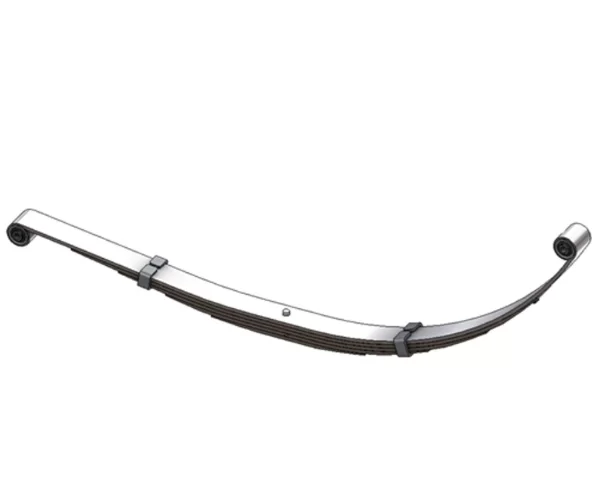
About the Dodge Durango Leaf Spring
Direct fit Dodge Durango 1st GEN 1998-2003 ONLY (6 years US production). CRITICAL GENERATION DISTINCTION: Only 1st gen Durango had rear leaf springs. 2nd gen 2004-2009 uses coil springs. 3rd gen 2011-current uses unibody all-coil multi-link suspension (Mercedes ML/Jeep Grand Cherokee platform) - no leaf springs anywhere on 2nd or 3rd gen.
1st gen Durango context: based on Dodge Dakota pickup platform (body-on-frame truck architecture). Sister vehicle: Dodge Dakota Pickup. 4-door SUV body only, 5-passenger with optional 3rd row. Engines: 3.9L Magnum V6 (base), 5.2L Magnum V8 (workhorse most common), 5.9L Magnum V8, 5.9L V8 R/T performance variant (1999-2003 with sport tuning). LA-Series Magnum engine family documented Batch 53.
Transmission: 46RE/47RE 4-speed overdrive automatic (late LA TorqueFlite heritage). Drivetrain: RWD or 4WD with genuine truck transfer case. Towing capacity ~7,300 lbs with V8. Why 1st gen had leaf springs: Dakota-based heritage with body-on-frame truck architecture compatible with leaf spring rear suspension.
Rear leaf spring: multi-leaf steel spring pack mounted between front and rear frame mounting points, connected to live rear axle. Provides suspension travel, load capacity, axle alignment, torque reaction absorption. Construction: multiple steel leaves stacked, eye bushings at mounting points, U-bolts securing axle, center pin holding leaves. Inspected for no broken leaves, bushings intact, spring pack bound, U-bolts present.
Durango Generation Suspension
- 1st Gen 1998-2003: REAR LEAF SPRINGS (Dakota-based)
- 2nd Gen 2004-2009: Coil springs rear (no leaf)
- 3rd Gen 2011-Current: Multi-link all-coil (no leaf)
- Only 1st gen relevant to this listing
1st Gen Durango Heritage
- Production: 1998-2003 (6 years)
- Platform: Dakota pickup-based body-on-frame
- Engines: Magnum V6 and V8, 5.9L R/T performance
- Transmission: 46RE/47RE 4-speed overdrive
- Drivetrain: RWD or 4WD truck transfer case
- Towing: ~7,300 lbs with V8
Vehicle Compatibility
Durango Generation Compatibility:
| Detail | Description |
|---|
| Dodge Durango 1998 (1st Year) | 1st gen original year |
| Dodge Durango 1999-2003 (1st Gen) | Leaf spring rear suspension application |
| 1st Gen Durango SLT/SXT/Limited Trims | Same leaf spring application |
| 1st Gen Durango R/T 5.9L V8 | Performance variant (may have sport-tuned springs) |
| 1st Gen Durango 4WD | Same leaf spring (different axle, same spring) |
| Sister Vehicle: | |
| Dodge Dakota 1997-2004 Pickup | Shares platform - parts may interchange |
| NOT Compatible: Dodge Durango 2004-2009 (2nd Gen) | Coil spring rear (no leaf) |
| NOT Compatible: Dodge Durango 2010 | Production hiatus year |
| NOT Compatible: Dodge Durango 2011+ (3rd Gen) | Multi-link all-coil (no leaf) |
| NOT Compatible: Other Dodge SUVs | Different vehicles |
Fitment Assistance
Call (240) 301-0095. Critical questions: (1) Year (1998-2003 1ST GEN ONLY). (2) Engine (V6 vs V8 may affect spring rating). (3) Drivetrain (RWD vs 4WD). (4) Trim (R/T performance may have different spring tuning). (5) Towing package (overload helper leaf).
Condition and Inspection
- No broken leaves Critical for safety
- Main leaf intact
- All leaves present in correct order
- Eye bushings intact Front and rear
- U-bolts present Critical for axle location
- Center pin sound
- Spring pack bound properly
- No excessive sagging
- Surface rust cleaned
- Year/configuration verified
- Donor vehicle disclosed
Why Buy from Us
- For Dodge Durango leaf spring
- 1st gen 1998-2003 expertise
- Generation distinction knowledge
- Dakota-based platform heritage
- Dodge Dakota sister vehicle context
- Body-on-frame truck architecture context
- Magnum V6/V8 engine family knowledge
- 5.9L V8 R/T performance variant heritage
- LA-Series Magnum heritage (Batch 53)
- 46RE/47RE TorqueFlite heritage
- Towing capacity context (~7,300 lbs V8)
- 2nd gen coil spring transition
- 3rd gen Mercedes/Grand Cherokee unibody platform
- Durango Hellcat ~710 HP most powerful SUV context
- DaimlerChrysler era platform engineering
- Multi-leaf spring construction expertise
- Bushing/U-bolt/center pin inspection
- No broken leaves verified
- Donor vehicle disclosed
- Free shipping all 50 states
- 15 day warranty
- No core charge
Why do only 1st gen Durangos have leaf springs?
Only 1ST GEN DODGE DURANGO 1998-2003 has rear LEAF SPRINGS because: (1) DAKOTA-BASED PLATFORM - 1st gen Durango based on Dodge Dakota PICKUP TRUCK platform. Dakota used body-on-frame truck construction with traditional leaf spring rear suspension. Durango inherited entirely. (2) BODY-ON-FRAME TRUCK ARCHITECTURE - 1st gen Durango is 4-door SUV body on Dakota truck frame. Leaf springs typical for truck rear suspension because high load/towing capacity, durability, cost-effective, proven technology. (3) TOWING CAPABILITY - leaf springs provided ~7,300 lbs towing capacity with V8 engine. (4) SISTER VEHICLE - Dodge Dakota pickup uses same leaf spring rear. Parts often interchange. (5) WHY 2ND GEN CHANGED 2004 - new body-on-frame platform independent of Dakota, COIL SPRING REAR REPLACING LEAF SPRINGS for more refined ride for family SUV use, industry trend away from leaf springs for passenger SUVs. (6) WHY 3RD GEN HAS NONE 2011+ - UNIBODY CROSSOVER based on Jeep Grand Cherokee/Mercedes ML-Class platform (DaimlerChrysler era), MULTI-LINK INDEPENDENT REAR SUSPENSION with coil springs, Mercedes engineering for refined ride, performance variants (SRT, Hellcat) require sophisticated independent rear. (7) Leaf springs SPECIFIC TO 1ST GEN 1998-2003 ONLY. (8) Call (240) 301-0095 if you have Durango 2004+ for correct rear suspension components.
What is the Dodge Durango 1st gen?
Dodge Durango 1ST GENERATION 1998-2003 (6 years) was Dodge's mid-size SUV: (1) ORIGIN - Durango launched 1998 to complement Dodge truck lineup with mid-size SUV between Dakota pickup and Ram pickup. Competed with Ford Explorer (Batch 54 vaz506), Chevy Blazer, Jeep Grand Cherokee. (2) PLATFORM - based on DODGE DAKOTA PICKUP platform with same body-on-frame chassis, drivetrain components, engines, transmissions, suspension architecture (including rear leaf springs). (3) BODY - 4-door SUV body only, no 2-door, with optional 3rd row seating making 5-7 passenger capacity. (4) ENGINES: 3.9L Magnum V6 (base ~175 HP), 5.2L Magnum V8 (workhorse ~230 HP), 5.9L Magnum V8 (~250 HP), 5.9L V8 R/T 1999-2003 (performance variant with bigger cam, better exhaust, sport tuning ~250-260 HP). (5) TRANSMISSIONS: 46RE/47RE 4-speed overdrive automatic (late LA TorqueFlite). (6) DRIVETRAIN: RWD standard, 4WD optional with genuine truck transfer case. (7) TOWING: ~7,300 lbs V8 (excellent for SUV of era). (8) MARKET POSITION: family SUV with truck capability for buyers wanting space plus towing/off-road. (9) SUCCESSOR: 2nd gen 2004-2009 with new platform, coil springs, more refined approach. (10) LEGACY: 1st gen Durango represents truck-based family SUV era before SUVs moved toward crossover/unibody designs.
What was the Durango R/T?
The Dodge DURANGO R/T was PERFORMANCE VARIANT of 1st gen Durango 1999-2003 (5 years): (1) R/T DESIGNATION - 'Road/Track' designation from Dodge performance heritage (going back to Mopar muscle car era 1968+). Applied to performance variants across Dodge lineup. (2) ENGINE - 5.9L MAGNUM V8 with R/T-specific modifications: (a) Bigger camshaft for more aggressive lift/duration. (b) Better exhaust system (sportier sound, less restriction). (c) Tuned induction. (d) Approximately 250-260 HP (slightly more than standard 5.9L). (3) SUSPENSION - sport-tuned: (a) Stiffer leaf springs (rear). (b) Stiffer shocks. (c) Sport-tuned ride height. (4) STYLING - R/T-specific: (a) R/T badging. (b) Specific wheel design. (c) Bold paint colors available. (d) Sometimes hood scoop. (5) INTERIOR - sport-themed appointments. (6) PRODUCTION - approximately 8,000-10,000 R/T units per year (small portion of total Durango production). (7) MARKET POSITION - performance family SUV for buyers wanting more capable Durango. Competed with: Ford Explorer Sport Trac R/T-like variants, Jeep Grand Cherokee 5.9 Limited. (8) DISCONTINUATION - R/T discontinued with 1st gen Durango 2003. 2nd gen Durango 2004-2009 had Magnum SXT/SLT/Limited but no R/T variant. (9) MODERN R/T RETURN - 3rd gen Durango 2011+ has R/T trim and SRT performance variant (6.4L HEMI ~475 HP) and Hellcat (6.2L Supercharged HEMI ~710 HP MOST POWERFUL SUV EVER). The R/T heritage continues. (10) FOR LEAF SPRING SPECIFICALLY - 1st gen R/T may have sport-tuned leaf springs different from standard Durango. Verify trim level when ordering.
How are the Durango and Dakota related?
The Dodge DURANGO 1st gen and DODGE DAKOTA pickup are DIRECT SISTER VEHICLES (1998-2003): (1) PLATFORM SHARING - 1st gen Durango based on Dakota Pickup platform: (a) Same body-on-frame chassis. (b) Same wheelbase and dimensions (Durango slightly stretched). (c) Same engine bay layout. (d) Same drivetrain mounting. (2) SHARED COMPONENTS: (a) ENGINES - 3.9L Magnum V6, 5.2L Magnum V8, 5.9L Magnum V8 (all same engines in Dakota of same year). (b) TRANSMISSIONS - 46RE/47RE 4-speed overdrive automatic. (c) FRONT SUSPENSION - independent torsion bar setup similar architecture. (d) REAR SUSPENSION - LEAF SPRING with live axle (same architecture, possibly same parts). (e) TRANSFER CASES (4WD). (f) Brakes, steering, many other components. (3) DIFFERENCES: (a) Body - Durango has 4-door SUV body with cargo area, Dakota has cab and bed configuration. (b) Length - Durango slightly longer. (c) 3rd row seating optional in Durango (not in Dakota). (d) Some interior trim differences. (4) DAKOTA HISTORY - Dodge Dakota produced 1986-2011 (25 years) as mid-size pickup. Sister vehicle relationship with Durango 1998-2003 was 1st gen Durango era. (5) PARTS INTERCHANGE - many mechanical parts interchange directly between 1st gen Durango and contemporary Dakota of same year. (6) LEAF SPRINGS specifically - 1st gen Durango leaf springs MAY interchange with Dakota of same era, but specific spring rate may differ due to Durango's SUV body weight vs Dakota truck cargo capacity. Always verify exact fitment. (7) DAKOTA DISCONTINUED 2011 - Dakota production ended 2011 as Dodge focused on Ram pickup line. 2nd gen Durango (2004-2009) was no longer based on Dakota platform. (8) FOR CUSTOMERS - if you can't find Durango-specific leaf springs, Dakota same-year leaf springs may work as substitution (verify rate/length match). Call (240) 301-0095.
What was the 2010 Durango hiatus?
The Dodge Durango had ONE-YEAR PRODUCTION HIATUS in 2010 due to CHRYSLER BANKRUPTCY: (1) BACKGROUND - Chrysler Corporation faced existential crisis 2008-2009: (a) 2008 financial crisis affected auto sales massively. (b) Chrysler had been struggling under Cerberus Capital Management ownership 2007-2009 (after DaimlerChrysler dissolution 2007). (c) Sales declining, cash flow issues. (d) Federal government provided bridge loans but couldn't sustain Chrysler indefinitely. (2) CHAPTER 11 BANKRUPTCY 2009 - Chrysler filed Chapter 11 bankruptcy April 30, 2009. Federal government and Fiat partnered to restructure Chrysler: (a) FIAT acquired stake in Chrysler. (b) Federal loans/guarantees. (c) Operational restructuring. (d) Brand consolidation. (3) PRODUCT IMPACT - During bankruptcy/restructuring 2009-2010: (a) Multiple model discontinuations (Plymouth had already ended 2001). (b) Some products paused for restructuring. (c) DURANGO 2010 NOT PRODUCED - the 2nd gen Durango ended 2009 model year, and the all-new 3rd gen Durango wasn't ready until 2011 model year. (d) HIATUS 2010 - no Dodge Durango sold for 2010 model year. (4) 3RD GEN LAUNCH 2011 - Durango returned with all-new 3rd generation based on Jeep Grand Cherokee/Mercedes ML-Class platform. (5) FIAT-CHRYSLER ERA - Chrysler became Fiat-Chrysler Automobiles (FCA) and eventually Stellantis (2021 merger with PSA Group). (6) DURANGO 3RD GEN SUCCESS - 3rd gen Durango has been very successful: family SUV positioning, performance variants (R/T, SRT, Hellcat), continuing production through current. (7) THE 2010 HIATUS is curious automotive footnote - very few vehicles have one-year production gaps, but Durango bridged 2nd gen end to 3rd gen launch with this hiatus. (8) FOR PARTS - 2009 Durango (last 2nd gen) and 2011 Durango (first 3rd gen) are completely different vehicles with completely different platforms and parts. No 2010 Durango exists to source parts from.
How does the Durango Hellcat compare to other SUVs?
The Dodge DURANGO HELLCAT (2021+) is MOST POWERFUL SUV EVER PRODUCED: (1) ENGINE - 6.2L SUPERCHARGED HEMI V8 producing ~710 HP and 645 lb-ft torque. Same engine family as: Dodge Challenger Hellcat, Charger Hellcat, Jeep Grand Cherokee Trackhawk. Eaton supercharger forced induction. (2) PERFORMANCE: 0-60 mph in ~3.5 seconds (FASTER than most sports cars), quarter-mile in 11.5 seconds, top speed ~180 mph. (3) DRIVETRAIN: AWD STANDARD (necessary for putting 710 HP to ground), 8-speed automatic transmission, all-wheel-drive system. (4) WHY MOST POWERFUL EVER - until Durango Hellcat, no production SUV had 710 HP. Even Lamborghini Urus (~641 HP) and Aston Martin DBX 707 (~697 HP) couldn't match. Now various competitors approach but Hellcat retains crown. (5) PRODUCTION VOLUME - VERY LIMITED. Approximately 2,000 Durango Hellcats per year (most years). Sells out immediately upon release. (6) MSRP $80,000-90,000+ (significantly more than standard Durango ~$35,000). (7) WHY DODGE BUILT IT - showcase for HEMI Hellcat engine technology, halo vehicle for Durango lineup, market position vs competitors trying to enter performance SUV space, demonstrating American engineering at maximum power. (8) DRIVING CHARACTER - despite 7-passenger family SUV body: aggressive launch from stop, supercar-pace acceleration, hilarious power-to-weight ratio, comfortable enough for daily driving, family-capable but performance-focused. (9) THE DURANGO HELLCAT represents PINNACLE of American performance SUV thinking - take family vehicle and add Hellcat engine. (10) AS COLLECTOR VEHICLE - Durango Hellcats are appreciating in value: limited production, unique market position, peak ICE performance era before electrification, Hellcat name brand value. (11) FOR LEAF SPRING SPECIFICALLY - Durango Hellcat is 3rd gen (2011+) which uses unibody multi-link rear suspension with COIL SPRINGS - NO LEAF SPRINGS. The Hellcat-specific suspension is electronically-controlled adaptive damping. Completely different from 1st gen Durango leaf springs that this listing covers.
How do I install a leaf spring?
1st gen Durango leaf spring installation is MODERATE-DIFFICULT DIY task (CRITICAL safety component): (1) SAFETY: leaf spring service involves lifted vehicle, heavy components, and critical safety system. Professional installation recommended for most owners. (2) PREP: park on level surface, engage parking brake. Penetrating oil on all bolts/nuts (allow time to work). (3) LIFT vehicle on jack stands at rated frame points (vehicle must be safely supported - leaf springs are heavy and vehicle/wheels need to clear). (4) Support REAR AXLE with jack stands or hydraulic jack independently of frame. (5) REMOVE WHEEL/TIRE on affected side. (6) Disconnect SHOCK ABSORBER lower mount (if shock interferes with spring removal). (7) Disconnect any BRAKE LINE BRACKETS attached to spring (don't disconnect brake lines themselves). (8) REMOVE U-BOLTS securing axle to spring (typically 4 large nuts, may be very rusty - heat or penetrating oil may be needed). (9) Lower axle slightly to separate from spring. (10) Disconnect FRONT SPRING EYE BOLT (where spring mounts to frame at front). (11) Disconnect REAR SPRING SHACKLE BOLT (where spring mounts to rear shackle). (12) Remove old spring (HEAVY - ~30-60 lbs per spring, two-person job). (13) INSTALL NEW SPRING: (a) Position new spring in mounting points. (b) Install front eye bolt hand-tight. (c) Install rear shackle bolt hand-tight. (d) Position axle on spring center pin (spring's center pin locates axle on spring). (e) Install U-bolts hand-tight first. (f) Tighten everything to specifications (typically 80-120 lb-ft U-bolts, varies by configuration). (14) Reconnect shock absorber and any brake brackets. (15) Reinstall wheel/tire. (16) Lower vehicle. (17) Test drive at low speed first - listen for noises, check for proper ride height. (18) Re-torque U-bolts after few hundred miles (settling can loosen). 2-4 hours typical. PROFESSIONAL INSTALLATION advised: this is critical safety component, requires proper tools (impact wrench for U-bolts, jack stands rated for vehicle weight), proper torque specifications. Bad installation can result in axle shifting or spring failure on road.
How does shipping work?
Free shipping to all 50 US states. Dodge Durango leaf spring is HEAVY component (30-60 lbs per spring) shipped via freight LTL trucking typically (5-10 days transit) due to weight and length. Smaller donor pool than mainstream vehicles - 1st gen Durango 1998-2003 production was significant but vehicles are aging out. Aftermarket replacement leaf springs widely available (Moog, MOOG Chassis, Mevotech) if used OE not available. Consider replacement of both rear springs together (paired replacement) for balanced ride and consistent wear.