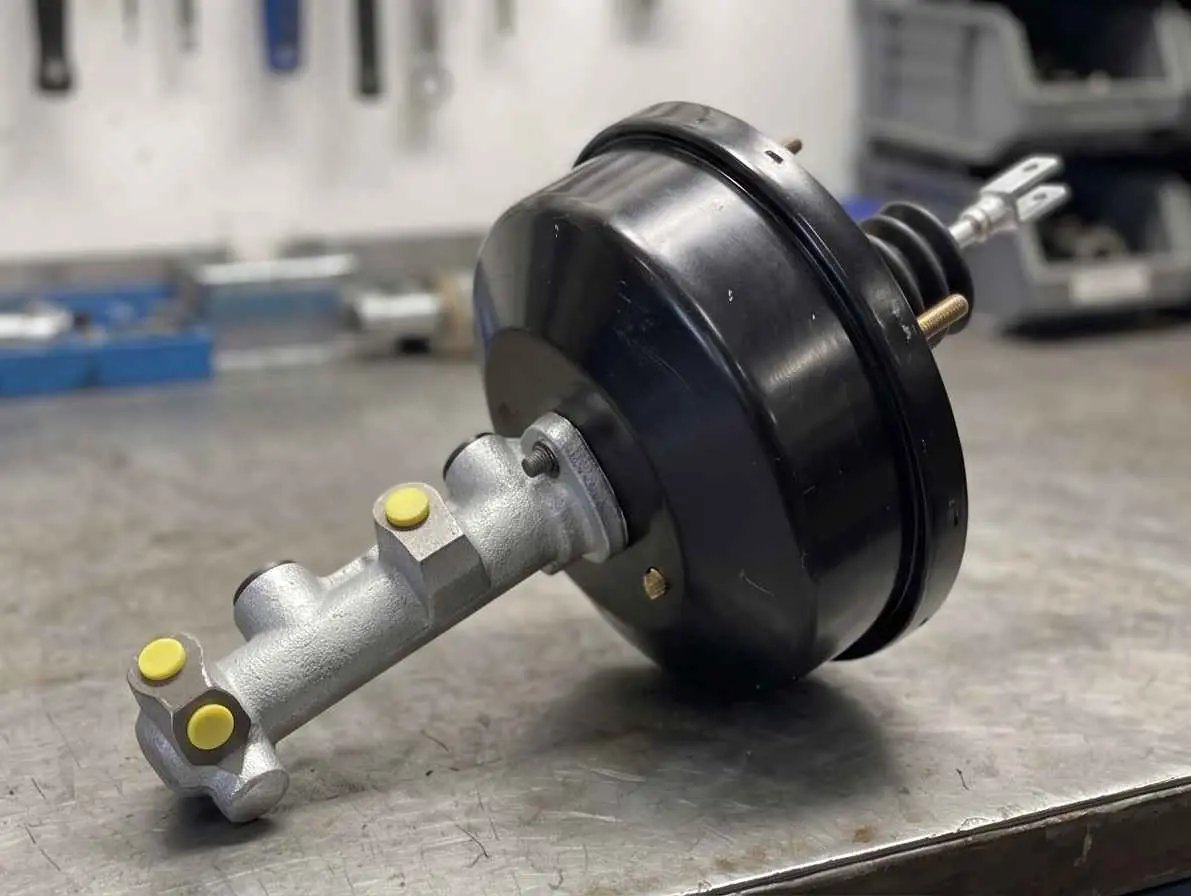
Direct fit Fiat 124 Italian compact 1966-1985. US market 1968-1974 sedan/coupe/wagon, Spider continued through 1985 (Pininfarina-built 1981-1985 era). EUROPEAN CAR OF THE YEAR 1967. Highly influential design with massive international license production.
Body variants: Berlina (sedan), Coupe, Spider (Pininfarina convertible), Familiare (wagon). Engines: 1.2L-2.0L OHC Lampredi-designed (famous Ferrari V12 designer's Fiat work).
Brake booster = vacuum-assisted brake servo. Standard automotive component on many 124 variants. Cross-reference international license production: LADA VAZ-2101 (Soviet, 19+ MILLION produced 1970-1988, excellent parts source), Premier 118NE (Indian), SEAT 124 (Spanish), Tofas Murat 124 (Turkish). Inspected for diaphragm, vacuum leaks, mounting.
Fiat 124 Vehicle Context
Production: 1966-1985 Italian (Spider through 1985)
US market: 1968-1974 most variants, Spider through 1985
For Fiat 124 brake booster (Italian vintage classic)
European Car of the Year 1967 heritage
All body variants supported (Berlina/Coupe/Spider/Familiare)
Pininfarina Spider 1981-1985 expertise
All Lampredi OHC engine variants
Lampredi engine heritage (Ferrari V12 designer)
LADA VAZ-2101 cross-reference (19+ million Soviet production)
Excellent Lada parts source access
Premier 118NE cross-reference (Indian)
SEAT 124 cross-reference (Spanish)
Tofas Murat 124 cross-reference (Turkish)
Diaphragm integrity verified
Vacuum leak tested
Mounting surfaces inspected
Master cylinder mating verified
Check valve function tested
Italian vintage Fiat specialist
Donor vehicle disclosed
Free shipping all 50 states
15 day replacement warranty
No core charge
Part Type
Vacuum-assisted brake servo (booster)
Vehicle Application
Classic Fiat 124 Italian compact
Production Era
1966-1985 Italian (Spider through 1985)
Us Market
1968-1974 sedan/coupe/wagon, Spider 1968-1985
Award
European Car of the Year 1967
Body Variants
Berlina, Coupe, Spider, Familiare
Engines
1.2L, 1.4L, 1.6L, 1.8L, 2.0L OHC Lampredi
Spider Designer
Pininfarina
Engine Designer
Aurelio Lampredi (ex-Ferrari V12)
Approximate Weight
5 to 10 lbs
Installation Difficulty
Moderate, 2-3 hours, brake bleeding required
Service Life
Many decades, replacement for age
Donor Disclosed
Brand, variant, year, engine, mileage
Price
$149.00
Bonaventure Constantinescu-Stoianescu
Replaced brake booster on my 1972 Fiat 124 Berlina (4-door sedan, 1.4L Lampredi OHC engine, US-market). Vaz immediately educated me on the cross-reference options and sourced from a 1985 Lada VAZ-2101 donor (Soviet license production, mechanically identical to my Fiat 124 brake system). Diaphragm integrity perfect, no vacuum leaks, check valve functioning. Took 19 days for sourcing through European parts dealer. Installed at my vintage Italian specialist with proper brake bleeding. Brake pedal e
Wenceslaa Wojtkiewicz-Mickiewicz
Bought brake booster for my 1976 Fiat 124 Spider (Pininfarina convertible, 1.8L Lampredi OHC, US-market). Vaz emphasized the Lampredi engine heritage (Ferrari V12 designer's Fiat work) and the Pininfarina design context. Sourced from a 1980 Pininfarina Azzurra donor (late Pininfarina-built Spider era 1981-1985, but my 1976 donor matched US-spec brake configuration). One star off because the Pininfarina-era donor needed master cylinder mating verification - my 1976 used slightly different master
Did the Fiat 124 have power brake boosters as standard?
Brake boosters were common but not universal on Fiat 124. Boosters were typically standard on higher-trim variants and most US-market 124s (US safety expectations were higher than some European markets). Variants included: 124 Berlina (most had booster), 124 Coupe (typically had booster), 124 Spider (typically had booster, especially US-market), 124 Familiare (most had booster). Some basic European variants had non-boosted brakes (smaller engines, lighter vehicles, lower-trim economy versions). Verify your specific 124 variant configuration before ordering.
Will a Lada VAZ-2101 brake booster fit my Fiat 124?
YES, very likely. The Lada VAZ-2101 (also called Zhiguli, exported as Lada 1200/1300/1500) was direct Fiat 124 license production in Soviet Union/Russia by AvtoVAZ starting 1970. Lada VAZ-2101 is mechanically very similar to original Fiat 124 (sharing platform, engines, suspension, brakes). Brake boosters cross-reference directly. The Lada was produced in MASSIVE numbers - approximately 19+ million units 1970-1988, one of highest-production cars in history. This makes Lada VAZ-2101 EXCELLENT parts source today, especially due to active restoration community in former Soviet states. Cross-reference parts often available at lower cost than direct Italian Fiat 124 donors.
How was the Fiat 124 so internationally influential?
The Fiat 124 became one of the most internationally-licensed cars in automotive history. Reasons: (1) European Car of the Year 1967 - prestigious award validation. (2) Modern design with FWD layout influence (though 124 was RWD), independent suspension, disc brakes. (3) Right-sized vehicle for many international markets. (4) Fiat had strong international licensing strategy. License production: Soviet Lada VAZ-2101 (19+ million units, longest-running), Premier 118NE India, SEAT 124 Spain, Tofas Murat 124 Turkey, Murat in Egypt, various other markets. Total worldwide production of Fiat 124-based vehicles is in tens of millions, possibly highest of any single car design in history.
What's special about Lampredi engines in Fiat 124?
Aurelio Lampredi (1917-1989) was famous Italian automotive engineer who designed the OHC engines used throughout Fiat 124 production. His significance: (1) Earlier designed famous Ferrari V12 Grand Prix and sports car engines at Ferrari. (2) Joined Fiat 1955, designed many Fiat engines including the 124 family OHC inline-4s. (3) The Fiat 124 OHC engines (1.2L through 2.0L) were praised for smooth operation, good fuel economy, performance potential. (4) Engines continued in production for decades through Lada production. (5) Same engine family appeared in Fiat 125, Fiat 131, Fiat 132, with various refinements. The Lampredi engine in your Fiat 124 has Ferrari racing pedigree heritage.
How does a vacuum brake booster work?
Operation: (1) Engine running creates vacuum in intake manifold during operation. (2) Vacuum hose connects intake manifold to brake booster. (3) Booster stores vacuum in internal diaphragm chamber when not braking. (4) When driver presses brake pedal, valve opens allowing atmospheric pressure to enter one side of diaphragm while other side maintains vacuum. (5) Pressure differential pushes diaphragm, multiplying driver's pedal force. (6) Multiplied force transfers to master cylinder push rod, creating brake hydraulic pressure. (7) Check valve prevents vacuum loss when engine off (allows some braking with engine off but not as effective). Without booster, drivers would need much higher pedal effort - boosters typically multiply effort 2-4x.
How do I install a brake booster?
Moderate work: (1) Remove brake fluid reservoir cover, suction out fluid from master cylinder. (2) Disconnect brake lines from master cylinder (catch fluid). (3) Disconnect master cylinder from booster (mounting bolts). (4) Remove master cylinder. (5) Disconnect vacuum hose from booster. (6) From inside cabin, disconnect brake pedal push rod (clip or pin). (7) Remove booster mounting bolts (typically 4 studs to firewall). (8) Remove old booster from engine bay. (9) Install new booster, tighten mounting bolts to spec. (10) Reconnect brake pedal push rod. (11) Install master cylinder with new gasket if applicable. (12) Reconnect brake lines. (13) Reconnect vacuum hose. (14) BLEED ENTIRE BRAKE SYSTEM. (15) Test brake operation before driving. 2-3 hours typical. Brake bleeding ALWAYS required.
How does international sourcing work for Fiat 124 parts?
Multiple sources available: (1) Italian vintage Fiat specialists (direct OEM origin). (2) LADA VAZ-2101 donors from former Soviet states (excellent cross-reference, massive production volume keeps parts available, lower cost). (3) Premier 118NE donors from India. (4) SEAT 124 donors from Spain. (5) Tofas Murat 124 donors from Turkey. The Lada cross-reference is particularly valuable due to massive production and active restoration community. Sourcing 14-30 business days typical including international transit and customs.
How does shipping work?
Free shipping to all 50 US states. Brake booster weighs 5-10 lbs in padded box with vacuum port protection. UPS or FedEx Ground for US transit (3-7 days). International sourcing transit 7-14 days plus customs. Total 14-30 business days. Bubble wrap, ports and mounting studs protected to prevent damage.
15 Day Replacement Warranty
Covered:
Defects at delivery (diaphragm tears not disclosed, severe vacuum leaks, broken check valve)
Not Covered:
Damage from improper installation
Damage from incorrect brake bleeding
Normal age-related wear on 50+ year-old parts
Labor costs. brake bleeding required after installation. brake system safety-critical
Contact (240) 301-0095 within 15 days.
For Fiat 124 Brake Booster: Italian vintage classic
Diaphragm integrity verified: no tears, proper sealing
No vacuum leaks: pressure tested
Mounting surfaces intact: firewall studs
Master cylinder mating surface: output flange
Brake pedal linkage connection: push rod
Check valve function: vacuum retention
Vacuum hose fitting: inlet connection
Fitment Verified: Confirm by VIN before order
Photos Available on Request: Actual unit condition