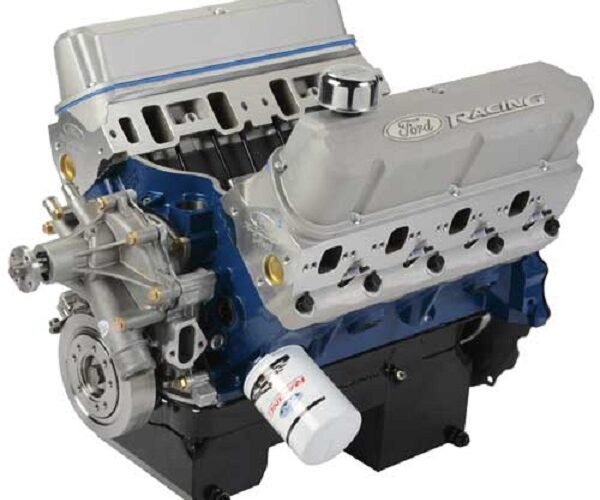
About the Ford 460 Engine
The Ford 460 engine is a true powerhouse that stands out in the world of performance engines. With its impressive displacement of 460 cubic inches (7.5 liters), this Lima big block V8 delivers unparalleled power and torque for a wide range of applications. Whether you're upgrading your classic Ford truck, restoring a 1970s Lincoln Continental, building a high-performance street rod, or repowering a motor home, the Ford 460 engine remains a top choice for enthusiasts and professionals alike. Part of the Ford 385-series Lima big block family (which also includes the 429), the 460 was produced from 1968 through 1997 and powered some of Ford's most iconic heavy-duty trucks and luxury vehicles.
Why the Ford 460 is the Most Popular Ford Big Block
Buyers choose the Ford 460 because:
- Massive low-end torque: The 460 delivers 350+ lb-ft of torque at low RPM, ideal for towing, hauling, and motor home use
- Proven durability: The iron block and Lima big block architecture handle decades of heavy use, with many examples reaching 300,000+ miles
- Excellent aftermarket support: Performance heads, cams, intakes, headers, and forced induction kits are widely available from Edelbrock, Trick Flow, Holley, and others
- Build potential: With the right components, the 460 produces 500 to 700+ wheel horsepower naturally aspirated, and 800 to 1,200+ wheel horsepower with proper turbocharging or supercharging
- Wide vehicle support: Sourced from F-Series trucks, Broncos, Lincolns, Mercuries, motor homes, and marine applications
- Affordable: Used Ford 460 long blocks are some of the most cost-effective ways to get big block V8 power
- Ford passenger car heritage: Found in iconic 1970s Lincoln Continentals, Mercury Marauders, and Cougars
The Ford 460 Variant Family
| Detail | Description |
|---|
| Pre-1973 460 | Open chamber cylinder heads, higher compression (10.5:1 to 11.0:1), passenger car focus. Used in Lincoln Continental, Mercury Cougar, and select Ford passenger cars. |
| 1973 to 1979 460 | Closed chamber heads, lowered compression (8.0:1 to 8.5:1) for emissions and unleaded fuel. Used widely in F-Series trucks and motor homes. |
| 1980 to 1987 460 (Truck) | Continued truck and motor home use. Various emissions and fuel injection updates over the decade. |
| 1988 to 1997 460 EFI | Electronic Fuel Injection (EFI) variant. Ford EFI big block, used in F-Series Super Duty trucks. The most modern factory 460 variant. |
Signs You Need a Replacement Ford 460
- Knock or rattle on cold start (rod or main bearing wear)
- Loss of compression on one or more cylinders
- Excessive oil consumption beyond normal range
- Lifter tick or noisy valve train (especially on flat-tappet pre-1990 variants)
- Coolant in oil or oil in coolant (head gasket failure, often from overheating)
- Oil pump failure causing low oil pressure
- Building a swap project (1970s/1980s Ford trucks, classic Broncos, hot rods, motor home repower)
- Replacement of seized engine in donor truck, motor home, or boat
- Drag racing build foundation
Known Ford 460 Issues We Inspect Before Shipping
- Compression on all 8 cylinders, the leading indicator of overall condition
- Cam lobe wear inspected (especially on flat-tappet pre-1990 variants)
- Lifter condition checked
- Block deck flatness assessed for any signs of head gasket damage
- Open chamber vs closed chamber heads identified and photographed (critical for proper compression ratio matching)
- Bell housing pattern verified (truck/van vs passenger car patterns differ)
- Donor application documented when available
What Is Included, What Is Not Included
| Item | Details |
|---|
| INCLUDED | Long block: block, crankshaft, rods, pistons, camshaft, lifters, heads, valve train, oil pan, valve covers, intake manifold (typical for older variants), harmonic balancer. |
| NOT INCLUDED | Carburetor or EFI throttle body (varies by year), ECU and harness on EFI variants (sold separately), distributor and ignition (often sold separately), alternator, starter, A/C compressor, power steering pump, flywheel/flexplate, motor mounts, exhaust manifolds. |
| Fluids | Drained before shipping. Refill with 10W-30 or 10W-40 motor oil for street use. |
| Core Note | No core charge. You are not required to return your old engine. |
Vehicle Compatibility
The Ford 460 was a direct fit in the following vehicles (specific year and chamber type matters, confirm before order):
| Vehicle | Compatibility |
|---|
| Ford F-100 / F-150 / F-250 / F-350 | 1973 to 1997 (truck variants), some 1968 to 1972 with passenger car spec swaps |
| Ford Bronco | 1978 to 1996 (full-size Bronco, optional 460 in select years) |
| Ford E-Series Vans (E-250, E-350) | 1975 to 1996 |
| Lincoln Continental | 1968 to 1979 (passenger car variant, open chamber heads) |
| Lincoln Mark III, IV, V | 1968 to 1979 |
| Mercury Cougar XR-7, Marauder | 1969 to 1973 (limited applications) |
| Mercury Cyclone, Montego | Limited applications |
| Motor Home Chassis (Class A) | Widely used 1973 to 1997 (Ford P-Series chassis, Winnebago, Coachmen, etc.) |
| Marine Inboard Applications | Common boat repower base, especially big inboard cruisers |
Common Ford 460 swap applications: 1948 to 1972 Ford F-Series trucks, classic Broncos (early Bronco swap), Cobra kit cars, drag racing, motor home repower, marine inboard repower, classic muscle car restorations.
Condition and Inspection
Every used Ford 460 we ship goes through this process:
- Compression test across all 8 cylinders, pressure per cylinder recorded
- Cam lobe wear inspected (especially flat-tappet pre-1990 variants)
- Lifter condition verified
- Visual inspection of block deck, head surfaces, oil galleries, cam tunnels
- Open chamber vs closed chamber head configuration identified
- Bell housing pattern verified (truck/van vs passenger car differ)
- Block code stamping documented when visible
- Donor application and approximate mileage documented where available
Where donor mileage is verified, it is shared. Where mileage cannot be confirmed, we disclose this openly before payment.
Why Buy From Vaz Auto Solutions
- All 8 cylinders compression tested, results before you pay
- Open chamber vs closed chamber head configuration documented
- Bell housing pattern verified (critical for transmission compatibility)
- Cam and lifter condition inspected
- Donor application documented when available
- Free crated freight to all 50 states, no hidden fees
- No core charge, keep your old engine
- 15 day replacement warranty on internal defects
- Ford big block experienced support team on the phone
What type of fuel does the Ford 460 engine require?
The Ford 460 engine is designed to run on regular unleaded gasoline with an octane rating of at least 87. Pre-1973 high-compression variants (10.5:1 or higher) may benefit from premium 91+ octane fuel to prevent knock. Variants with 8.0:1 to 8.5:1 compression run safely on regular 87 octane.
How often should I change the oil in my Ford 460 engine?
Change the oil every 5,000 miles or every six months, whichever comes first, using 10W-30 or 10W-40 conventional or synthetic oil for street use. For motor home or heavy-towing use, more frequent changes (every 3,000 miles) are recommended.
Can I use aftermarket performance parts on my Ford 460 engine?
Yes. The Ford 460 has excellent aftermarket support. Common upgrades include performance cylinder heads (Edelbrock Performer RPM, Trick Flow PowerPort), performance camshafts, dual-plane and single-plane intake manifolds, headers, electronic ignition conversions, and fuel injection conversions. The 460 is also a popular foundation for turbocharger and supercharger builds.
What is the towing capacity of a vehicle equipped with a Ford 460 engine?
A vehicle equipped with a Ford 460 engine typically has a towing capacity of up to 10,000 pounds in factory truck applications, but actual capacity varies depending on transmission, axle ratio, brake system, and chassis. Class A motor home applications regularly use the 460 to move 25,000+ lb GVWR motor coaches.
Does the Ford 460 engine have any common issues or known problems?
Common 460 issues include overheating (especially in motor home applications without proper cooling), oil leaks (rear main seal and oil pan gasket are common), exhaust manifold cracking, intake manifold gasket leaks, and timing chain wear on high-mileage units. The 460 is otherwise extremely durable when properly maintained.
Is it possible to rebuild a Ford 460 engine myself?
Rebuilding a Ford 460 is feasible for an experienced DIY mechanic with the right tools (engine stand, torque wrench, ring compressor, valve spring compressor, etc.) and access to a machine shop for block work. The 460 is a relatively simple OHV pushrod engine. Less experienced builders should seek professional assistance or use a remanufactured assembly.
What vehicles are commonly found with a Ford 460 engine?
The Ford 460 was commonly found in larger vehicles such as Ford F-Series trucks (F-100, F-150, F-250, F-350), Ford Bronco, Ford E-Series vans, Lincoln Continental, Lincoln Mark series, Mercury Cougar XR-7, Mercury Marauder, motor home chassis (Class A), and marine inboard applications. The engine was produced from 1968 through 1997.
What's the difference between open chamber and closed chamber heads?
Open chamber heads (pre-1973) have a larger combustion chamber volume that yields lower compression with a given piston, originally designed for higher-compression performance applications. Closed chamber heads (1973+) have smaller combustion chamber volume that requires lower-compression pistons, designed for unleaded fuel and emissions compliance. Mixing chamber types without matching pistons causes major compression ratio problems.