
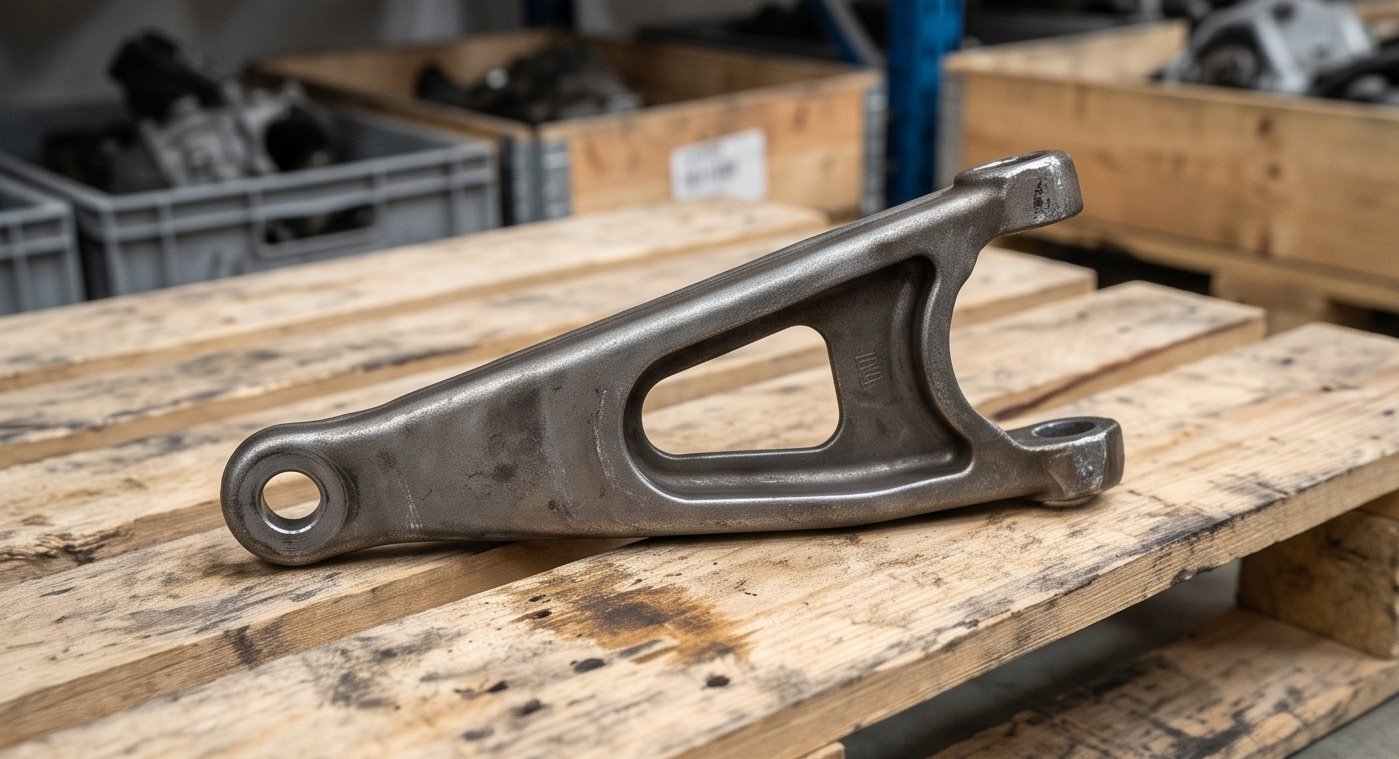



The clutch fork is one of those parts you do not think about until it fails, and when it fails, the clutch stops working. The Mini Cooper R-series in particular has a reputation for clutch pivot failures, where either the ball stud snaps or the fork pivot socket wears badly, and the fork pops off its pivot. The symptom is sudden: one moment the clutch is fine, the next moment the pedal goes to the floor and the clutch never disengages. The car can be driven home in some cases by carefully matching engine speed to gear speed without using the clutch, but this is rough on the synchros and not a long-term solution.
A verified used Mini Cooper clutch fork restores OEM clutch release at a fraction of new dealer pricing. We inspect the pivot socket for wear, verify the bearing retainer tabs are intact, check the fork body for bends or cracks, and confirm the slave cylinder contact point is clean. The Mini Cooper specialist support behind us makes sure you get the right fork for your generation.
Get your Mini back on the road with a tested clutch fork today.
The Mini Cooper clutch fork is a Y-shaped or L-shaped metal lever that lives inside the transmission bellhousing. The fork's outer end extends outside the bellhousing through a slot and contacts the clutch slave cylinder pushrod. The fork pivots on a ball stud mounted to the bellhousing. The fork's inner end captures the clutch throwout bearing. When the slave cylinder extends, it pushes the outer end of the fork, the fork pivots on the ball stud, and the inner end of the fork pushes the throwout bearing into the pressure plate fingers, releasing the clutch.
The lever action multiplies the relatively small hydraulic force at the slave cylinder into the significant force needed to compress the diaphragm spring in the pressure plate. A typical Mini Cooper clutch fork provides about 3:1 or 4:1 mechanical advantage depending on the pivot location.
Clutch fluid level drops without an external leak (slave cylinder leaking into bellhousing because of fork misalignment)
Clutch pedal feel changes (becomes spongy or harder than normal)
Recent clutch installation followed by immediate release failure (fork installed incorrectly or off pivot)
Our team works with Mini Cooper R-series clutch systems regularly. We will help you confirm which generation your car is, which fork design applies, and remind you to replace the ball stud at the same time. Call (240) 301-0095 with your VIN.
| Vehicle | Compatibility |
|---|---|
| Mini Cooper R50 (first gen hardtop) | 2002 to 2006 naturally aspirated 1.6L Tritec manual transmission |
| Mini Cooper R52 (first gen convertible) | 2005 to 2008 Cooper and Cooper S manual transmission |
| Mini Cooper R53 (first gen Cooper S) | 2002 to 2006 supercharged 1.6L Tritec manual transmission |
| Mini Cooper R55 (Clubman) | 2008 to 2014 Cooper and Cooper S manual transmission |
| Mini Cooper R56 (second gen hardtop) | 2007 to 2014 Cooper and Cooper S and JCW manual transmission |
| Mini Cooper R57 (second gen convertible) | 2009 to 2015 Cooper and Cooper S manual transmission |
| Mini Cooper R58 (Coupe) | 2012 to 2015 Cooper and Cooper S manual transmission |
| Mini Cooper R59 (Roadster) | 2012 to 2015 Cooper and Cooper S manual transmission |
| NOT Compatible | Mini Cooper F-series third generation (F55/F56/F57) which often uses internal concentric slave cylinder, Mini Countryman R60/F60 (different bellhousing), and any Mini Cooper with automatic transmission (uses torque converter, not clutch fork) |
| Part Type | Clutch release fork, throwout fork, clutch arm |
|---|---|
| Vehicle Application | Mini Cooper R-series first gen (R50/R52/R53) and second gen (R55/R56/R57/R58/R59), manual transmission only |
| Construction Material | Cast steel or stamped steel, generation dependent |
| Pivot | Ball stud socket |
| Bearing Retainer | Tabs or clips on inner end |
| Slave Cylinder Contact | Outer end, external slave cylinder pushrod |
| Lever Action | Class 1 lever, approximately 3:1 to 4:1 mechanical advantage |
| Approximate Weight | 0.5 to 1 lb |
| Installation Difficulty | Advanced DIY or shop work, transmission removal required |
| Tools Needed | Transmission jack, standard hand tools |
| Coding Required | No |
| Service Life | Typically vehicle life with healthy ball stud, common failure point at high mileage |
| Price | $100.00 |
Clutch pedal went to the floor on my 2010 R56 Cooper S on a Tuesday morning. Vaz had a second-gen fork in stock, also pointed out I should grab a new ball stud while I was in there which I almost forgot. Both arrived together, installed during clutch replacement, smooth pedal feel restored. Mini Cooper specialist staff knew exactly what I needed without me having to spell it out. Great service.
Picked up a fork for my 2005 R53 Cooper S. Vaz confirmed first-gen vs second-gen design difference on the phone, sent the right one. Pivot socket measurement was within their stated specification. Bearing retainer tabs hold the throwout bearing firmly. One star off because the fork has some surface rust spots that are cosmetic but visible on close inspection. Functionally everything is right and the price was fair for a tricky Mini part.
Contact (240) 301-0095 within 15 days of delivery.


