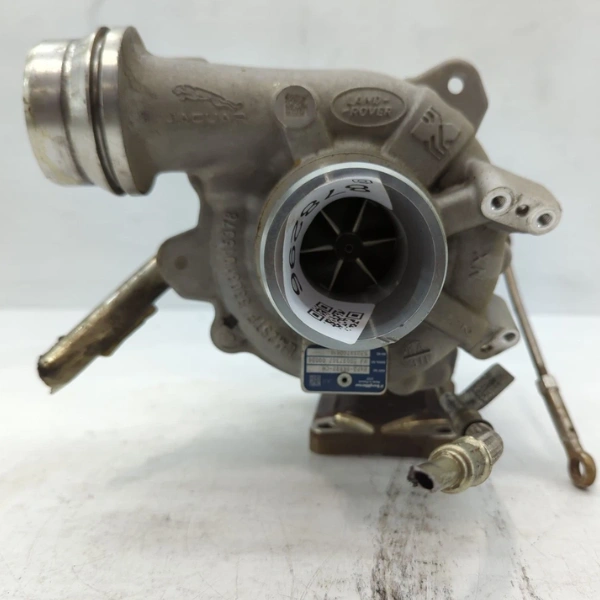
About the Jaguar F-Pace Turbocharger
The turbocharger is the F-Pace's forced-induction heart: exhaust energy spins the cast iron turbine, the aluminum compressor packs more air into the Ingenium engine, and the result is the power and efficiency the SUV was designed around. This unit runs a precision-balanced rotating assembly on a dual bearing design, oil and water cooling for the center section, and the boost control actuator, electronic or pneumatic depending on the variant, that keeps boost precise and responsive.
Why F-Pace Owners Replace the Turbocharger
Turbos fail in recognizable ways: a whining or siren noise from worn bearings, blue smoke from oil passing failed seals, boost loss with a check engine light, shaft play you can feel at the compressor wheel, and oil pooling in the intercooler piping. Oil starvation and heat cycling drive most failures, which is why the oil-supply lines and intervals matter after the swap.
Things to Confirm Before Ordering
- Your engine: this turbo serves the 2.0L Ingenium cars, not the supercharged V6 or V8 models
- The part number on your old turbocharger, the most reliable match
- Actuation type on your variant, electronic or pneumatic
- Fresh oil, a new filter, and clean oil feed lines for the install, the cheapest insurance a turbo gets
What Is Included, What Is Not Included
| Detail | Description |
|---|
| INCLUDED | The turbocharger assembly with its actuator. An installation kit with gaskets, fittings, and hardware is included; we confirm the exact kit contents for this unit at order time. |
| NOT INCLUDED | Intercooler, charge pipes, downpipe, oil and coolant lines unless stated, and fluids. |
| Tools You Need | Standard hand tools, penetrating oil for exhaust fasteners, a torque wrench, and fresh oil and filter for the post-install service. |
Which F-Pace models use this turbocharger?
The 2.0L Ingenium four-cylinder cars, in gas and diesel form. The supercharged V6 and SVR V8 models use superchargers, not this part. Send your VIN and we confirm in one step.
How do I know my turbo is failing?
A rising whine or siren noise, blue exhaust smoke, boost loss with a check engine light, visible shaft play at the compressor wheel, and oil collecting in the intercooler pipes are the classic signs.
What kills turbochargers prematurely?
Oil starvation and dirty oil, above everything else. Blocked or coked feed lines starve the bearings in minutes, which is why fresh oil, a new filter, and clean lines are non-negotiable at install time.
Should I prime the turbo before first start?
Yes. Fill the oil feed port or crank with the injectors disabled until oil pressure builds, so the bearings never spin dry. Then idle for a few minutes before any boost.
Does the actuator come with the turbo?
Yes, the actuator ships attached, and we confirm whether your variant runs the electronic or pneumatic type before shipping.
Will a worn turbo damage my engine if I keep driving?
It can. Failing seals push oil into the intake and exhaust, bearing debris can travel, and in the worst case a let-go compressor wheel feeds fragments downstream. Park it once the signs are clear.
What should I replace alongside the turbo?
Engine oil and filter at minimum, the oil feed line if there is any doubt about it, and the air filter. Inspect the intercooler and pipes for oil and clean them out.
How does a turbocharger ship?
30% off shipping to all 50 US states with fast transit, bagged and foam-packed with all ports capped so nothing enters the housings in transit.