








Description
Reliable Jeep Cherokee 4.0 Engine for Sale
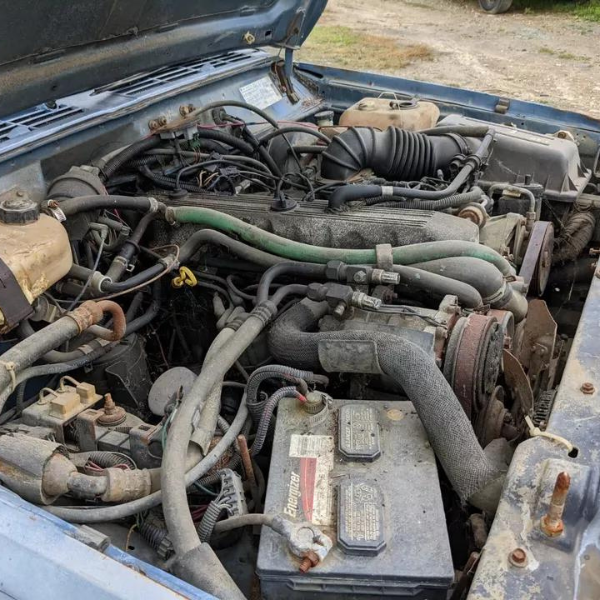
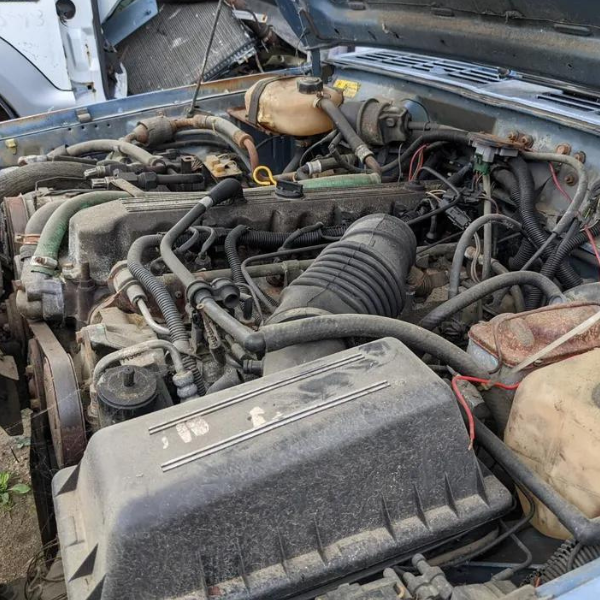
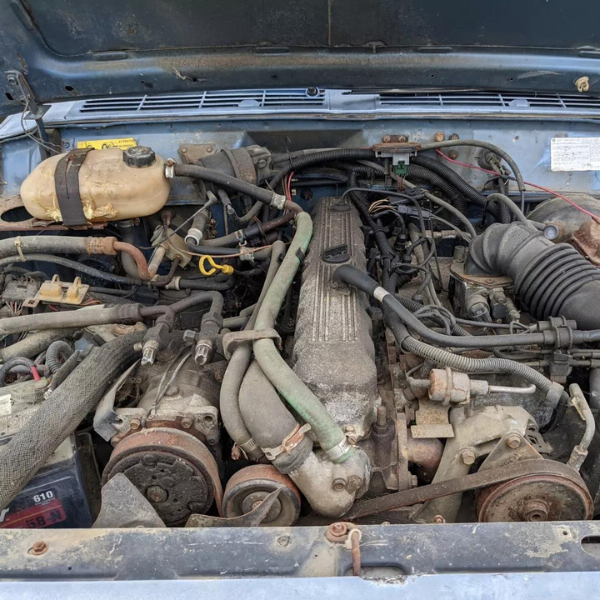
The Jeep Cherokee uses an AMC I6 engine, one of the most recognizable and longest-running engines in the history of American Motors Corporation (AMC). This Jeep 4.0 engine for sale is from the family of engines kept in production when Chrysler bought AMC in 1987. The engine is even referred to as the “Immortal Six“ because of its legendary longevity and rebuildability. Properly maintained, the 4.0 Inline-6 routinely logs 300,000+ miles between major rebuilds, putting it in the same elite reliability tier as the Toyota 22RE and the Ford 300 Inline-6.
Applications of the Jeep Cherokee 4.0 Engine
- Jeep Cherokee XJ: The 4.0 was a staple in the Cherokee XJ from 1987 to 2001. Available in both Renix-injection (1987 to 1990) and HO (High Output, 1991 onward) variants. The XJ-with-4.0 is one of the most-loved off-road platforms ever produced.
- Jeep Grand Cherokee ZJ and WJ: Used in the Grand Cherokee from 1993 to 2004 as the standard inline-6 option, paired with various automatic and manual transmissions.
- Jeep Wrangler YJ and TJ: Found in the Wrangler from 1991 to 2006. The TJ Wrangler with 4.0 became a defining off-road vehicle of its era.
- Jeep Comanche MJ: Available from 1987 to 1992, the Comanche pickup paired the XJ chassis with a truck bed for compact-truck off-road duty.
- Jeep Wagoneer XJ: Used in the XJ Wagoneer from 1987 to 1990 (the XJ-based Wagoneer, not the full-size SJ Grand Wagoneer).
- Off-Roading: The 4.0 is widely used in custom off-road builds because of its torque and ability to withstand punishment. The engine’s cast iron block, simple OHV architecture, and low parts cost make it the ideal foundation for serious wheeling builds.
- Rock Crawling: The Jeep 4.0 has low-end torque ideally suited for rock crawling. Combined with TJ / XJ chassis solid axles and proven 4WD systems, the 4.0 is the signature rock-crawler engine.
- Marine Applications: Some marine adaptations use the 4.0 because of its sturdy nature and high torque availability.
- Industrial Equipment: The 4.0 has been used in generators and pumps where reliability matters more than peak power.
- Hot Rods and Custom Cars: Some enthusiasts use the 4.0 in hot rods and custom builds for its torque-rich character and easy availability.
- Engine Swaps: The 4.0’s compact dimensions, robust torque, and simple electronics make it a popular swap target into Jeep CJ, classic Land Rover, and various restoration projects.
- Military and Specialty Vehicles: Some military vehicles and specialty off-road vehicles have relied on Jeep 4.0 engines due to the toughness associated with it in tough environments.
Variant Identification, Renix vs HO
This is the most important specification consideration when buying a Jeep 4.0:
Key Features of the Jeep Cherokee 4.0 Engine
- Engine Design and Configuration: The 4.0L engine uses an inline-six cylinder format, an arrangement that delivers smooth operation and balanced power output. With a displacement of 4.0 liters (242 cubic inches), this engine uses an OHV (Overhead Valve) cam-in-block pushrod design. As a result of this configuration, the engine is simpler and more rebuildable than overhead camshaft designs, and the 4.0 is famously easy to maintain and repair compared to many modern V6 engines.
- Performance Attributes: The 4.0 makes between 173 and 195 horsepower depending on year and variant. Torque ranges from 220 to 235 lb-ft, suitable for off-roading and towing due to strong low-end and mid-range delivery. The engine pulls hard from idle, exactly the character needed for rock crawling and trail driving.
- Durability and Reliability: The defining feature of the engine. Cast iron block AND cast iron cylinder head construction makes the 4.0 extraordinarily durable. It can comfortably exceed 300,000 miles when properly maintained. Cooling is effective when the system is well-maintained, important for off-road operation in difficult terrain.
- Ease of Maintenance: The OHV design lacks the complex features of modern overhead-cam engines and is therefore far easier to repair. Parts for the 4.0 are widely available and relatively inexpensive due to the long production run and widespread use of this engine across multiple Jeep models. This availability makes repair and maintenance accessible to all Jeep owners.
- Off-Road Capability: The 4.0’s strong low-end torque is ideal for off-road use. Climbing and crawling require adequate low-end power, and the 4.0 delivers it abundantly. Combined with strong 4WD systems in Jeep vehicles, the 4.0 is critical to the off-road performance of the Cherokee XJ, Wrangler YJ / TJ, Grand Cherokee, and Comanche MJ.
- MPFI Fuel Injection: Multi-point fuel injection (MPFI) starting in 1987 provided cleaner cold starts, better throttle response, and improved fuel economy compared to the carbureted predecessors.
Signs You Need a Replacement 4.0
- Loss of compression on one or more cylinders
- Cylinder head cracks (the 0331 casting used 2000 to 2001 is documented as crack-prone, particularly between cylinders 3 and 4)
- Excessive oil consumption past piston rings
- Connecting rod or main bearing knock under load
- Excessive blowby through the PCV system
- Donor Cherokee XJ, Wrangler, or Grand Cherokee has been totaled and the engine is being moved
- High-mileage Wrangler TJ owner planning a long-term keeper build
- XJ restoration project requiring fresh starting block
- Off-road / rock crawler build wanting a known-good base
Known Jeep 4.0 Issues We Inspect Before Shipping
- 0331 cylinder head cracks (2000-2001 castings): A documented Jeep 4.0 weakness. The 0331 cylinder head casting used on 2000 and 2001 model year engines is prone to cracking between cylinders 3 and 4. We pressure test or visually inspect heads, particularly on 2000-2001 era cores. Earlier 7120 and 0630 heads are more reliable.
- Cracked exhaust manifold: A known issue particularly on TJ Wranglers, often visible from underneath. Documented before shipping.
- Rear main seal leak: Common at high mileage. Inspected and disclosed.
- Renix vs HO confusion: We confirm variant before shipping based on year, intake manifold style, and ECU connector type.
- Connecting rod bearing wear: Listened for during run test.
- Cooling system condition: Inspected; a healthy cooling system is critical to 4.0 longevity.
What Is Included, What Is Not Included
Jeep 4.0 Myth Busters
- Myth: All Jeep 4.0 engines have overheating issues.
- Reality: Overheating is typically a result of neglected cooling systems, undersized radiators, clogged passages, or aged thermostats. Upgrading components like the radiator, fan clutch, and thermostat effectively prevents overheating issues. The 4.0 itself is not inherently prone to overheating with proper cooling system maintenance.
- Myth: The Jeep 4.0 engine is fuel-inefficient.
- Reality: While not as efficient as modern engines with direct injection and 8-speed transmissions, the Jeep 4.0 offers respectable fuel economy for its class, particularly considering its torque and capabilities. XJ Cherokee with 4.0 typically delivers 16 to 19 mpg city / 20 to 23 mpg highway depending on transmission and conditions.
- Myth: The Jeep 4.0 lacks power.
- Reality: While not the most powerful engine of its era, the Jeep 4.0’s torque-rich performance (220 to 235 lb-ft) makes it well-suited for off-road driving and towing. The torque-to-weight ratio of an XJ or TJ with 4.0 is excellent for trail use.
- Myth: All Jeep 4.0 engines suffer from cracked cylinder heads.
- Reality: Only the 0331 casting used on 2000 and 2001 model year engines is documented as crack-prone. Earlier heads (7120, 0630) and later heads are reliable. Replacement options and improved aftermarket heads (TUPY 0630, Mopar updated castings) mitigate this issue.
- Myth: The Jeep 4.0 is difficult to work on.
- Reality: The Jeep 4.0’s popularity means there is ample documentation, community support, parts availability, and aftermarket development, making it relatively easy to work on for enthusiasts and mechanics. The XJ and TJ communities have decades of accumulated knowledge.
Rex Dalton (verified owner) –
Highly impressed with the Jeep Cherokee 4.0 Engine. It’s reliable, powerful, and has brought new life to my vehicle. The engine was in great condition on arrival, and it was an easy fit. Couldn’t be happier with this purchase
Buck Anderson (verified owner) –
The Jeep Cherokee 4.0 Engine has been a fantastic upgrade. It delivers robust performance and has improved my off-road capabilities significantly. Installation was straightforward, and it’s running like a charm.