




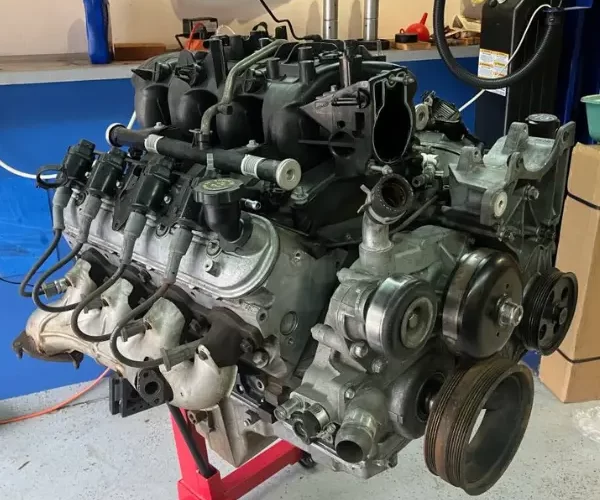
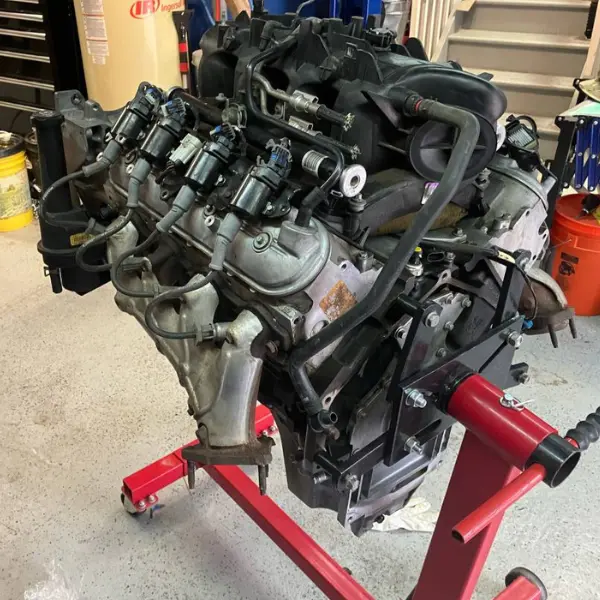
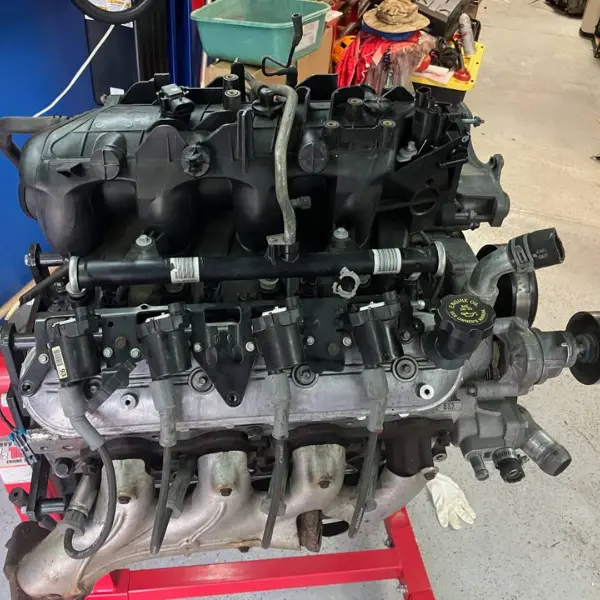


Description
About This Engine
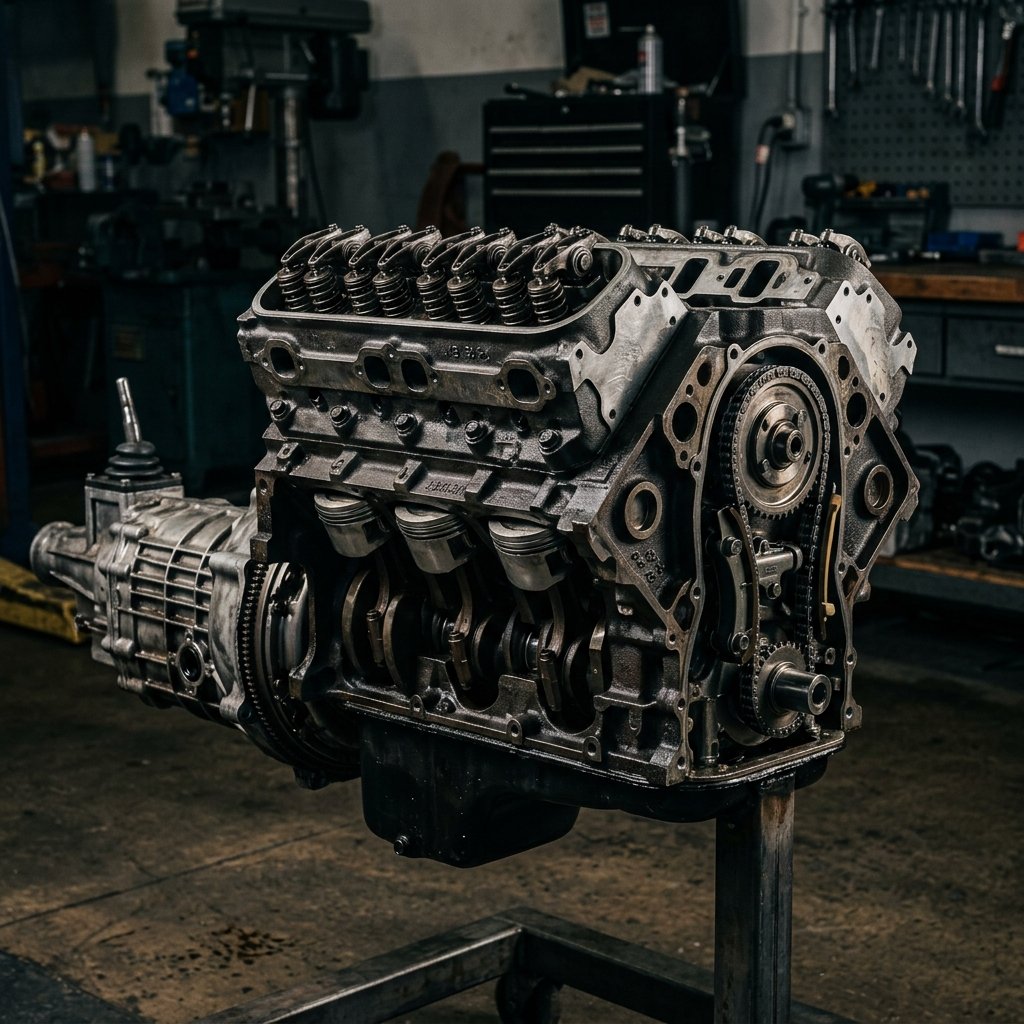
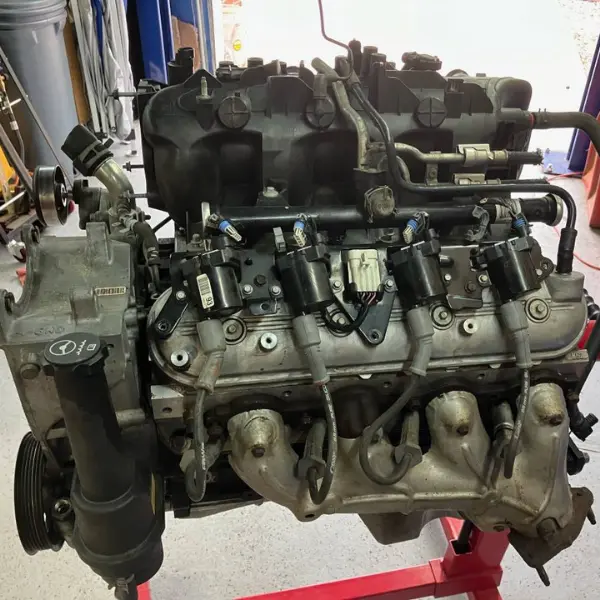
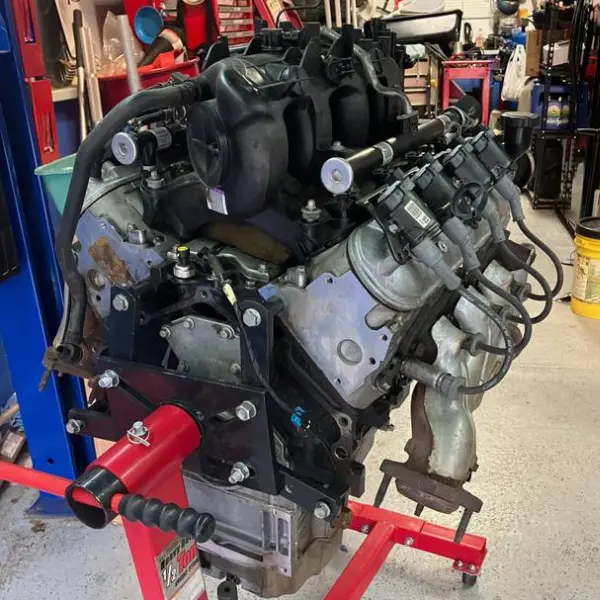
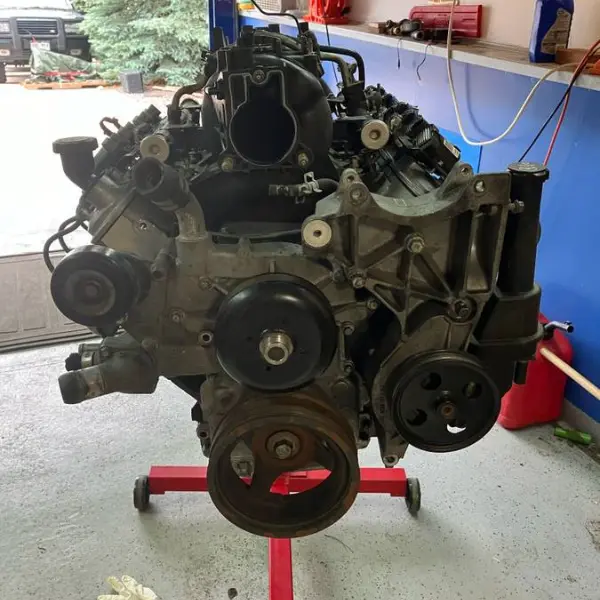
The GM 4.8L Vortec (also called the Vortec 4800) is the smallest displacement member of GM's LS-based truck engine family, produced from 1999 through 2014 across three engine code generations: the LR4 (Gen III, 1999 to 2006), the LY2 (Gen IV, 2007 to 2009), and the L20 (Gen IV with VVT, 2010 to 2014). Despite being overshadowed by the more widely known 5.3L Vortec, the 4.8L has earned a devoted following among budget-minded truck owners and LS swap enthusiasts for a combination of reasons that make it arguably more practical than its larger sibling for many applications.
The 4.8L and 5.3L share the same block casting and bore size (96mm). The only displacement difference is the stroke- 83mm on the 4.8L vs 92mm on the 5.3L. This means the 4.8L is a destroked 5.3L sharing the same externals, heads, accessories, bellhousing pattern, and swap infrastructure. The 4.8L can use any LS1-pattern mount, pan, or accessory bracket directly. What the 4.8L lacks in stroke and torque it more than compensates for in one critical area: it never used AFM (Active Fuel Management / cylinder deactivation). The 5.3L's AFM-equipped variants have a well-documented lifter collapse failure mode that has cost many owners significant repair bills. The 4.8L has no AFM lifters, no AFM solenoids, and no AFM lifter bore issues- ever.
The 4.8L is also the most popular budget LS swap engine in the American enthusiast community. Its cast iron block handles boost exceptionally well- stock bottom end 4.8Ls have been documented at 600 to 750 horsepower with turbocharger builds, outperforming many more expensive LS variants on a dollar-per-horsepower basis. The short 83mm stroke reduces piston speed at high RPM, allowing the 4.8L to rev more freely than the 5.3L- a significant advantage in forced induction applications where sustained high-RPM operation is common.
Signs You Need a Replacement Engine
- Ticking or tapping from the valve train at idle- common on high-mileage units with degraded oil or extended change intervals. Unlike the 5.3L, the 4.8L's OHV valve train noise is not related to AFM lifter collapse.
- Oil leaks at the valve covers or intake manifold- the plastic composite intake manifold on early LR4 engines (1999 to 2001) can crack from heat cycling. We inspect intake mating surfaces before shipping.
- Loss of power with no fault codes- MAF sensor contamination or throttle body carbon buildup on high-mileage units
- Coolant in the oil- intake manifold gasket failure on Gen III engines (common at high mileage), or head gasket issue on severely overheated examples
- Check engine light with cylinder misfire codes- coil-on-plug failure, the most common single-cylinder performance issue on the 4.8L
- Low oil pressure at idle- main bearing wear on very high mileage examples
Known Problems With This Engine
- Plastic intake manifold cracking on early LR4 (1999 to 2001): The early LR4 used a composite plastic intake manifold that can crack around the EGR connection or coolant crossover on high-mileage examples, causing vacuum leaks or coolant contamination. We inspect intake mating surfaces before shipping. The 2002-and-newer Gen III and all Gen IV intakes are improved aluminum units.
- LR4 vs LY2 vs L20 PCM incompatibility: The Gen III LR4 uses a P01 or P59 PCM. The Gen IV LY2 and L20 use the E38 ECM. These are not interchangeable- installing a Gen IV engine in a Gen III truck (or vice versa) without matching the PCM and wiring harness will result in a no-start or severe drivability issues. We confirm Gen III vs Gen IV before every order.
- L20 VVT complexity: The L20 added Variable Valve Timing- useful for fuel economy and power but adds an additional oil-pressure-driven mechanism requiring clean oil to function. Extended oil change intervals cause VVT phaser sludging and cam timing fault codes. We note VVT presence on all L20 units before shipping.
- Coil-on-plug failure: The 4.8L uses individual coil-on-plug ignition, one coil per cylinder. Single-coil failures cause individual cylinder misfires and P030X codes. Coils are inexpensive ($15 to $25 each) and easy to replace but should be checked at installation.
- Oil consumption on high-mileage examples: Unlike the 5.3L's AFM-related ring gap oil consumption, the 4.8L's oil consumption on high-mileage units is standard ring wear. We compression test all 8 cylinders with uniformity across cylinders as the key health indicator.
GM 4.8L Vortec Engine Variants
Three engine codes across 16 years of 4.8L Vortec production:
| Code | Years | HP | Key Features | Notes |
|---|---|---|---|---|
| LR4 | 1999 to 2006 | 255 to 285 hp | Gen III. P01/P59 PCM. No VVT. No AFM. 3-bolt cam gear. | Most common swap donor. First LS truck engine. 2002-plus has improved intake. |
| LY2 | 2007 to 2009 | 295 hp | Gen IV. E38 ECM. No VVT. No AFM. 1-bolt cam gear. Larger valves. | Drive-by-wire throttle. Stronger connecting rods than LR4. Best non-VVT Gen IV. |
| L20 | 2010 to 2014 | 302 hp | Gen IV. E38 ECM. VVT on both cams. Flex-Fuel (E85). Larger injectors. | VVT adds complexity. Limits cam swap options. Best power output but most complex. |
What Is Included- What Is Not Included
| INCLUDED- Long Block | Cast iron LS block, crankshaft, pistons, connecting rods, in-block camshaft, aluminum cathedral port heads, OHV valve train, oil pan, front timing cover. |
|---|---|
| NOT INCLUDED | Intake manifold, throttle body, fuel injectors, alternator, power steering pump, A/C compressor, starter, flexplate, PCM or ECU, wiring harness. |
| SWAP NOTE | The 4.8L uses the standard LS1-pattern bellhousing and motor mounts. Any LS-series swap mount, engine cradle, or accessory bracket designed for the LS1 fits the 4.8L directly. |
| Core Note | No core charge. |
Vehicle Compatibility
The GM 4.8L Vortec was factory installed in the following vehicles:
| Chevrolet Silverado 1500 | 1999 to 2013- base V8 option |
|---|---|
| GMC Sierra 1500 | 1999 to 2013 |
| Chevrolet Tahoe and GMC Yukon | 2000 to 2013 |
| Chevrolet Suburban and GMC Yukon XL | 2000 to 2006 |
| Chevrolet Avalanche | 2002 to 2006 |
| Chevrolet Express and GMC Savana (2500/3500) | 2003 to 2014 |
| Swap Applications- virtually any rear-drive or all-wheel-drive vehicle | The 4.8L is the most popular budget LS swap engine- identical external dimensions to LS1, uses all LS1-pattern swap hardware |
The 4.8L is dimensionally identical to the LS1 in external mounting- using the same bellhousing bolt pattern, motor mount locations, and accessory drive dimensions. Any Chevy S10, Jeep, classic muscle car, 1st gen CRV, or custom build using LS1-pattern swap hardware will accept the 4.8L directly. Gen III LR4 swap builds use the P01 or P59 PCM. Gen IV LY2/L20 swap builds use the E38 ECM. Match the PCM to the engine generation. Call (240) 301-0095 with your chassis and we will advise on ECM compatibility.
Transmission: 4L60E 4-speed automatic- standard Silverado/Sierra pairing (Gen III) | 4L65E- upgraded automatic (2003-plus Gen III) | 4L80E- heavy duty automatic option | 6L80E- Gen IV applications (LY2/L20) | T56 or TR6060 6-speed manual- popular swap transmission. Confirm your application.
Not sure if this fits? Call (240) 301-0095. We verify fitment before every order ships.
Common Names and Search Terms
| 4.8L LS | Most common buyer search |
|---|---|
| Vortec 4800 | Truck designation |
| LR4 engine | Gen III code buyer |
| 4.8 Vortec | Short designation buyer |
| GM 4.8 V8 | Brand and displacement buyer |
| LY2 engine | Gen IV code buyer |
| 4.8 LS swap | Swap community buyer |
| No AFM 4.8 | AFM-aware buyer |
| 4.8 vs 5.3 LS | Comparison buyer |
| Chevy 4.8 engine | Application buyer |
Used OEM vs Rebuilt- Which Is Right for You?
Used OEM is the right choice for a Silverado, Sierra, Tahoe, or Yukon replacement- and for the large swap community using the 4.8L as a budget LS platform. Our units are compression tested with LR4/LY2/L20 variant confirmed and Gen III vs Gen IV documented.
A rebuilt 4.8L makes sense for a swap build targeting high power output requiring fresh tolerances and specific component selection. LS specialists can build a 4.8L bottom end with select pistons and rods for a boosted application. Call us and we can discuss current unit condition and power goals.
Condition and Inspection Process
- Compression test across all 8 cylinders- uniformity across all cylinders is the key health indicator. Healthy 4.8L shows 165 to 185 psi with less than 10 psi variation.
- Variant confirmed- LR4, LY2, or L20 engine code documented. Gen III vs Gen IV noted for PCM compatibility.
- AFM status confirmed- the 4.8L never has AFM. Any unit showing AFM solenoid evidence would indicate a 5.3L mislabeled unit. We verify.
- Intake manifold mating surface inspected- early LR4 composite cracking checked
- VVT system noted on L20 units- phaser area inspected
- External oil leak assessment- valve covers, front seal, rear main seal inspected
Mileage varies by unit. Where available from the donor vehicle we provide it. Where it cannot be confirmed, we disclose this before your order is placed.
Buyer Tips- What to Know Before You Order
- Gen III vs Gen IV PCM must match: LR4 (Gen III) uses a P01 or P59 PCM. LY2 and L20 (Gen IV) use the E38 ECM. A Gen IV engine in a Gen III truck (or vice versa) will not start without converting the wiring harness and PCM. Confirm your vehicle's generation before ordering.
- For swap builds, choose Gen III LR4 for simplicity: The LR4 is simpler to tune, pairs with widely available P-code PCM tuning software, and has no VVT to complicate cam swaps. The Gen IV LY2 offers slightly more power from the factory and stronger rods, but requires E38 ECM tuning capability.
- AFM is the reason to choose 4.8L over 5.3L: If replacing a 5.3L that failed due to AFM lifter collapse, consider a 4.8L replacement. The power difference is minor (285 vs 300+ hp for most comparisons) but the 4.8L completely eliminates the AFM failure mode for the life of the engine.
- L20 cam limitation: The L20 VVT system limits camshaft options- VVT-compatible cams are required, and some aggressive profiles are not available in VVT-compatible versions. For a performance build, the LY2 may be preferred over the L20.
- Oil spec: Use full synthetic 5W-30 meeting Dexos 1 specification. Change every 5,000 miles. The 4.8L hydraulic roller valve train is oil-condition sensitive- fresh oil is the most impactful maintenance step.
Why Buy From Vaz Auto Solutions
- Variant confirmed- LR4, LY2, or L20 documented before you pay
- Gen III vs Gen IV identified- PCM compatibility noted before every order
- AFM-free confirmed- the 4.8L's key advantage over the 5.3L clearly documented
- All 8 cylinders compression tested- uniformity assessed
- Intake manifold condition assessed on LR4 units- known cracking point inspected
- No core charge- keep your old engine
- Free freight pallet delivery to all 50 states
- 15 day replacement warranty on internal engine defects
- Call (240) 301-0095- speak with someone who understands LS engine variant differences, swap PCM requirements, and the 4.8L vs 5.3L trade-offs
Todd Baker (verified owner) –
4.8L LS from Vaz Auto Solutions. Reliable, efficient. Good for daily drivers. Easy mods.
Sam Cooper (verified owner) –
Vaz Auto Solutions 4.8L LS. Solid base engine. Decent power, great fuel economy. Upgrade potential.
Jason M., Houston TX –
Replaced my 4.8 LR4 after a valve train failure. Vaz confirmed the Gen III LR4 code- critical for PCM compatibility with my 2003 truck- and checked the intake manifold mating surface. Compression came back 172 to 180 across all 8. Direct swap with no PCM issues. Engine has 25,000 miles on it and runs like new.
Mike T., Phoenix AZ –
Sourced a LY2 Gen IV 4.8 for an LS swap into my 1985 El Camino. Vaz confirmed the LY2 code and Gen IV E38 ECM requirement before I bought. Compression uniform across all 8. Iron block is exactly what I need for the planned turbo build — AFM-free is the whole reason I chose the 4.8 over the 5.3. Running strong on a simple E38 tune.