

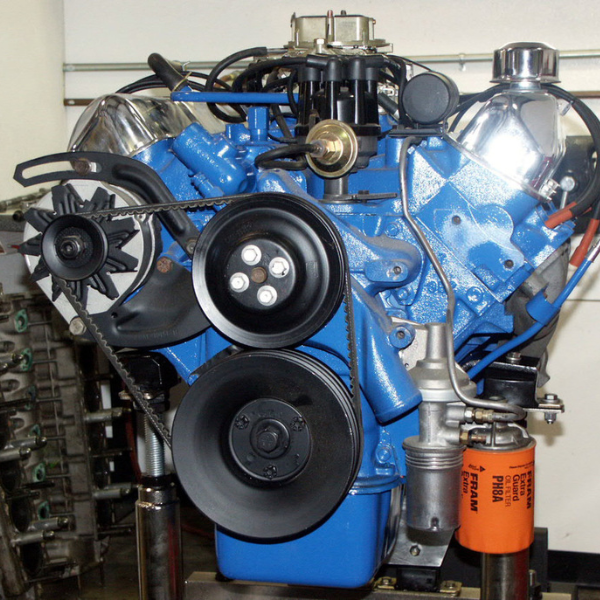
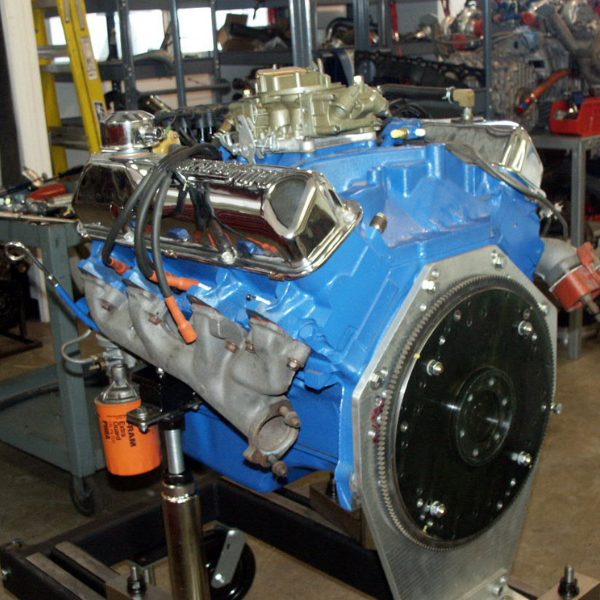
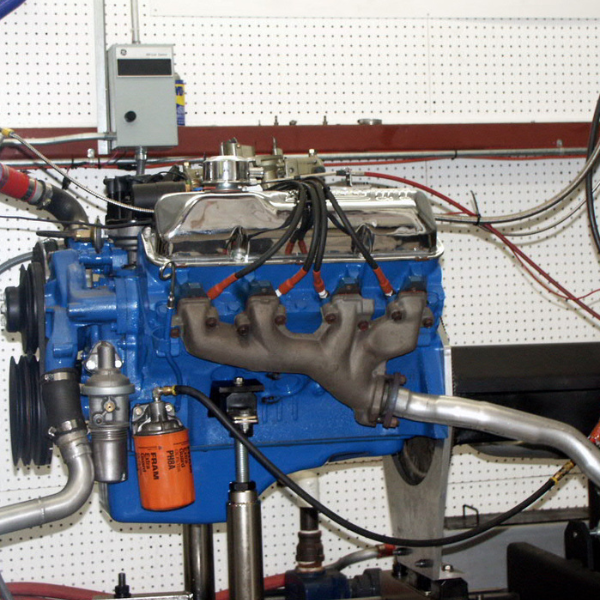
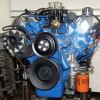
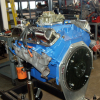
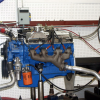
About the Ford 390 Engine
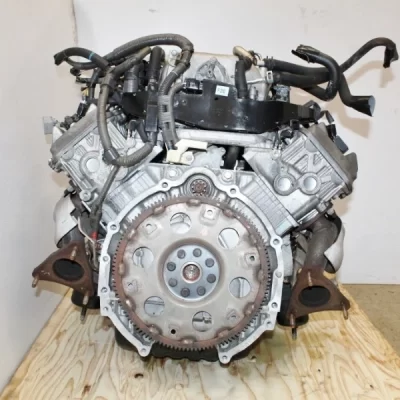
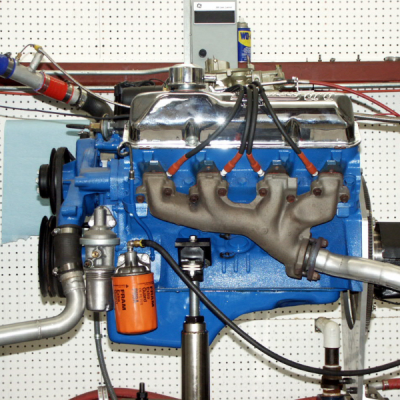
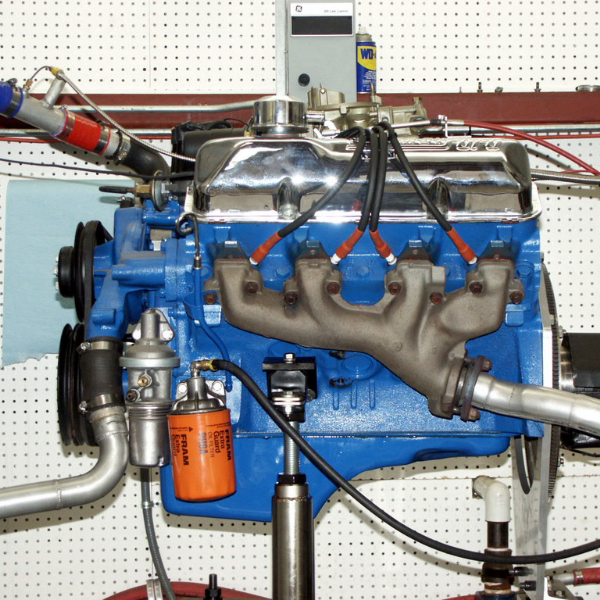
The Ford 390 Engine is a perfect example of how innovative and excellent Ford's engineering was during the muscle car era. Produced in the years 1961 to 1976, this Ford 390 Engine for sale at Vaz Auto Solutions is the perfect blend of durability and power, a favorite of both performance car enthusiasts and classic truck restorers alike.
The Ford FE Big-Block Family
The 390 is part of the Ford FE (Ford-Edsel) big-block engine family, which Ford produced from 1958 to 1976. The FE family is one of the most iconic American V8 engine architectures ever built, with engines ranging from 332 cu in to 428 cu in displacement on the same fundamental block design. Other FE family members include:
| Detail | Description |
|---|
| 332 cu in | 4.00" x 3.30" bore/stroke, 1958-1959 |
| 352 cu in | 4.00" x 3.50", 1958-1966 |
| 360 cu in | 4.05" x 3.50", 1968-1976 (truck variant) |
| 390 cu in (THIS LISTING) | 4.05" x 3.78", 1961-1976 |
| 410 cu in | 4.05" x 3.98", 1966-1967 (Mercury) |
| 427 cu in | 4.232" x 3.78", 1963-1968 (legendary high-performance) |
| 428 cu in | 4.13" x 3.98", 1966-1970 (including 428 Cobra Jet, 428 Super Cobra Jet) |
The 390 sits in the middle of the FE range, offering excellent torque output, strong durability, and proven longevity. It became the workhorse "torque big-block" of the FE family, equally at home in family sedans, performance cars, and heavy-duty trucks.
Features of the Ford 390 Engine
- Mechanical Construction: The 390 features a cast iron block and heads, OHV (overhead valve) pushrod configuration, forged steel or nodular cast iron crankshaft depending on variant, aluminum alloy cast pistons, forged steel connecting rods, and hydraulic flat tappet camshaft.
- Performance Specifications: The engine has a displacement of 390 cubic inches (6.4 liters), with the compression ratio typically running at approximately 9.5:1. Horsepower ranges from 265 hp (standard 2-barrel) to approximately 401 hp (390 HiPo with dual 4-barrel carbs), and torque is approximately 427 lb-ft depending on variant.
- Fuel System: Carbureted with options for a single Holley or Autolite 4-barrel carburetor (390 GT variant) or dual 4-barrel carburetors (390 HiPo variant).
- Ignition System: Points-type ignition in early models (1961-1973), electronic ignition in later years (1974-1976), with a standard mechanical advance distributor. Most restorers convert to modern electronic ignition (Pertronix Ignitor, MSD, etc.) for everyday driveability.
- Cooling System: Naturally aspirated engine, water-cooled using a belt-driven mechanical water pump and a conventional radiator.
- Exhaust System: Cast iron exhaust manifolds were factory-standard, but aftermarket headers (Hooker, Hedman, Doug's) are widely available for performance applications.
- Lubrication System: Standard wet sump design with a single oil pump. Oil capacity is typically 5 to 6 quarts depending on filter and pan configuration.
Ford 390 Variants
The 390 was offered in multiple variants across its 1961-1976 production:
| Detail | Description |
|---|
| Standard 390 2V (2-Barrel) | The base 390 used in regular passenger car applications, 265-280 hp depending on year |
| Standard 390 4V (4-Barrel) | The 4-barrel variant in higher-trim passenger cars, approximately 280-300 hp |
| 390 GT (4V) | The performance variant in Fairlane GT, Galaxie XL GT, Cougar GT, and similar trims, 320 hp |
| 390 Police Interceptor | Heavy-duty variant for fleet / police service, 330 hp with hardened internals |
| 390 HiPo (High Output) | The legendary high-performance variant produced 1962-1963 only, 401 hp with dual 4-barrel carburetors, very rare |
| 390 Truck Variant | The truck variant for F-Series, with different camshaft, oil pan, and accessory drives optimized for low-rpm torque |
Compatibility, Ford and Mercury Models
Ford Models:
- 1. Ford Galaxie (1961-1971)
- 2. Ford Thunderbird (1961-1968)
- 3. Ford Fairlane (1966-1967)
- 4. Ford Mustang (1967-1969), rare high-performance GT versions only
- 5. Ford Torino (1968-1970)
- 6. Ford F-Series Trucks (1961-1976)
- 7. Ford Custom (1965-1972)
- 8. Ford LTD (1965-1972)
Mercury Models:
- 1. Mercury Cougar (1967-1970)
- 2. Mercury Comet (1964-1967)
- 3. Mercury Cyclone (1966-1971)
- 4. Mercury Marauder (1963-1965, 1969-1970)
- 5. Mercury Monterey (1961-1970)
- 6. Mercury Marquis (1967-1970)
- 7. Mercury Park Lane (1964-1968)
Here at Vaz Auto Solutions, you'll find the used Ford 390 Engine for sale at the perfect price. Our goal is to find the ideal engine for you and make your hunt easier and seamless. Grab your Ford 390 Engine now if you're looking for a powerful classic V8 that delivers that unmistakable big-block sound.
Signs You Need a Replacement Ford 390
- Loss of compression on one or more cylinders
- Excessive oil consumption (more than 1 quart per 1,000 miles)
- Oil pressure drop indicating bearing wear
- Connecting rod or main bearing knock
- Cylinder head crack symptoms (coolant in oil, white smoke, overheating)
- Cracked block (rare but possible on heavily-driven examples)
- Restoration project requiring matching-numbers donor (we document casting numbers when possible)
- Donor classic Ford or Mercury totaled, engine being moved to another chassis
- Hot rod / period-correct build requiring authentic FE block
Common 390 Maintenance Considerations
- Camshaft and lifter wear: A documented FE concern at high mileage; the hydraulic flat tappet camshaft and lifters can wear, especially with reduced ZDDP modern oils. Use ZDDP-supplemented oil or break-in oil for older flat tappet engines.
- Timing chain stretch: The factory timing chain can stretch at high mileage. Replace during any rebuild.
- Distributor advance: Mechanical advance weights in the distributor can wear, causing timing drift. Inspect during service.
- Carburetor service: Whether 2-barrel or 4-barrel, the carburetor benefits from periodic rebuild for cold-start drivability and full-throttle response.
- Modern ignition upgrade: Most owners convert points to electronic ignition (Pertronix Ignitor or MSD) for everyday reliability without changing the period correct external appearance.
What Is Included, What Is Not Included
| Item | Details |
|---|
| INCLUDED | Long block: cast iron block, crankshaft (nodular cast iron or forged steel depending on variant), connecting rods, pistons, camshaft, cylinder heads, valve train, oil pan, valve covers (typical). |
| NOT INCLUDED | Carburetor (sold separately, application-specific to 2V vs 4V vs HiPo), distributor, intake manifold, exhaust manifolds, alternator, starter, A/C compressor (when factory-equipped), power steering pump, water pump (typical), thermostat, motor mounts, transmission, flywheel/flexplate. |
| Performance Note | Many of our 390 cores have been blueprint-machined and micro-polished by previous rebuilders, ensuring quality internals for restoration projects. |
| Core Note | No core charge. You are not required to return your old engine. |
Vehicle Compatibility
The Ford 390 fits a wide range of classic Ford and Mercury vehicles. Tell us your year and chassis, and we ship the matching variant:
| Vehicle | Compatibility |
|---|
| Ford Galaxie | 1961 to 1971 |
| Ford Thunderbird | 1961 to 1968 |
| Ford Fairlane | 1966 to 1967 (including Fairlane GT) |
| Ford Mustang | 1967 to 1969 (rare GT variants only, most Mustangs got 289 / 302 / 351) |
| Ford Torino | 1968 to 1970 |
| Ford F-Series Trucks | 1961 to 1976 (F-100, F-250, F-350) |
| Ford Custom / LTD | 1965 to 1972 |
| Mercury Cougar | 1967 to 1970 |
| Mercury Comet | 1964 to 1967 |
| Mercury Cyclone | 1966 to 1971 |
| Mercury Marauder | 1963 to 1965, 1969 to 1970 |
| Mercury Monterey / Marquis / Park Lane | 1961 to 1970 |
The 390 also drops into many non-original-fitment chassis with appropriate motor mount adapters and bellhousing matching, making it a popular choice for Ford-pattern hot rod and street rod builds.
Condition and Inspection
Every used Ford 390 we ship goes through this process:
- All 8 cylinders compression tested, pressure per cylinder recorded
- FE block authentication (casting number documented when visible)
- Variant identified (2V, 4V GT, HiPo, Police Interceptor, or Truck)
- Cylinder head inspected for cracks
- Camshaft and lifter condition assessed (documented FE wear point)
- Timing chain stretch inspected
- Crankshaft material verified for performance variants (nodular cast iron vs forged steel)
- Donor application photographed and documented
- Approximate mileage documented when verifiable
Why Buy From Vaz Auto Solutions
- All 8 cylinders compression tested, results before you pay
- FE block authentication and casting number documentation
- Variant identification (2V, 4V GT, HiPo, Police Interceptor, Truck)
- Camshaft / lifter inspection (documented FE wear point)
- Timing chain stretch checked
- Crank and rod material verified for performance variants
- Donor classic Ford or Mercury chassis traced
- Free freight pallet delivery to all 50 states
- No core charge, keep your old engine
- 15 day replacement warranty on internal defects
- Classic Ford FE experienced support team on the phone
Availability of Ford 390 Engine for sale?
Yes, we have multiple Ford 390 engines in stock, with various variants available (Standard 2V / 4V, GT 4V, Police Interceptor, and occasionally HiPo for premium restoration projects). Sourced from Mustang, Galaxie, Fairlane, Thunderbird, Torino, F-Series, Cougar, Cyclone, and other FE-equipped donor vehicles. Call (240) 301-0095 to confirm current variant availability.
Price of the Ford 390 Engine?
$6,799.00 for this listing (SKU vaz91). Genuine specialty reman 390 engines run $7,500 to $11,000 from FE-experienced shops. Independent reman runs $5,500 to $8,500. Our used 390 with full variant identification and compression test represents excellent value for restoration and hot rod projects.
Are there typical modifications for the Ford 390 engine?
Yes, popular modifications include: performance camshaft (Comp Cams Magnum series, Crane HMV series), aluminum intake manifold (Edelbrock Performer or Performer RPM), high-performance carburetors (Holley 600-750 cfm or Edelbrock AVS2), electronic ignition conversion (Pertronix Ignitor or MSD 6A), aftermarket headers (Hooker, Hedman, Doug's) for free-flowing exhaust, and high-output cooling systems (Be Cool aluminum radiator, electric fan conversion).
Is the Ford 390 engine good?
Yes, the Ford 390 is highly regarded as a solid and reliable big-block V8. The FE family architecture is robust, with stout connecting rods, durable cast iron block, and cylinder heads designed for sustained use. With proper maintenance and the right oil (use ZDDP-supplemented oil for the flat tappet camshaft), a Ford 390 can deliver many decades of reliable service. Many examples in regular use today have logged 200,000+ miles on their original blocks.
What fuel system is installed in the Ford 390 engine?
The Ford 390 engine is carbureted, with either a single 4-barrel carburetor (390 GT variant) or dual 4-barrel carburetors (390 HiPo variant), depending on year and model. Standard passenger car versions used a single 2-barrel carburetor for everyday driveability. The original carburetors were typically Holley or Autolite units.
What is the weight of the Ford 390 engine?
The dry weight of the Ford 390 engine is approximately 650 pounds, with accessories (intake manifold, carburetor, distributor, alternator, starter, water pump, exhaust manifolds) adding additional weight bringing fully-dressed weight to approximately 700-750 pounds.
What is the racing history of the Ford 390 engine?
The Ford 390 engine has a strong racing heritage. It was used in NASCAR during the 1960s, particularly in the Galaxie chassis. The engine also became a favorite of drag racers and street rod builders due to its strong performance characteristics, abundant aftermarket support, and shared FE architecture with the legendary 427 and 428 engines. The 390 was often used as a more accessible alternative to the 427 in grassroots racing.
What transmissions were paired with the Ford 390 engine?
Common Ford 390 transmission pairings include: Ford C6 3-speed automatic (the most common automatic), Ford Toploader 4-speed manual (for performance applications including HiPo and GT variants), Ford C4 3-speed automatic (lighter applications), and various truck-specific manuals (3-speed and 4-speed) for F-Series applications. Modern restorations often pair the 390 with overdrive automatics like the AOD or 4R70W for highway cruising.