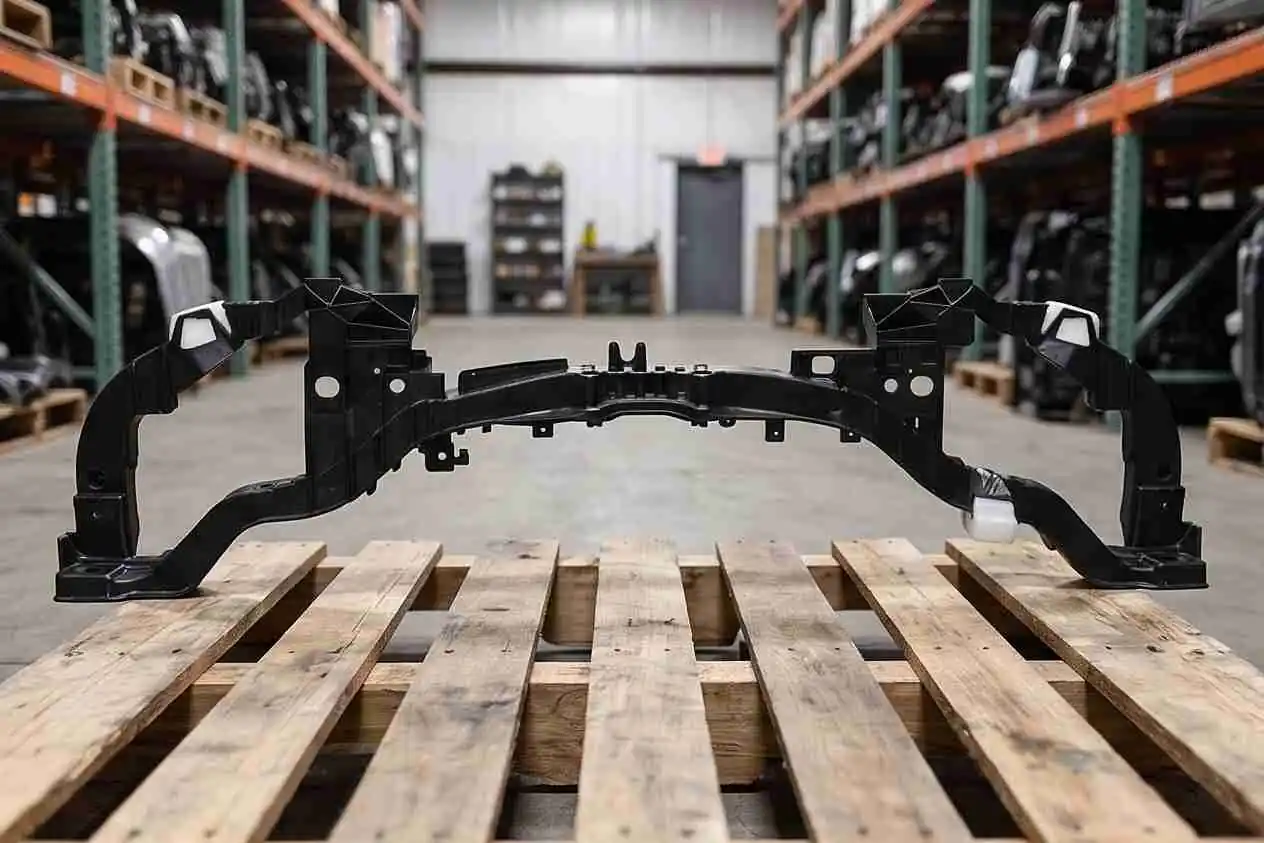

Ford Escape Radiator Core Support for Sale | Used Ford Escape Front Frame Core Support

Code: vaz538
(2 customer reviews)

Product Overview & Specifications

  • In Stock for Ford Escape 2001+ (4 Generations)
  • Free Shipping All 50 States, Freight Shipping (heavy item) 5-10 Day Transit
  • Ford Escape Compact SUV – 4 Generations of Production
  • 1st Generation 2001-2007 (CD2 platform, conservative SUV styling)
  • 2nd Generation 2008-2012 (CD2 updated, modern styling refresh)
  • 3rd Generation 2013-2019 (Global C platform, EcoBoost intro)
  • 4th Generation 2020+ (C2 platform, hybrid/PHEV standard)
  • Sister Mazda Tribute (1st generation 2001-2007)
  • Sister Mercury Mariner (1st-2nd generation 2005-2011)
  • Hybrid Variant Since 2005 (one of FIRST hybrid SUVs in market)
  • Engines Varied by Generation:
  • 1st-2nd Gen: 2.0L I4, 2.3L Duratec I4, 3.0L Duratec V6, Hybrid 2.3L I4
  • 3rd Gen: 1.6L EcoBoost I4, 2.0L EcoBoost I4, 2.5L Duratec I4
  • 4th Gen: 1.5L EcoBoost I3, 2.0L EcoBoost I4, 2.5L Hybrid, 2.5L PHEV
  • Transmissions: 4-spd/6-spd/8-spd automatic, CVT hybrid
  • Drivetrain: FWD Standard or AWD Optional (Intelligent AWD)
  • Core Support Function: Front frame structure
  • Mounts: Radiator, Condenser, Headlights, Hood Latch
  • Sometimes Engine Mount, Active Grille Shutter (newer), Horn
  • Construction: Heavy steel (1st-2nd gen) or composite (3rd-4th gen)
  • Common Failures:
  • Collision Damage (Frontal Impact Most Common)
  • Rust/Corrosion Salt-Belt Areas
  • Broken Mounting Points (Heavy Component Stress)
  • Cracked Welds, Bent from Minor Impacts
  • Symptoms: Misaligned hood, Headlight aim off, Radiator loose
  • Installation: Major job 6-12 hours, body shop often recommended
  • Condition Verified, Mounting Points Intact, Donor Disclosed
  • 100% Inspection Before Every Order Ships
  • Good Donor Pool (4-Generation + Sister Vehicles)
  • 15 Day Replacement Warranty

$199.00

In Stock
100% Fitment Assistance
15 Days Replacement Warranty
Free & Fast Shipping

Description

About the Ford Escape Radiator Core Support

Direct fit Ford Escape compact SUV 2001+ (4 generations of production). Ford Escape was Ford’s entry into growing compact SUV segment introduced 2001, responding to successful Toyota RAV4 (1996+) and Honda CR-V (1997+) which established the compact SUV segment.

Escape generations: (1) 1st generation 2001-2007 (Ford CD2 platform with conservative SUV-truck influenced styling), (2) 2nd generation 2008-2012 (continued CD2 platform updated with modern styling), (3) 3rd generation 2013-2019 (NEW Ford global C platform – same as Ford Kuga European market, aerodynamic styling shift, EcoBoost engine introduction), (4) 4th generation 2020+ (Ford C2 platform modern architecture with hybrid/PHEV variants standard).

Sister vehicles: Mazda Tribute (1st generation 2001-2007 – Mazda’s badge-engineered Escape from Ford-Mazda alliance era, identical mechanical), Mercury Mariner (1st-2nd generation 2005-2011 – Mercury’s luxury-positioned Escape sister with upgraded interior and styling, ended with Mercury brand discontinuation 2011). Both sister vehicles share Escape core support with minor styling differences.

Hybrid heritage: Ford Escape Hybrid introduced 2005 as one of FIRST HYBRID SUVs in market. Significant industry milestone for SUV hybrid adoption. Continued through 1st-2nd generation (2005-2012). Modern 3rd-4th generation hybrid variants continued hybrid lineage. Hybrid versions use 2.3L (1st-2nd gen) or 2.5L (modern) I4 engines paired with electric motors for combined ~155-200 HP.

Engines varied by generation: (1) 1st-2nd Gen: 2.0L I4 (~127-135 HP base economy), 2.3L Duratec I4 (~153 HP), 3.0L Duratec V6 (~200-240 HP), Hybrid 2.3L I4 + electric (~155 HP combined). (2) 3rd Gen 2013-2019: 1.6L EcoBoost I4 (~178 HP), 2.0L EcoBoost I4 (~240 HP), 2.5L Duratec I4 (~168 HP). (3) 4th Gen 2020+: 1.5L EcoBoost I3 (~180 HP), 2.0L EcoBoost I4 (~250 HP), 2.5L Hybrid (~200 HP combined), 2.5L PHEV plug-in hybrid.

Transmissions: 4-speed automatic (1st gen early), 6-speed automatic (modern era), 8-speed automatic (4th gen), CVT (hybrid models). Drivetrain: FWD standard or AWD optional (Intelligent AWD with center coupling).

Core support definition: front frame structure that holds critical front-end components – radiator (engine cooling), condenser (air conditioning), headlight assemblies, hood latch mechanism, sometimes engine mount, sometimes active grille shutter on newer models (Edge has Batch 59 vaz537 reference, similar feature on modern Escape), sometimes horn mount. Provides structural integrity to front end of vehicle.

Construction: heavy steel (1st-2nd gen typical, more rust-prone but stronger), or composite/plastic (3rd-4th gen modern weight savings, more impact-absorbing). Welded/bolted to vehicle frame structure. Mounting points engineered for all front-end components.

Common failure modes: (1) Collision damage (frontal impact MOST COMMON cause – even minor front-end accidents damage core support requiring replacement), (2) Rust/corrosion (salt-belt areas especially on 1st-2nd gen steel construction – typical failure after 10-15 years), (3) Broken mounting points (heavy component stress from radiator/condenser weight over years), (4) Cracked welds (stress fractures at high-load points), (5) Bent from minor impacts (causing misaligned hood and headlights without obvious collision damage). Symptoms: misaligned hood (won’t close properly), headlight aim off (cannot adjust to spec), radiator mounting loose, visible front-end damage.

Installation: MAJOR JOB – difficult DIY, 6-12 hours of skilled work, requires full front-end disassembly (bumper cover, grille, headlights, radiator, condenser, hood components, sometimes engine mount disconnection). Body shop installation often recommended for proper alignment of all front-end components after installation. Welding equipment may be needed for steel construction repair.

Ford Escape 2001-2004 (1st Gen Early)Direct fit
Ford Escape 2005-2007 (1st Gen Late)Direct fit
Ford Escape Hybrid 2005-2007Hybrid-specific core support
Ford Escape 2008-2012 (2nd Gen)Direct fit
Ford Escape Hybrid 2008-2012Hybrid-specific core support
Ford Escape 2013-2019 (3rd Gen Global C Platform)Different core support design
Ford Escape 2020+ (4th Gen C2 Platform)Different core support design
Ford Escape Hybrid 2020+ / PHEVHybrid-specific mounting
Engine Variants:
2.0L I4 / 2.3L Duratec I4 / 3.0L V6Different mounting locations
Hybrid 2.3L (1st-2nd gen)Hybrid-specific support
1.6L / 2.0L EcoBoost (3rd gen)EcoBoost-specific
1.5L / 2.0L EcoBoost (4th gen)4th gen specific
Sister Vehicles:
Mazda Tribute 2001-2007 (1st gen sister)Same core support typically
Mercury Mariner 2005-2011 (1st-2nd gen sister)Same core support typically
Generation Compatibility:
Within Same Generation (Same Years)Usually compatible
Between Generations (Different Years)Different platforms – NOT compatible
Ford Kuga (European Market)May share 3rd gen 2013+ Escape design

Call (240) 301-0095. Critical questions: (1) Year (2001-2024+). (2) Generation (1st 2001-2007 / 2nd 2008-2012 / 3rd 2013-2019 / 4th 2020+ – different platforms). (3) Engine (gas vs hybrid – different mounting possibly). (4) Trim level. (5) FWD or AWD. (6) Mazda Tribute or Mercury Mariner sister vehicle cross-reference.

Structural integrity – no major cracks or deformation

  • All mounting points intact (radiator, condenser, headlights, hood latch)

No collision damage signs (verify with measurements if uncertain)

Rust assessment – surface rust acceptable, no rust-through holes

Welds inspected – no cracked or detached welds

Bolt holes intact – threads good, not stripped

Hybrid-specific mounts verified if hybrid version

Year/generation/engine verified

Donor vehicle disclosed, condition rated

Cleaned of road grime and surface debris

Ford Escape core support all 4 generations covered (2001+)

  • Multi-generation knowledge (1st CD2 / 2nd CD2 updated / 3rd Global C / 4th C2)

Sister Mazda Tribute cross-compatibility (1st gen 2001-2007)

Sister Mercury Mariner cross-compatibility (1st-2nd gen 2005-2011)

Compact SUV segment heritage (Toyota RAV4/Honda CR-V era)

Hybrid SUV pioneering 2005+ context

Hybrid variant cross-compatibility 1st-2nd gen and modern

EcoBoost engine family transition (3rd gen 2013+)

Ford Kuga European market sister vehicle context (3rd gen 2013+)

Duratec engine family knowledge (V6 1st-2nd gen)

Core support function expertise (radiator/condenser/headlight mounts)

  • Construction variation knowledge (steel 1st-2nd gen vs composite 3rd-4th gen)

Common failure mode expertise (collision/rust/broken mounts)

Active grille shutter mounting on modern Escapes

Body shop installation recommendation knowledge

PCM relearn / wheel alignment knowledge after installation

Year/generation verification before shipping

Donor vehicle disclosed

Free shipping all 50 states (freight for heavy items)

15 day warranty

Additional information

part-type

Radiator core support / front frame structure

Vehicle

Ford Escape 2001+ (4 generations)

function

condenser, headlights, Holds radiator, hood latch

Escape Generations

1st 2001-2007, 2nd 2008-2012, 3rd 2013-2019, 4th 2020+

Platforms

C2 (4th), CD2 (1st-2nd), Global C (3rd)

Sister Vehicles

Mazda Tribute (1st gen), Mercury Mariner (1st-2nd gen)

Hybrid Heritage

Pioneer 2005+ (first hybrid SUVs in market)

engines

2.0L/2.3L/2.5L Duratec I4, 3.0L V6, EcoBoost, Hybrid

drivetrain

FWD standard or AWD optional

construction

Steel (1st-2nd gen) or composite (3rd-4th gen)

Components Mounted

condenser, headlights, hood latch, Radiator, sometimes engine

common-failure

broken mounts, Collision damage, cracked welds, rust

Symptoms

headlight aim off, Misaligned hood, radiator loose

approximate-weight

15-40 lbs (steel) or 10-25 lbs (composite)

installation-difficulty

6-12 hours, body shop often recommended, Major job

Wheel Alignment

Required after installation (front-end disturbed)

donor-disclosed

engine, Generation, trim, Year

SKU

vaz538

price

$129.00

2 reviews for Ford Escape Radiator Core Support for Sale | Used Ford Escape Front Frame Core Support

  1. Eustathios Konstantopoulos-Stamatides

    Replaced damaged core support on my 2010 Ford Escape XLT FWD (2nd generation 2008-2012 Escape era, CD2 platform continuation from 1st generation 2001-2007 with updated modern styling refresh, 2.5L Duratec I4 engine ~171 HP one of the standard engines for 2nd generation Escape, 6-speed automatic transmission for modern era Escape, FWD standard drivetrain, XLT mid-trim package, 4-door compact SUV body style competing with Toyota RAV4 and Honda CR-V in compact SUV segment). My core support had collision damage from rear-end accident where front of vehicle hit guardrail at low speed – hood wouldn’t close properly, headlight aim was off, radiator was loose, multiple mounting points cracked. Vaz educated me extensively on Ford Escape heritage (compact SUV introduced 2001 as Ford’s entry into growing compact SUV segment responding to Toyota RAV4 1996+ and Honda CR-V 1997+ success, my 2010 model year being late 2nd generation), Escape generations (1st gen 2001-2007 Ford CD2 platform with conservative SUV-truck styling, my 2nd gen 2008-2012 continued CD2 platform with modern styling refresh and continued Mercury Mariner sister vehicle 2008-2011 before Mercury brand discontinuation, 3rd gen 2013-2019 new Ford global C platform with aerodynamic styling shift and EcoBoost engine introduction, 4th gen 2020+ Ford C2 platform with hybrid/PHEV variants standard), sister vehicles context (Mazda Tribute 1st generation 2001-2007 only as Mazda’s badge-engineered Escape from Ford-Mazda alliance era, Mercury Mariner 1st-2nd generation 2005-2011 as Mercury’s luxury-positioned Escape sister – my era – with upgraded interior and Mercury luxury features ending with Mercury brand discontinuation 2011 following Ford restructuring), Ford Escape hybrid heritage (2005 launch as one of FIRST HYBRID SUVs in market with 2.3L I4 gas engine plus electric motor plus NiMH battery making industry milestone for SUV hybrid adoption, predecessor to modern hybrid SUV market with Toyota RAV4 Hybrid and Honda CR-V Hybrid), Ford US minivan exit context (Windstar/Freestar discontinued Batch 58 vaz527 reference replaced by Ford crossover lineup including Escape my vehicle plus Edge Batch 59 vaz537 plus Explorer plus Flex), Duratec engine family heritage (my 2.5L I4 plus 2.3L I4 plus 3.0L V6 across 1st-2nd generation Escape), 6-speed automatic transmission modern era, FWD standard drivetrain with AWD optional Intelligent AWD with center coupling, core support function (front frame structure holding radiator for engine cooling plus A/C condenser plus headlight assemblies plus hood latch mechanism plus sometimes engine mount), 2nd generation steel construction (more rust-prone but stronger than 3rd-4th gen composite construction), common failure modes (my collision damage from frontal impact most common cause plus rust/corrosion salt-belt areas plus broken mounting points plus cracked welds plus bent from minor impacts), symptoms (my misaligned hood plus headlight aim off plus radiator mounting loose plus visible front-end damage), and replacement procedure (major job 6-12 hours requiring full front-end disassembly with bumper cover plus grille plus headlights plus radiator plus condenser plus hood components removal, body shop installation often recommended due to complexity, wheel alignment required after installation due to front-end disturbance). Sourced from 2010 Escape XLT FWD donor matching configuration. Body shop installed and aligned properly. The Ford Escape compact SUV heritage and 1st-2nd generation context was excellent.

  2. Wilhelmina Hartmann-Schweighofer

    Bought core support for my 2003 Ford Escape XLS FWD (1st generation 2001-2007 Escape era, Ford CD2 platform original generation with conservative SUV-truck influenced styling, 2.0L I4 engine ~127 HP base engine for 1st generation Escape, 4-speed automatic transmission for 1st generation early era Escape, FWD standard drivetrain, XLS entry trim package, 4-door compact SUV body style as Ford’s entry into compact SUV segment competing with Toyota RAV4 and Honda CR-V). My core support had heavy rust corrosion from salt-belt Wisconsin winters – steel construction of 1st generation Escape particularly susceptible to rust over years, with rust-through holes around radiator mounting points causing radiator to shift and headlight aim to drift. Vaz patiently explained the Ford Escape heritage (compact SUV introduced 2001 as Ford’s entry into compact SUV segment responding to RAV4/CR-V success, my 2003 model year being early 1st generation), Escape generations (my 1st gen 2001-2007 Ford CD2 platform with conservative SUV-truck styling and Mazda Tribute sister 2001-2007 – Mazda’s badge-engineered Escape from Ford-Mazda alliance era, 2nd gen 2008-2012 continued CD2 with modern styling, 3rd gen 2013-2019 new Ford global C platform with aerodynamic styling shift and EcoBoost engine introduction, 4th gen 2020+ Ford C2 platform with hybrid/PHEV variants standard), Mazda Tribute sister vehicle context (1st generation 2001-2007 only – identical mechanical to my Escape with different Mazda design styling – Mazda discontinued after 2007 with Mazda CX-5/CX-7 succession), Mercury Mariner sister vehicle context (1st-2nd generation 2005-2011 as Mercury’s luxury Escape sister – not yet available for my 2003 era but introduced 2 years later), Ford Escape Hybrid pioneering 2005+ context (one of FIRST HYBRID SUVs in market with 2.3L I4 plus electric motor as industry milestone, but my 2003 was pre-hybrid era), Duratec engine family heritage context (my 2.0L I4 base engine plus 2.3L I4 plus 3.0L V6 for 1st-2nd generation Escape), 4-speed automatic transmission early 1st generation Escape, FWD standard drivetrain, Ford US minivan exit context (Windstar/Freestar discontinued Batch 58 vaz527 reference replaced by Ford crossover lineup including my Escape plus Edge Batch 59 vaz537 plus Explorer), core support function (front frame structure holding radiator/condenser/headlights/hood latch), 1st generation steel construction (more rust-prone than 3rd-4th gen composite), common failure modes (my rust/corrosion salt-belt areas most common for 1st-2nd gen steel construction typical failure after 10-15+ years plus collision damage plus broken mounting points plus cracked welds plus bent from minor impacts), symptoms (my radiator shift from rust-through plus headlight aim drift), and replacement procedure (major job 6-12 hours, body shop installation recommended, wheel alignment required). Sourced from 2004 Escape XLS donor (similar configuration but slightly later year). One star off because finding 1st generation Escape-specific core support vs 3rd generation completely different design took clarification (NOT interchangeable between generations). But the Ford Escape 1st generation heritage and compact SUV segment context was excellent.

Add a review

Your email address will not be published. Required fields are marked *

Frequently Asked Questions

What is the Ford Escape?

Ford Escape is COMPACT SUV/CROSSOVER with 4 GENERATIONS since 2001: (1) Background – introduced 2001 as Ford’s entry into compact SUV segment responding to Toyota RAV4 (1996+) and Honda CR-V (1997+) success. (2) Market position – mainstream compact SUV competing with RAV4, CR-V, Mazda CX-5, Chevy Equinox, Hyundai Tucson, Kia Sportage, Toyota Highlander junior variant. (3) Generations: (a) 1st gen 2001-2007 (Ford CD2 platform, conservative SUV-truck influenced styling). (b) 2nd gen 2008-2012 (continued CD2 platform updated, modern styling). (c) 3rd gen 2013-2019 (NEW Ford global C platform, aerodynamic styling shift, EcoBoost engine intro). (d) 4th gen 2020+ (Ford C2 platform, hybrid/PHEV variants standard). (4) Sister vehicles: Mazda Tribute (1st gen 2001-2007), Mercury Mariner (1st-2nd gen 2005-2011). (5) Hybrid heritage: First hybrid SUV market entry 2005 (industry milestone), continued through generations. (6) Engines: gas I4/V6, hybrid, modern EcoBoost. (7) Drivetrain: FWD standard, AWD optional. (8) Production: Hermosillo Mexico (1st-2nd gen), Louisville Kentucky (later gens), various globally. (9) Used market: excellent salvage donor pool from 23+ years of production. (10) Reliability: generally good across generations with proper maintenance. Hybrid versions particularly reliable.

How does the Ford Escape relate to Mazda Tribute and Mercury Mariner?

Ford Escape, Mazda Tribute, and Mercury Mariner are SISTER VEHICLES from Ford-Mazda alliance era: (1) Ford Escape (this listing’s vehicle) – Ford’s mainstream compact SUV 2001+. (2) Mazda Tribute – Mazda’s badge-engineered Escape from Ford-Mazda alliance era: (a) 1st generation only 2001-2007 (sold concurrently with Escape 1st gen). (b) Identical mechanical to Escape. (c) Different exterior styling (Mazda design language). (d) Different interior (Mazda design). (e) Mazda discontinued after 2007 – Mazda CX-5/CX-7 became Mazda’s SUV approach. (3) Mercury Mariner – Mercury’s luxury-positioned Escape sister: (a) 1st-2nd generation 2005-2011 (Mercury added later than 2001). (b) Identical mechanical to Escape. (c) Upgraded interior with Mercury luxury features (leather, premium audio, chrome trim). (d) Different exterior styling (Mercury design language with chrome elements). (e) Discontinued 2011 with MERCURY BRAND DISCONTINUATION following Ford restructuring. (4) Why three versions: Ford-Mazda alliance era encouraged platform sharing. Mercury brand existed to provide luxury entry between Ford and Lincoln. (5) Parts compatibility: most mechanical parts INTERCHANGE between Escape/Tribute/Mariner, body panels DIFFERENT (different brand styling), interior DIFFERENT, core support typically same or very similar with minor mounting differences for brand-specific trim. (6) Used market: Escape most common (mainstream sales volume), Tribute moderate (Mazda brand), Mariner less common (Mercury discontinuation 2011). (7) For core support replacement – if Escape-specific not available, Mariner equivalent often works (within same generation), Tribute equivalent works for 1st gen (within 2001-2007). (8) Cross-platform sourcing – dramatically expands donor pool for parts.

What's the difference between 1st-2nd gen and 3rd-4th gen Escape?

Ford Escape underwent MAJOR PLATFORM CHANGE between 2nd generation (2008-2012) and 3rd generation (2013-2019): (1) 1st-2nd Generation (2001-2012, Ford CD2 Platform): (a) Conservative SUV-truck influenced styling (boxy SUV appearance). (b) Steel core support construction. (c) Traditional 4-speed/6-speed automatic transmissions. (d) Engines: 2.0L/2.3L I4 and 3.0L Duratec V6, hybrid 2.3L. (e) Body-on-unibody construction with truck-like proportions. (f) Sister: Mazda Tribute (1st gen) and Mercury Mariner (1st-2nd gen). (g) Made in Hermosillo Mexico. (h) Conservative buyer appeal. (2) 3rd-4th Generation (2013+, Global Ford C Platform): (a) Aerodynamic crossover styling (lower, sleeker). (b) Composite/plastic core support construction (weight savings). (c) Modern 6-speed/8-speed automatic and CVT (hybrid). (d) Engines: EcoBoost turbocharged direct-injection family (1.5L/1.6L/2.0L EcoBoost), 2.5L Duratec I4, modern hybrid 2.5L. (e) Global platform shared with Ford Kuga European market and other Ford vehicles. (f) No sister vehicles (Mazda Tribute and Mercury Mariner discontinued). (g) Made in Louisville Kentucky and globally. (h) Aerodynamics/efficiency focus. (3) Core support specifically: completely different design between 2nd and 3rd generation. NOT INTERCHANGEABLE. (4) For replacement – verify generation carefully. 2012 Escape (last 2nd gen year) vs 2013 Escape (first 3rd gen year) have completely different core supports. (5) Hybrid: 1st-2nd gen hybrid uses 2.3L I4 with CVT. 3rd-4th gen hybrid uses 2.5L with modern hybrid technology. (6) Used market: 1st-2nd gen more numerous in donor pool but aging out (15+ year vehicles). 3rd-4th gen growing donor pool. (7) Restoration interest: 1st gen 2001-2004 has some early-SUV nostalgia interest. (8) Parts compatibility: WITHIN same generation usually compatible. Between generations RARELY compatible due to platform changes.

What is the Ford Escape Hybrid?

Ford Escape Hybrid was ONE OF FIRST HYBRID SUVs IN MARKET (introduced 2005): (1) Historical significance: 2005 launch made Escape Hybrid one of FIRST mass-market hybrid SUVs (Toyota Prius 1997 but compact car, Lexus RX 400h 2005 luxury SUV). Escape Hybrid brought hybrid SUV technology to mainstream affordable segment. (2) Technology: Ford developed in cooperation with Toyota (cross-licensing for hybrid components in early hybrid SUV era). (3) 1st-2nd gen Hybrid (2005-2012): (a) 2.3L I4 gas engine. (b) Electric motor (33 kW initial, 70 kW later). (c) Hybrid battery (NiMH initially). (d) Combined ~155 HP. (e) CVT transmission (industry-standard for hybrid). (f) Fuel economy ~30 MPG combined (excellent for SUV era). (g) Sister Mercury Mariner Hybrid (2006-2011). (h) Sister Mazda Tribute Hybrid (2008-2011). (4) Modern Hybrid (3rd-4th gen, 2020+): (a) 2.5L I4 hybrid (Atkinson cycle). (b) Modern lithium-ion battery. (c) Combined ~200 HP. (d) eCVT continuously variable. (e) PHEV plug-in hybrid variant 4th gen. (f) Fuel economy ~40+ MPG. (5) Hybrid core support: slightly different from gas Escape due to hybrid battery placement, additional cooling for hybrid components, electric motor mounting. (6) Reliability: hybrid Escapes generally very reliable. Hybrid battery typically 150,000-200,000+ miles. Common failures: hybrid battery degradation (replacement $3,000-5,000), inverter coolant pump. (7) Used market: hybrid Escapes valuable due to fuel economy. (8) For parts – hybrid-specific core support may differ from gas version. Specify hybrid variant when ordering. (9) Industry legacy: Escape Hybrid proved hybrid SUVs viable and economic for mainstream buyers. Paved way for Toyota RAV4 Hybrid, Honda CR-V Hybrid, modern hybrid SUV market.

How do I replace a Ford Escape core support?

Ford Escape core support replacement is MAJOR JOB – difficult DIY (~6-12 hours), body shop often recommended: (1) Tools: complete socket set (metric), screwdrivers, plastic pry tools, floor jack with engine support, jack stands, transmission jack (for support), welding equipment (if steel construction), pneumatic tools recommended. (2) Skills required: front-end disassembly experience, electrical disconnection skills, welding (if steel repair instead of replacement), wheel alignment understanding. (3) Prep: park flat, parking brake, battery disconnected, A/C system depressurized (professional task – requires recovery equipment). (4) Drain coolant: drain radiator completely, capture for proper disposal. (5) Disconnect A/C system: PROFESSIONAL TASK – requires R-134a recovery equipment per EPA regulations. (6) Disconnect electrical: headlights, horn, washer pump, active grille shutter (if equipped), various sensors. (7) Remove front-end components: front bumper cover (multiple fasteners), grille, headlight assemblies, hood latch mechanism, fender liners, sometimes inner fenders. (8) Disconnect cooling system: upper/lower radiator hoses, heater hoses, transmission cooler lines, condenser refrigerant lines (must be evacuated first). (9) Remove radiator and condenser: lift out together if possible, support carefully. (10) Disconnect engine mounts: if core support holds engine mount (some Escape models), engine must be supported with floor jack or hoist before mounts removed. (11) Remove core support: bolts/welds attaching to vehicle frame, lift out (15-40 lbs). (12) Install new core support: position carefully, verify alignment to vehicle frame, secure with bolts (or weld for steel construction). (13) Reinstall everything in reverse: electrical connections, cooling system, A/C system (professional recharge required), front-end components. (14) Verify alignment: hood alignment, headlight aim, fender alignment, bumper alignment. (15) Wheel alignment: front-end disturbed – professional wheel alignment required ($75-150). (16) System check: coolant level, A/C function, headlight aim, hood latching, horn function, all electrical systems.

How is the Ford Escape related to Ford Edge?

Ford Escape (compact SUV) and Ford Edge (mid-size SUV) are DIFFERENT VEHICLES at DIFFERENT SIZES in Ford’s SUV lineup: (1) Ford Escape – COMPACT SUV (~$25-40K): smaller, more fuel-efficient, 5-passenger only, competes with Toyota RAV4/Honda CR-V. (2) Ford Edge – MID-SIZE SUV (~$30-50K): larger, more powerful, 5-passenger luxury, competes with Honda Passport/Mazda CX-50. (3) Generations comparison: both have been in production through Ford’s modern era. (4) Platform sharing: NOT directly platform-shared. Edge uses CDX platform (with Lincoln MKX), Escape uses CD2 (1st-2nd gen) or Global C/C2 (3rd-4th gen). (5) Engine overlap: some engine sharing across Ford lineup (e.g., 2.0L EcoBoost in both Escape 3rd gen and Edge 2nd gen, though tuned differently). (6) Both have active grille shutters: Edge 2011+ (Batch 59 vaz537), Escape 2013+. Similar technology, different specific implementations. (7) Both share Ford US minivan exit context: replaced Windstar/Freestar (Batch 58 vaz527). Ford pivoted from minivans to SUV/crossover lineup. (8) Production: both made by Ford in North American plants. (9) Sister vehicles: Edge has Lincoln MKX/Nautilus. Escape had Mazda Tribute/Mercury Mariner (now standalone). (10) Used market: both have large donor pools. Edge for mid-size SUV needs, Escape for compact SUV needs. (11) Parts compatibility: very limited interchange between Edge and Escape due to different platforms and sizes.

Why is wheel alignment needed after replacement?

Wheel alignment REQUIRED after Ford Escape core support replacement due to front-end disturbance: (1) Why wheel alignment matters: vehicle suspension geometry depends on precise component positioning. Even minor changes affect tire wear, handling, fuel economy, safety. (2) Why disturbed during core support replacement: (a) Front-end completely disassembled (bumper, grille, headlights, radiator, condenser, hood components removed). (b) Suspension/steering components may be loosened. (c) Strut mount positions may shift. (d) Frame alignment may have been affected by original damage (collision often causes core support replacement). (e) Bolts loosened/replaced require re-torquing in proper sequence. (3) Alignment specs affected: (a) Camber (wheel tilt). (b) Caster (steering axis). (c) Toe (wheel direction). (d) Hub position. (e) Frame squareness. (4) Why DIY alignment isn’t possible: requires alignment rack with sensors, computer system reads angles to fractions of degrees, manual measurement insufficient. (5) Cost: professional alignment ~$75-150. Sometimes included with body shop repair. (6) Timing: should be done IMMEDIATELY after installation, not delayed. (7) Symptoms of poor alignment: uneven tire wear, vehicle pulls to one side, steering wheel off-center, vibration, reduced fuel economy. (8) Quality of alignment shops: dealership ~$120-200 (most precise), independent ~$75-100 (good quality available), chain stores ~$50-80 (basic). Verify shop has Ford-specific alignment specs. (9) Re-alignment timing: alignment specifications may shift over first 100-1000 miles after replacement – some shops offer free re-check at 30-day point. (10) Inspection results: alignment should show all measurements WITHIN MANUFACTURER SPEC. If outside spec, additional adjustment or component replacement may be needed.

How does shipping work?

Free shipping all 50 US states. Ford Escape core support is HEAVY ITEM (15-40 lbs steel construction, 10-25 lbs composite) shipped via FREIGHT typically (5-10 day transit) or UPS Heavy Goods for lighter composite versions. Good salvage donor pool from 23+ years of Escape production (4 generations) combined with sister Mazda Tribute (1st gen 2001-2007) and Mercury Mariner (1st-2nd gen 2005-2011) cross-compatibility – significantly expands donor pool. Customer must specify: (1) Year (2001-2024+). (2) Generation (1st 2001-2007 / 2nd 2008-2012 / 3rd 2013-2019 / 4th 2020+ – critical, different platforms). (3) Engine (gas vs hybrid – different mounting). (4) Trim level. (5) FWD or AWD (usually same support). (6) Mazda Tribute or Mercury Mariner sister vehicle if needed (acceptable substitutes within same generation). Aftermarket Dorman/Crown core supports new $250-600 if used OE not preferred. Body shop installation often recommended due to complexity – delivery to body shop can be coordinated.

Product Warranty

15 Day Replacement Warranty

Covered:

  • Defects discovered at delivery

Not Covered:

  • Damage from improper installation
  • Labor costs of any kind

Contact (240) 301-0095 within 15 days of delivery.

Trust Badges

  • For Ford Escape Core Support All 4 Generations, 2001+
  • Multi-Generation Knowledge, 1st CD2 / 2nd CD2 / 3rd Global C / 4th C2
  • Sister Mazda Tribute Cross-Compatibility, 1st gen 2001-2007
  • Sister Mercury Mariner Cross-Compatibility, 1st-2nd gen 2005-2011
  • Compact SUV Segment Heritage Knowledge, RAV4/CR-V Era
  • Hybrid SUV Pioneer 2005+ Context, Industry Milestone
  • Hybrid Variant Cross-Compatibility, 1st-2nd Gen and Modern
  • EcoBoost Engine Family Transition Context, 3rd Gen 2013+
  • Ford Kuga European Market Sister Context, 3rd Gen 2013+
  • Duratec Engine Family Knowledge, V6 1st-2nd Gen
  • Core Support Function Expertise
  • Construction Variation Knowledge, Steel vs Composite
  • Common Failure Mode Expertise, Collision/Rust/Broken Mounts
  • Mazda Tribute Discontinuation 2007 Context
  • Mercury Mariner Discontinuation 2011 Context, Mercury Brand Discontinuation
  • Active Grille Shutter Modern Escape Context
  • Ford US Minivan Exit Context, Batch 58 vaz527
  • Body Shop Installation Recommendation Knowledge
  • Wheel Alignment Required After Installation
  • Donor Vehicle Disclosed, Year, Generation, Engine
  • Free Shipping All 50 States, Freight for Heavy Items
  • 15 Day Warranty / No Core Charge