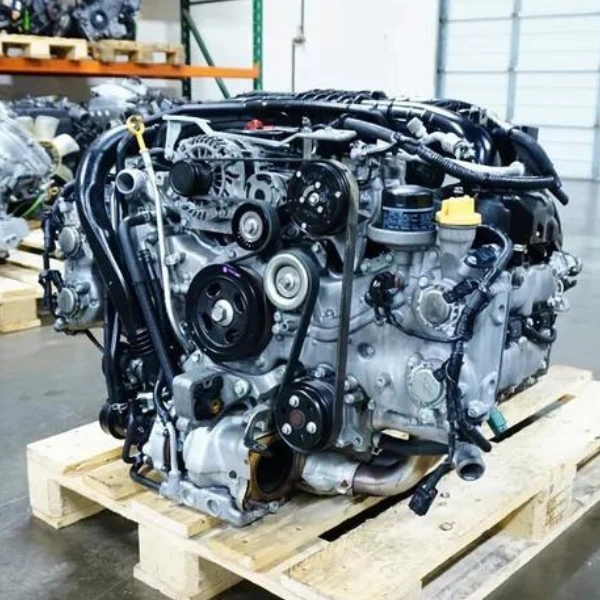
About the Subaru FA20 Engine
The Subaru FA20 engine for sale here is a flat-4 boxer that tugs at the heartstrings of many enthusiasts. It's a compact powerplant, high in versatility and tuning potential. Having been used in popular cars like the Subaru BRZ and Toyota 86 (in NA FA20D form) and the Subaru WRX and Forester XT (in FA20DIT turbocharged form), it offers performance and efficiency in a good mix. Its flat-four design contributes to improved vehicle handling due to the low center of gravity. While the NA variant might not be the most powerful engine in stock form, where it truly excels is at character and revability , it can also be tuned for more power. Its reliability and responsiveness make this motor a favorite of everyone from daily drivers to weekend racers.
The FA-Series Engine Family (Different from EJ-Series)
Important context: the Subaru FA20 is part of the FA-series engine family, which is a completely NEW engine family Subaru developed in joint partnership with Toyota Motor Corporation starting in 2012. The FA-series is separate from and unrelated to the older EJ-series engines (EJ20, EJ25, etc.) that powered Subarus from 1989 to 2021.
Differences between the FA-series and EJ-series:
| Feature | EJ-Series (Older) | FA-Series (Current) |
|---|
| Development | Subaru | Joint Subaru-Toyota |
| Block Design | Open-deck aluminum | Semi-closed deck aluminum (stronger) |
| Head Gasket Issues | Significant on NA variants | Greatly reduced |
| Bore x Stroke (2.0L) | 92 x 75 mm (long-stroke EJ20) | 86 x 86 mm (square FA20) |
| Character | Torquey, low-revving | High-revving, sports car character |
| Production Years | 1989-2021 | 2012-present |
The FA-series represents a clean-sheet redesign that addresses many of the EJ-series's known service items while introducing new characteristics suited to modern Subaru applications.
FA20 Variant Breakdown
FA20D / 4U-GSE (Naturally Aspirated)
The sports car NA variant used in BRZ/86/FR-S:
- Displacement: 2.0L (1,998 cc)
- HP: 200-205 HP at 7,000 RPM
- Torque: 151-156 lb-ft at 6,400-6,600 RPM
- Compression: 12.5:1 (one of the highest production NA compression ratios)
- Aspiration: Naturally aspirated
- Fuel System: Toyota D-4S dual injection , port injection + direct injection
- Redline: 7,400 RPM (high-revving for a boxer)
- Toyota Name: 4U-GSE (same engine, Toyota designation)
- Production: 2012-2021
- Applications: Subaru BRZ (2013-2020), Toyota 86 (2017-2020, was Scion FR-S 2013-2016), GT86 (European market)
The FA20D is famous for its sports car character , high-revving, light, and engaging. The unique D-4S dual injection system uses BOTH port injection (at low loads for smoother operation and to reduce intake valve carbon buildup) and direct injection (at high loads for power and efficiency). This system enables the high 12.5:1 compression ratio.
Common owner observation: the FA20D has a documented torque dip in the 3,000-5,000 RPM range , the engine produces strong torque at low RPM, dips slightly in the mid-range, then comes alive past 5,500 RPM toward redline. Owners often describe the engine as wanting to be revved.
FA20DIT (Turbocharged) , WRX / Forester XT Variant
The turbocharged FA20 variant:
- Displacement: 2.0L (1,998 cc)
- HP: 268 HP at 5,600 RPM
- Torque: 258 lb-ft at 2,000-5,200 RPM , broad torque curve
- Compression: 10.6:1 (lower than NA for boost)
- Aspiration: Turbocharged with IHI VF series turbo and intercooler
- Fuel System: Direct injection only (no port injection on turbo)
- Production: 2014-2021
- Applications: Subaru WRX (2015-2021, replacing the previous EJ255), Subaru Forester XT (2014-2018), Subaru Levorg (JDM 2014-2020)
The FA20DIT in the WRX produces notably more low-end torque than the previous EJ255 it replaced (258 lb-ft from 2,000 RPM vs the EJ255's later peak), making the 2015+ WRX more drivable in everyday conditions. The Forester XT used the same engine for capable family-SUV performance.
FA20F (Limited)
A variant used in certain Forester XT applications with slightly different state of tune. Less common than the FA20DIT.
FA20 Variants Summary
| Variant | Years | Aspiration | HP | Torque | Common Applications |
|---|
| FA20D / 4U-GSE | 2012-2021 | NA | 200-205 HP at 7,000 RPM | 151-156 lb-ft at 6,400-6,600 RPM | BRZ, Toyota 86, Scion FR-S |
| FA20DIT | 2014-2021 | Turbo | 268 HP at 5,600 RPM | 258 lb-ft at 2,000-5,200 RPM | WRX, Forester XT, Levorg JDM |
| FA20F | Limited | Turbo | Various | Various | Some Forester XT applications |
Key Engineering Features
- Flat-4 (Boxer) Configuration: Lower center of gravity, inherent primary balance
Vehicle Compatibility
Direct Fit (FA20D / 4U-GSE NA Variant):
| Vehicle | Compatibility |
|---|
| Subaru BRZ | 2013-2020 (FA20D / 4U-GSE, 200 HP NA) |
| Toyota 86 | 2017-2020 (was Scion FR-S 2013-2016, same engine, Toyota name 4U-GSE) |
| Scion FR-S | 2013-2016 (US market, became Toyota 86 in 2017) |
| Toyota GT86 | European market, 2012-2020, same engine |
Direct Fit (FA20DIT Turbo Variant):
| Vehicle | Compatibility |
|---|
| Subaru WRX | 2015-2021 (FA20DIT, 268 HP turbo, replacing previous EJ255 in 2015) |
| Subaru Forester XT | 2014-2018 (FA20DIT turbo) |
| Subaru Levorg | JDM 2014-2020 (FA20DIT) |
Condition and Inspection
- Variant verified (FA20D NA / 4U-GSE or FA20DIT turbo)
- Donor vehicle confirmed (BRZ, Toyota 86, Scion FR-S, WRX, or Forester XT)
- All 4 cylinders compression tested
- Oil pressure verified at idle and operating speed
- AVCS variable valve timing function verified (intake AND exhaust camshafts)
- D-4S dual injection system tested (FA20D NA only, port AND direct injection)
- Turbocharger condition verified (FA20DIT, IHI VF series, including shaft play, oil seals)
- Wastegate operation verified (FA20DIT)
- Semi-closed deck block condition assessed
- Cylinder head condition assessed (aluminum heads, no warping)
- Valve spring condition verified (FA20D 2013-2014 recall items)
- Direct injection injectors tested (both variants)
- Port injectors tested (FA20D only)
- High-pressure fuel pump function tested
- Spark plug condition documented (4 iridium plugs)
- Coil-on-plug function verified
- Carbon buildup on intake valves assessed (especially FA20DIT direct injection only)
- Coolant system function verified
- Miles from donor vehicle documented where available
- Variant correctly identified (FA20D NA vs FA20DIT turbo)
- All 4 cylinders compression tested
- AVCS variable valve timing tested (both intake and exhaust)
- D-4S dual injection system tested (FA20D)
- Turbocharger condition verified on FA20DIT
- Valve spring recall verification (FA20D 2013-2014)
- Semi-closed deck block inspection
- Carbon buildup assessment on intake valves
- Donor vehicle and mileage documented
- Cross-reference assistance across BRZ / 86 / FR-S / WRX / Forester XT
- BRZ/86 build consultation
- WRX performance build consultation
- 30% off freight pallet delivery to all 50 states
- 15 day replacement warranty on internal defects
- Subaru FA20 family specialist support team
What engine is the "FA20" and what cars use it?
The FA20 is Subaru's 2.0 liter flat-4 boxer engine from the FA-series engine family (separate from the older EJ-series). The FA20 is used in two main forms: FA20D / 4U-GSE (Naturally Aspirated): 200-205 HP, used in Subaru BRZ (2013-2020), Toyota 86 (2017-2020), Scion FR-S (2013-2016). Toyota calls this engine 4U-GSE (same engine, Toyota's designation). FA20DIT (Turbocharged): 268 HP, used in Subaru WRX (2015-2021), Subaru Forester XT (2014-2018), Subaru Levorg (JDM 2014-2020). Both variants share the same 2.0L flat-4 architecture but differ in aspiration, fuel system, compression ratio, and supporting components.
How is the FA20 different from the older EJ20 or EJ25?
Completely different engine family. Key differences: | Feature | EJ-Series (Older) | FA-Series (Newer) | | --- | --- | --- | | Development | Subaru alone | Joint Subaru-Toyota | | Block Design | Open-deck aluminum | Semi-closed deck aluminum (stronger) | | Bore x Stroke (2.0L) | 92 x 75 mm | 86 x 86 mm (square) | | Head Gasket Issues | Common on NA | Much less common | | Character | Torquey, mid-range | High-revving (FA20D) | | Years | 1989-2021 | 2012-present | The FA-series is a clean-sheet design that addresses many EJ-series weaknesses while offering different characteristics.
What's the difference between FA20D and FA20DIT?
Major differences: | Feature | FA20D (NA) | FA20DIT (Turbo) | | --- | --- | --- | | Aspiration | Naturally aspirated | Turbocharged with intercooler | | HP | 200-205 HP | 268 HP | | Torque | 151-156 lb-ft | 258 lb-ft (broad curve) | | Compression | 12.5:1 (high) | 10.6:1 (lower for boost) | | Fuel System | D-4S dual injection (port + direct) | Direct injection only | | Redline | 7,400 RPM | 6,500 RPM | | Character | High-revving sports car | Torquey turbo | | Applications | BRZ, 86, FR-S | WRX, Forester XT | Despite sharing the FA20 name, these are essentially different engines internally (different pistons, rods, fuel system, induction system).
Why is the FA20D / 4U-GSE used in both Subaru BRZ and Toyota 86?
Joint Subaru-Toyota partnership. The BRZ and 86 (formerly Scion FR-S) are the same vehicle developed jointly: Subaru manufactures the cars and the engines at Subaru's Gunma Plant Toyota contributed development resources and the D-4S dual injection technology Each company markets the car under their own brand with minor styling differences Same engine, different name: Subaru calls it FA20D, Toyota calls it 4U-GSE , identical engine This partnership allowed both companies to produce a rear-wheel-drive sports car economically (sharing development costs).
What is the D-4S dual injection system on the FA20D?
Toyota's signature dual injection technology. The D-4S (Direct injection + 4-stroke + Superior version) system uses: Port injection: Fuel injectors in the intake ports (traditional location) Direct injection: Additional fuel injectors directly in the combustion chambers ECU controls both: Port injection at low loads (smoother operation, helps clean intake valves), direct injection at high loads (more power, better efficiency) Combined operation: Both systems can work together for optimal performance Benefits: Enables the very high 12.5:1 compression ratio Reduces intake valve carbon buildup (vs DI-only engines) Better cold start performance Optimized fuel economy across load range The FA20DIT turbo uses direct injection ONLY (no port injection), which is one of the engineering simplifications for the turbo variant.
What's the FA20D torque dip everyone talks about?
Documented characteristic of the FA20D NA. Some owners describe a torque dip in the 3,000-5,000 RPM range: Strong low-end torque at 1,500-3,000 RPM Slight dip at 3,500-4,500 RPM (the famous "valley") Comes alive again past 5,500 RPM toward redline This isn't a defect , it's a result of the engine's tuning compromise to make a high-revving (7,400 RPM redline) NA engine with 12.5:1 compression. The engine wants to be revved , drivers who keep RPM above 5,000 don't notice the dip. The FA24D (2.4L successor) addresses this with additional displacement and revised tuning.
Was there a valve spring recall on the FA20?
Yes, 2013-2014 FA20D engines. Some early FA20D engines (in 2013 BRZ, FR-S, 86, and some 2014 models) had a valve spring recall due to potential spring failure that could cause engine damage. Subaru and Toyota performed updated valve springs under warranty. Critical for buyers: When buying any 2013-2014 BRZ, FR-S, 86, or FA20D engine of this era, verify the recall has been completed. Most engines have been serviced by now, but some unserviced examples remain.
How long does the FA20 typically last?
With proper maintenance: FA20D NA: 150,000-200,000+ miles common. Higher mileage examples may have oil consumption. FA20DIT stock: 150,000+ miles with maintenance FA20DIT modified: Variable depending on tune , conservative tunes can match stock lifespan, aggressive tunes (350+ HP) may see 80,000-120,000 miles before connecting rod or ringland concerns