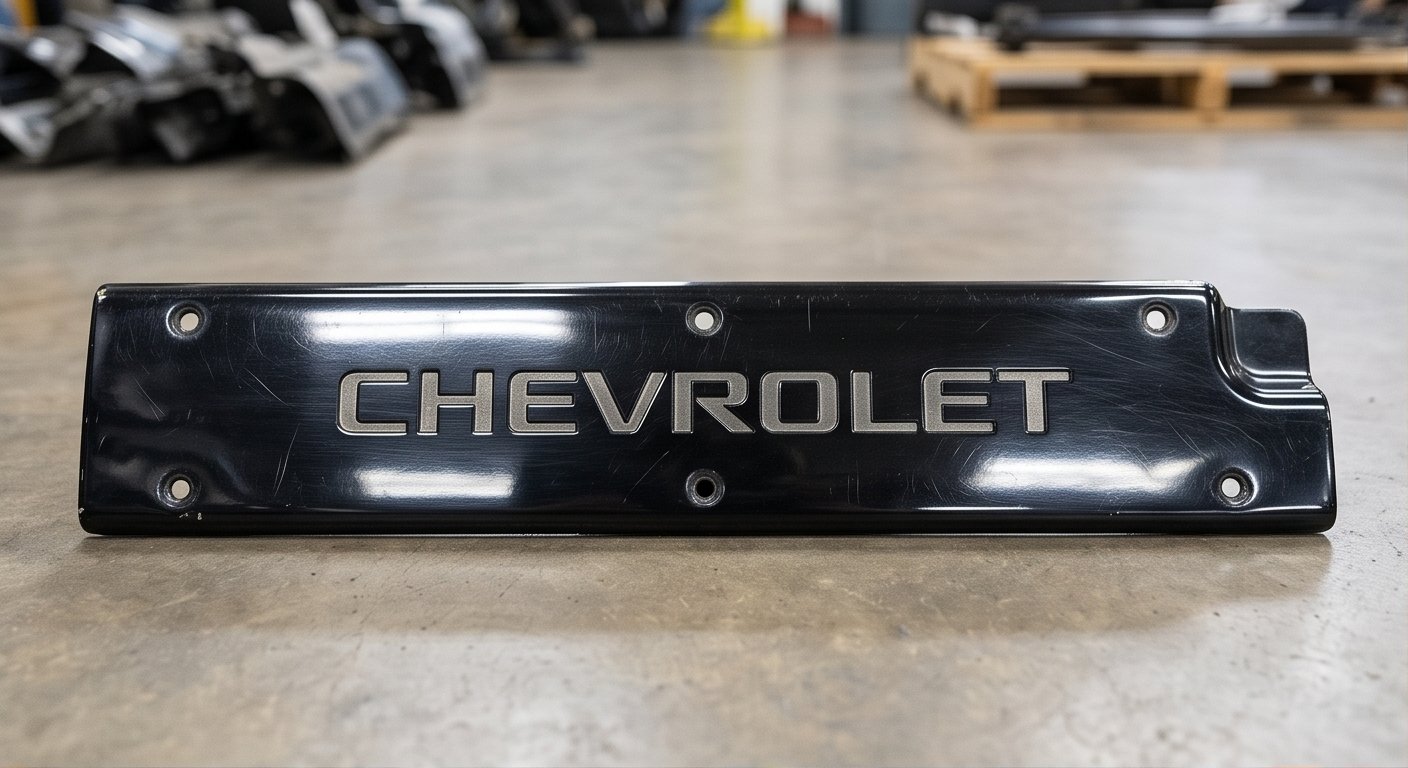

GMC Suburban 10 Sill Plate for Sale | Used GMC Suburban Door Sill Plate / Door Threshold Trim

Code: vaz532
(2 customer reviews)

Product Overview & Specifications

  • In Stock, 19-Year Production Coverage 1973-1991
  • Free Shipping to All 50 States, 3-7 Business Day Transit
  • GMC Suburban 10 1973-1991 1/2-Ton Pre-GMT400 Era
  • C10 2WD or K10 4WD Configurations
  • Sister Chevrolet Suburban C10/K10 1973-1991 Same platform
  • 3rd-4th Generation ‘Square Body’ Era Iconic American SUV
  • GM Longest Continuous Nameplate 1935+ 90+ years
  • Naming Convention:
  • Suburban 10 = 1/2-Ton (This Listing)
  • Suburban 20 = 3/4-Ton Batch 56 vaz517 GMC 2500 reference
  • Suburban 30 = 1-Ton Batch 56 vaz518 GMC 3500 reference
  • GMT400 1992+ Adopted 1500/2500/3500 Numbering
  • Body Styles:
  • 3-Door Early Era
  • 4-Door 1973+ Later Among first SUVs with 4-door config
  • Engines:
  • 305 V8 (5.0L) GM small block
  • 350 V8 (5.7L) Most common famous GM small block 1955-2003
  • 6.2L Detroit Diesel V8 Optional heavy-duty
  • 454 V8 Big Block (7.4L) Towing variants
  • Transmissions:
  • TH350 3-Speed Automatic Common small V8
  • TH400 Heavy-Duty 3-Speed Batch 56 vaz517 reference
  • 700R4 4-Speed Automatic with Overdrive Late 1980s+
  • 4L60 4-Speed Automatic Later models
  • 3/4-Speed Manual Early Years
  • Drivetrain:
  • 2WD (C10) Configuration
  • 4WD (K10) Configuration With transfer case and front live axle
  • Applications:
  • Family Hauler Pre-minivan era 1984+ Batch 55 vaz510
  • Work Vehicle / Towing / Recreational
  • 4th Generation 1992+:
  • GMT400 Platform Modernization
  • Naming Dropped ’10’ for ‘1500’
  • OBD-II Federal Mandate 1996+
  • Sill Plate Function:
  • Protection of Door Threshold Sheet Metal
  • Decorative Trim
  • Vehicle Branding (Suburban/GMC Logo)
  • Weather Seal Maintenance
  • Foot Traffic Protection
  • Construction:
  • Stamped Steel or Metal Aluminum or stainless
  • Mounting Screws or Clips
  • Embossed or Painted Logo
  • Multiple Colors Chrome, black, body-color
  • Common Failure Modes:
  • Bending from Foot Traffic
  • Corrosion (Salt-Belt)
  • Missing Screws/Clips
  • Damaged Logo/Branding
  • Surface Intact Verified
  • Mounting Points Functional
  • Donor Vehicle Disclosed
  • 100% Inspection Before Every Order Ships
  • Good Salvage Donor Pool (19 Years + Chevy Suburban)
  • Strong Vintage GM Truck/SUV Restoration Market
  • 15 Day Replacement Warranty

$80.00

In Stock
100% Fitment Assistance
15 Days Replacement Warranty
Free & Fast Shipping

Description

About the GMC Suburban 10 Sill Plate

Direct fit GMC Suburban 1/2-ton 1973-1991 era. ‘Suburban 10′ refers to OLDER GMC Suburban naming convention for 1/2-ton variant (C10 = 2WD, K10 = 4WD), before GM dropped ’10’ naming in 1992 with GMT400 platform modernization (switched to 1500/2500/3500 numbering like sister pickup trucks).

GMC Suburban heritage: GM’s FAMOUS FULL-SIZE SUV with 14+ generations spanning 1935-present (90+ years production making Suburban among LONGEST CONTINUOUS NAMEPLATES in automotive history). Founder of full-size SUV concept before modern SUV era. Used by families/service/commercial applications throughout decades.

3rd/4th generation Suburban 10 1973-1991 era: featured ‘square body’ styling – distinctive iconic American SUV era. Body styles: 3-door (early era) and 4-door (1973+ later – Suburban was among first SUVs to offer 4-door configuration, pre-dating modern SUV 4-door designs). 1/2-ton capacity distinct from Suburban 20 (3/4-ton, Batch 56 vaz517 GMC 2500 reference for older naming) and Suburban 30 (1-ton, Batch 56 vaz518 GMC 3500 reference for multi-era heritage).

Sister vehicle Chevrolet Suburban C10/K10 1973-1991 (same platform, different Chevy badging). GM made both Chevy and GMC versions simultaneously at same plants sharing most mechanical components. Many parts interchange between Chevy and GMC Suburban versions – different grille/badging decorative trim only.

Suburban 10 engines: 305 V8 (5.0L small block), 350 V8 (5.7L most common – the FAMOUS GM small block V8 heritage used across GM lineup 1955-2003), 6.2L Detroit Diesel V8 (optional heavy-duty), 7.4L V8 (454 Big Block some configurations for towing – the famous GM Big Block V8, Batch 56 vaz518 GMC 3500 reference). Transmissions: Turbo-Hydramatic 350 (TH350 3-spd auto common smaller V8), Turbo-Hydramatic 400 (TH400 heavy-duty 3-spd, Batch 56 vaz517 GMC 2500 reference), 700R4 4-spd with overdrive (late 1980s+), 4L60 4-spd (later models), 3-spd/4-spd manual early years. 2WD (C10) or 4WD (K10).

Applications: family hauler (most common pre-minivan era 1984+ Batch 55 vaz510 reference), work vehicle, towing vehicle (RV/boat/trailer), recreational vehicle, government/military use. 4WD K10 versions particularly popular for off-road and rural use.

4th generation 1992+ (GMT400 platform): when GM switched to GMT400 platform 1992 the ‘Suburban 10’ naming was dropped in favor of ‘1500’ designation following sister truck conventions (C1500/K1500 Suburban). Same ’10’ = ‘1500’ translation = ‘1/2-ton’. GMT400 brought modernization including OBD-II federal mandate 1996+ (Batch 56 vaz517 GMC reference for older pre-OBD-II era context).

Sill plate definition: trim piece mounted on door threshold/door sill (bottom door frame where rocker panel meets door opening). Functions: (1) Protection (protects sheet metal door threshold from foot wear and damage from many daily entries/exits), (2) Decorative trim (provides finished appearance to door opening), (3) Vehicle branding (often includes ‘Suburban’ or ‘GMC’ logo embossed or painted), (4) Weather seal (helps maintain door seal at threshold), (5) Foot traffic protection (many daily entries/exits wear sheet metal without sill plate).

Construction: stamped steel or metal plate (typically aluminum or stainless steel for corrosion resistance), mounting screws or clips (Phillips screws typical), branding/logo (embossed or painted ‘Suburban’ or ‘GMC’ lettering), anti-slip profile some designs, multiple colors (chrome polished, black, body-color variants).

Common failure modes: bending from foot traffic wear over years, corrosion (especially salt-belt areas), missing screws/clips (lost during removal), damaged logo/branding (worn lettering), cracking (plastic variants), paint wear (painted plates). Replacement is easy DIY 15-30 minutes per plate.

GMC Suburban 10 Heritage

Era: 1973-1991 (pre-GMT400 naming)

Naming: 10 = 1/2-ton (C10 2WD or K10 4WD)

Sister: Chevy Suburban C10/K10 same platform

Suburban Heritage: GM longest continuous nameplate 1935+ (90+ years)

Generation: 3rd-4th gen ‘square body’ iconic era

Body: 3-door early, 4-door 1973+

Engines: 305/350 V8, 6.2L Diesel, 454 Big Block

Transmissions: TH350/TH400/700R4/4L60

Drivetrain: 2WD (C10) or 4WD (K10)

Successor Naming: GMT400 1500/2500/3500 from 1992

GMC Suburban C10 1973-19912WD 1/2-ton
GMC Suburban K10 1973-19914WD 1/2-ton
Position Specific:
Driver Front (Left)Specific configuration
Passenger Front (Right)Mirror configuration
Rear Driver (Left)Rear door specific (4-door models)
Rear Passenger (Right)Rear door specific (4-door models)
Body Style:
3-Door SuburbanFront doors only
4-Door Suburban (1973+ Common)Front and rear doors
Sister Vehicle:
Chevy Suburban C10/K10 1973-1991Same platform (often interchanges)
Trim Level:
Base, Custom, Silverado, SierraMay affect plate color/style
Color Options:
Chrome, Black, Body-ColorSpecify preference
NOT Compatible: GMT400 Suburban 1500 (1992+)Different ‘1500’ naming era
NOT Compatible: Modern SuburbanDifferent platform

Call (240) 301-0095. Critical questions: (1) Year (1973-1991). (2) Position (driver/passenger, front/rear). (3) Body style (3-door or 4-door). (4) Color preference. (5) Trim level if specific.

Surface intact No major bending

Mounting holes functional Screws/clips can attach

Branding/logo visible Suburban or GMC lettering readable

Color condition assessed Some wear typical for age

No major corrosion

Anti-slip profile intact If equipped

Year/position verified

Donor vehicle disclosed

Cleaned of road grime

For GMC Suburban 10 sill plate vintage restoration

1973-1991 19-year production coverage

Pre-GMT400 naming era expertise

Square body iconic SUV era heritage

Suburban 14+ generation heritage 1935-present (90+ years)

GM longest continuous nameplate context

Sister Chevy Suburban C10/K10 cross-compatibility

Naming convention knowledge (10/20/30 vs 1500/2500/3500)

Suburban 20 = 3/4-ton context (Batch 56 vaz517)

Suburban 30 = 1-ton context (Batch 56 vaz518)

GMT400 1992+ platform modernization context

OBD-II 1996+ federal mandate context (Batch 56 vaz517)

Body style configurations (3-door early, 4-door 1973+)

350 V8 famous GM small block heritage 1955-2003

454 V8 Big Block context (Batch 56 vaz518)

6.2L Detroit Diesel V8 context

TH350/TH400 transmission heritage (Batch 56 vaz517)

700R4 4-speed automatic with overdrive

2WD (C10) vs 4WD (K10) configurations

Family hauler heritage pre-minivan era 1984+ (Batch 55 vaz510)

Sill plate function expertise (protection, decoration, branding)

Construction knowledge (stamped steel/aluminum/stainless)

Logo branding (Suburban or GMC)

Multiple color options (chrome, black, body-color)

Common failure mode expertise

Vintage GM truck/SUV restoration market knowledge

Surface intact verification

Mounting points inspection

Donor vehicle disclosed

Good salvage donor pool

Free shipping all 50 states

15 day warranty

No core charge

Additional information

part-type

Door sill plate / threshold trim / step plate

Vehicle

GMC Suburban 1/2-Ton 1973-1991

era

Pre-GMT400 naming (C10/K10)

production

19 years US

generation

3rd-4th gen 'square body'

Sister

Chevrolet Suburban C10/K10 1973-1991

body-styles

3-door (early), 4-door (1973+)

Suburban Heritage

GM longest nameplate 1935+ (90+ years)

engines

305/350 V8, 454 Big Block, 6.2L Diesel

Transmissions

4L60, 700R4, TH350, TH400

drivetrain

2WD (C10) or 4WD (K10)

naming-convention

10 = 1/2-ton (vs 20 = 3/4-ton, 30 = 1-ton)

GMT400 Successor

1992+ adopted 1500/2500/3500

construction

branding logo, Stamped steel/aluminum/stainless

mounting

Screws or clips

color-options

Black, body-color, Chrome

common-failure

Bending, corrosion, missing screws

approximate-weight

0.5 to 2 lbs

installation-difficulty

15-30 minutes per plate, Easy

2 reviews for GMC Suburban 10 Sill Plate for Sale | Used GMC Suburban Door Sill Plate / Door Threshold Trim

  1. Konstantinos Konstantopoulos-Stamatides

    Replaced front door sill plates on my 1985 GMC Suburban K10 Silverado 4-Door (K10 4WD 1/2-ton configuration with transfer case and front live axle, 1985 era 3rd generation Suburban 1973-1991 ‘square body’ styling distinctive iconic American SUV era, 350 V8 small block 5.7L the famous GM small block V8 used across GM lineup 1955-2003, TH400 heavy-duty 3-speed automatic transmission the famous GM heavy-duty automatic documented Batch 56 vaz517 GMC 2500 reference for multi-era heritage, 4WD configuration popular for off-road and rural use, 4-door body style for family hauler use as Suburban was among first SUVs to offer 4-door pre-dating modern SUVs, Silverado trim level premium GMC trim with upgraded features). Original front door sill plates had bent from foot traffic wear over 40 years and chrome finish was worn. Vaz educated me extensively on the GMC Suburban 10 heritage (1973-1991 19-year production era of 1/2-ton ‘Suburban 10′ naming with C10 2WD or my K10 4WD designation before GM dropped ’10’ naming in 1992 with GMT400 platform modernization switching to 1500/2500/3500 numbering like sister pickup trucks), GMC Suburban overall heritage (GM’s famous full-size SUV with 14+ generations spanning 1935-present 90+ years production making Suburban among longest continuous nameplates in automotive history, founder of full-size SUV concept before modern SUV era), 3rd generation ‘square body’ iconic era context (1973-1991 distinctive styling, multiple updates through 19-year run, considered prime collector era, K10 4WD variants particularly valued today), Suburban naming convention (10 = 1/2-ton my Suburban, 20 = 3/4-ton documented Batch 56 vaz517 GMC 2500 reference, 30 = 1-ton documented Batch 56 vaz518 GMC 3500 reference, GMT400 1992+ adopted 1500/2500/3500 following Ford F-Series style), sister Chevrolet Suburban C10/K10 1973-1991 cross-compatibility (same platform different Chevy badging, many parts interchange), engine heritage (my 350 V8 famous GM small block plus 305 V8 5.0L plus 454 V8 Big Block 7.4L Batch 56 vaz518 reference plus 6.2L Detroit Diesel V8 optional), transmission heritage (TH350 3-speed automatic, my TH400 heavy-duty 3-speed Batch 56 vaz517 reference, 700R4 4-speed with overdrive late 1980s+, 4L60 4-speed later), 2WD C10 vs 4WD K10 distinction (transfer case and front live axle for 4WD), pre-minivan era family hauler context (1984 Chrysler minivan revolution Batch 55 vaz510 reference began taking family market share), 4th generation GMT400 1992+ context (platform modernization with OBD-II federal mandate 1996+ Batch 56 vaz517 GMC reference for older pre-OBD-II era), and sill plate function (door threshold protection, decorative trim, GMC/Suburban branding, weather seal). Sourced from 1987 K10 Silverado donor matching configuration. The Suburban heritage and square body era context was excellent.

  2. Mathilde Hartmann-Schweighofer

    Bought rear door sill plates for my 1981 GMC Suburban C10 Custom Deluxe 4-Door (C10 2WD 1/2-ton configuration for highway/family use, 1981 era 3rd generation Suburban 1973-1991 ‘square body’ generation, 305 V8 5.0L GM small block base V8 engine, 700R4 4-speed automatic transmission introduced in late Suburban 1980s era with overdrive ratio for better highway fuel economy, 2WD configuration for highway and family use, 4-door body style for family hauler with rear doors having sill plates wear from family use over decades, Custom Deluxe trim level base configuration with practical features). Original rear door sill plates had heavy corrosion from salt-belt area use plus missing branding/lettering. Vaz patiently explained the GMC Suburban heritage (1935-present GM’s longest continuous nameplate with 14+ generations and 90+ years production), Suburban 10 naming context (1/2-ton designation pre-GMT400 era with my C10 2WD vs K10 4WD), 3rd generation ‘square body’ 1973-1991 iconic era, 4-door body style heritage (Suburban among first SUVs to offer 4-door pre-dating modern SUVs), Suburban capacity tiers (10 = 1/2-ton my Suburban, 20 = 3/4-ton Batch 56 vaz517 reference, 30 = 1-ton Batch 56 vaz518 reference), sister Chevrolet Suburban C10/K10 cross-compatibility, engine options (my 305 V8 plus 350 V8 most common plus 454 V8 Big Block heavy towing plus 6.2L Detroit Diesel), transmission heritage (TH350 3-speed for smaller V8, TH400 heavy-duty 3-speed Batch 56 vaz517 reference, my 700R4 4-speed with overdrive for better highway fuel economy late 1980s+, 4L60 4-speed later models, manuals early years), 1992+ GMT400 platform modernization context (dropped ’10/20/30′ for ‘1500/2500/3500’ following industry trend like Ford F-Series naming, OBD-II 1996+ federal mandate Batch 56 vaz517 GMC reference), family hauler heritage pre-minivan era (1984 Chrysler minivan revolution Batch 55 vaz510 reference began shifting family market share to minivans), and sill plate function (door threshold protection from foot traffic wear plus decorative trim plus vehicle branding plus weather seal maintenance plus foot traffic protection over many daily entries/exits). Sourced from 1983 C10 Custom Deluxe donor matching configuration. One star off because finding rear door sill plates vs front door variants took multiple inspections (rear doors less common in donor pool). But the Suburban 10 heritage and ‘square body’ context was excellent.

Add a review

Your email address will not be published. Required fields are marked *

Frequently Asked Questions

What does 'Suburban 10' mean?

‘Suburban 10′ is OLDER GMC SUBURBAN NAMING for 1/2-ton variant: (1) NAMING CONVENTION 1973-1991: (a) Suburban 10 = 1/2-ton capacity. (b) Suburban 20 = 3/4-ton capacity (Batch 56 vaz517 GMC 2500 reference). (c) Suburban 30 = 1-ton capacity (Batch 56 vaz518 GMC 3500 reference). (d) C10/K10 = 2WD/4WD respectively. (e) Same numbering convention as GMC/Chevy pickup trucks of era. (2) WHY ’10/20/30′ NAMING: (a) Followed Chevy/GMC truck naming since 1960s. (b) Indicated payload capacity tier. (c) Common across GM truck/SUV lineup. (d) Customers familiar with system. (3) C vs K DESIGNATION: (a) C = 2WD (Conventional). (b) K = 4WD (4-Wheel Drive). (c) C10 = 2WD 1/2-ton. (d) K10 = 4WD 1/2-ton. (4) GMT400 PLATFORM 1992+ CHANGED NAMING: (a) Dropped ’10/20/30’ for ‘1500/2500/3500’. (b) Same capacity translation: 10=1500, 20=2500, 30=3500. (c) Followed competitor naming conventions (Ford F-150/F-250/F-350). (d) C/K letters initially retained on Suburban (C1500/K1500), later dropped. (5) GMC Suburban 10 SPECIFICALLY: (a) Most common Suburban variant for family use. (b) Adequate towing capacity for moderate loads. (c) Better fuel economy than Suburban 20 or 30. (d) Lower purchase price. (e) Most popular in resale market today. (6) PRODUCTION YEARS 1973-1991: (a) 3rd generation Suburban 1973-1991 ‘square body’. (b) Modernized 1973 with new styling. (c) Multiple updates through 19-year run. (d) Considered iconic American SUV era. (7) MODERN EQUIVALENT: 1992-2014 = Chevy/GMC Suburban 1500. (8) FOR PARTS – sill plates and other trim specific to 1973-1991 era. NOT interchangeable with newer GMT400 Suburban 1500 (1992+) which has different door configurations and trim styles. (9) ENTHUSIAST INTEREST – Square body Suburbans (1973-1991) highly collectible especially K10 4WD variants.

What is the Suburban's heritage?

GMC SUBURBAN is one of automotive history’s MOST IMPORTANT VEHICLES: (1) PRODUCTION HISTORY – 1935 to PRESENT (90+ years across 14+ generations). One of LONGEST CONTINUOUS NAMEPLATES in automotive history. (2) CONCEPT – Suburban was FOUNDER OF FULL-SIZE SUV concept before modern SUV era. Originally truck-based wagon for hauling people and cargo. (3) GENERATIONS OVERVIEW: (a) 1st gen 1935-1946 (initial concept). (b) 2nd gen 1947-1955 (post-war design). (c) 3rd gen 1973-1991 (THIS LISTING’S ERA – square body iconic). (d) 4th gen 1992-1999 (GMT400 platform, ‘1500’ naming). (e) 5th gen 2000-2006 (GMT800). (f) 6th gen 2007-2014 (GMT900). (g) 7th gen 2015-2020 (K2XX). (h) 8th gen 2021-present (T1XX platform). (4) APPLICATIONS through history: (a) Family hauler (large families pre-minivan era). (b) Commercial/fleet vehicle. (c) Government/military use. (d) Towing vehicle. (e) Off-road exploration. (f) Limousine conversions. (g) Hot rod and custom builds. (5) CULTURAL ICONS – Suburban featured in: countless movies, TV shows, government usage. Iconic American family/work vehicle. (6) FAMILY OPTION before minivans: (a) Before 1984 Chrysler minivan revolution (Batch 55 vaz510 reference). (b) Large families needed Suburban or station wagon. (c) Suburban offered seating 7-9 people. (d) Cargo capacity for groceries/luggage. (e) Towing for RV/boat. (7) 1973-1991 SQUARE BODY GENERATION: (a) Distinctive iconic styling. (b) Major 19-year production run. (c) Multiple updates within generation. (d) Considered prime collector era. (e) K10 4WD variants particularly valued. (8) MILITARY/GOVERNMENT: (a) Used by US military as ‘CUCV’ commercial utility cargo vehicle. (b) White House Secret Service uses Suburbans. (c) Many police/government applications. (d) FBI/DEA fleet vehicles. (9) MODERN STATUS – Suburban continues production. Latest generation 2021+ with modern technology. Premium luxury variants (Suburban Premier, High Country). (10) SISTER VEHICLE – Chevrolet Suburban always made alongside GMC Suburban. Same platform, different brand badging. Strong loyalty to each brand. (11) ENTHUSIAST COMMUNITIES: (a) Vintage Suburban restoration. (b) K10/K20 4WD enthusiasts. (c) Square body specific groups. (d) Diesel Suburban (6.2L Detroit Diesel) enthusiasts. (12) FOR PARTS – 19-year 3rd gen production provides good donor pool plus sister Chevy doubles availability.

How does Suburban 10 compare to Suburban 20 and 30?

Suburban capacity tiers reflected by ’10/20/30′ naming: (1) SUBURBAN 10 (1/2-Ton, This Listing): (a) Capacity ~1,000 lbs payload. (b) Towing ~5,000-7,000 lbs typical. (c) GVWR ~6,500-7,200 lbs. (d) Most popular for family use. (e) Better fuel economy than 20/30. (f) Most common in used market. (g) Adequate for most family hauling needs. (2) SUBURBAN 20 (3/4-Ton, Batch 56 vaz517 GMC 2500 Reference): (a) Capacity ~2,000 lbs payload. (b) Towing ~7,500-10,000 lbs typical. (c) GVWR ~8,500-9,200 lbs. (d) Heavier duty suspension and brakes. (e) Larger axles. (f) Truck-like capability with SUV body. (g) Used by larger families needing towing. (3) SUBURBAN 30 (1-Ton, Batch 56 vaz518 GMC 3500 Reference): (a) Capacity ~3,000 lbs payload. (b) Towing ~10,000-12,000 lbs typical. (c) GVWR ~10,000+ lbs. (d) Heaviest duty configuration. (e) Dual rear wheels (DRW) option available. (f) Maximum towing within Suburban range. (g) Commercial/work use common. (4) ENGINE OPTIONS DIFFER: (a) Suburban 10 – 305/350 V8 most common, 454 Big Block optional. (b) Suburban 20 – 350/454 V8, 6.2L Diesel optional. (c) Suburban 30 – 454 Big Block, 6.2L Diesel standard for heavy use. (5) TRANSMISSION DIFFERENCES: (a) Suburban 10 – TH350 (light V8), TH400 (heavier), 700R4 (later). (b) Suburban 20/30 – TH400 (standard for heavy duty – Batch 56 vaz517 reference), heavy-duty automatics. (6) AXLE DIFFERENCES: (a) Suburban 10 – lighter duty 8.5-inch rear axle typically. (b) Suburban 20/30 – 10.5-inch or larger Dana 60 axles (Batch 56 vaz518 reference for Dana 60). (7) SUSPENSION: (a) Suburban 10 – lighter springs and shocks. (b) Suburban 20/30 – heavy-duty springs, stiffer ride, higher capacity. (8) PRICE: (a) Suburban 10 – lower price tier. (b) Suburban 20 – higher price for capacity. (c) Suburban 30 – highest price commercial-oriented. (9) FOR PARTS – sill plates may differ slightly between tiers: (a) Most often share between 10/20/30 due to common cab construction. (b) Verify before assuming interchange. (c) Cosmetic trim level may differ. (10) USED MARKET: Suburban 10 most plentiful. Suburban 20 less common. Suburban 30 rare today.

How do I replace a sill plate?

GMC Suburban sill plate replacement is EASY DIY ~15-30 minutes per plate: (1) TOOLS NEEDED: Phillips screwdriver, trim removal tool, clean rag, new sill plate. (2) OPEN DOOR: Open vehicle door for access to sill plate. (3) IDENTIFY MOUNTING: (a) Locate mounting screws or clips along sill plate. (b) Typically 3-6 Phillips screws. (c) Or plastic clips on some designs. (4) REMOVE OLD SCREWS/CLIPS: (a) Phillips screwdriver to unscrew. (b) Or pry tools for clips. (c) Set hardware aside for reuse or reference. (d) Remove rust/corrosion if needed. (5) REMOVE OLD SILL PLATE: (a) Lift plate from threshold. (b) May need to bend slightly. (c) Inspect threshold sheet metal beneath. (6) CLEAN THRESHOLD: (a) Clean dirt and debris. (b) Wipe with damp rag. (c) Inspect for rust damage. (d) Treat any rust with rust converter if present. (7) POSITION NEW SILL PLATE: (a) Align with door threshold. (b) Verify mounting holes align with body holes. (c) Note correct orientation (some plates have specific top/bottom). (8) INSTALL MOUNTING HARDWARE: (a) Use new screws or original (if good condition). (b) Tighten Phillips screws snugly (don’t over-tighten). (c) Snap clips into place. (9) VERIFY SECURE: (a) Press on plate to ensure no movement. (b) Check all mounting points engaged. (c) Verify branding/logo visible. (10) REPEAT FOR EACH PLATE: (a) Typically 2-4 plates per vehicle (depending on 3-door or 4-door). (b) Front doors usually have sill plates. (c) Rear doors on 4-door models. (11) CLOSE DOOR AND TEST: (a) Close door normally. (b) Verify plate doesn’t catch door. (c) Verify normal door operation. (d) Plate should sit flush with threshold. (12) PROFESSIONAL INSTALLATION not needed for sill plates – simple DIY task. (13) FOR VEHICLE BEAUTY: (a) Clean plate periodically. (b) Use chrome polish on chrome variants. (c) Replace if heavily damaged. (d) Sill plates make significant cosmetic improvement for affordable cost.

What's the GMT400 platform connection?

GMT400 was GM’s PLATFORM MODERNIZATION 1988-1998 that REDEFINED Suburban naming: (1) GMT400 PLATFORM 1988-1998: (a) New platform for full-size GM trucks/SUVs. (b) Pickup trucks (C/K 1500/2500/3500) adopted 1988. (c) Suburban adopted GMT400 platform 1992 (4-year delay). (d) Documented Batch 56 vaz517 GMC 2500 reference for older era and Batch 56 vaz518 GMC 3500 reference for Multi-Era. (2) NAMING CHANGE for Suburban 1992+: (a) Dropped ’10/20/30′ for ‘1500/2500/3500’ numbering. (b) Followed Chevy/GMC pickup naming. (c) Followed Ford F-Series naming style (F-150/F-250/F-350). (d) Modern customer-friendly naming. (3) WHY NAMING CHANGED: (a) Industry-wide trend toward ‘thousand’ naming. (b) Customer recognition (1500 more intuitive than 10). (c) Marketing modernization. (d) Followed competitor conventions. (4) PLATFORM IMPROVEMENTS: (a) New body design – more modern styling. (b) Better aerodynamics. (c) Improved suspension. (d) More refined interior. (e) Updated electronics. (f) Better fuel economy. (5) ENGINE OPTIONS GMT400 Era: (a) 350 V8 (5.7L) continued. (b) 454 Big Block V8 (7.4L) continued. (c) 6.5L Detroit Diesel turbo (replaced 6.2L Detroit Diesel). (d) Vortec engines later (after 1996). (6) TRANSMISSION OPTIONS: (a) 4L60 4-speed automatic. (b) 4L80 heavy-duty 4-speed. (c) Manual transmissions available some configurations. (7) OBD-II MANDATE 1996: (a) Federal mandate documented Batch 56 vaz517 GMC reference. (b) Pre-1996 GMT400 still pre-OBD-II. (c) Post-1996 OBD-II required all vehicles. (d) Affected diagnostic capability. (8) END OF GMT400 1999+ (Pickup) / 1999+ (Suburban GMT800): (a) Replaced by GMT800 platform 1999+. (b) Continued modernization. (c) Many GMT400 vehicles still in service today. (9) FOR PARTS – GMT400 Suburban (1992-1999) parts DIFFERENT from older C10/K10 1973-1991 Suburban: (a) Different door configurations. (b) Different trim. (c) Sill plates SPECIFIC to each era. (d) Not interchangeable with older era. (10) ENTHUSIAST INTEREST: (a) GMT400 vehicles becoming collectible. (b) Less than square body 1973-1991 generation. (c) Modern enough for daily use. (d) Vintage charm developing as age.

Why is the square body Suburban so popular today?

GMC Suburban ‘SQUARE BODY’ 1973-1991 is ICONIC AMERICAN SUV ERA: (1) DEFINING ERA – 1973-1991 considered: (a) Peak American family hauler era. (b) Pre-minivan dominance era (minivans took over 1984+ Batch 55 vaz510). (c) RWD/4WD truck-based SUV era. (d) Distinctive ‘square body’ styling. (2) AESTHETIC APPEAL: (a) Boxy/utilitarian styling. (b) Bold, masculine appearance. (c) High ground clearance look. (d) Big visible wheels. (e) Clean horizontal lines. (f) No aerodynamic compromises. (3) ENGINEERING SIMPLICITY: (a) Body-on-frame construction (durability). (b) Solid rear axle. (c) Simple suspension. (d) Easy to repair. (e) Parts plentiful. (f) Modifications easier. (4) ENGINE OPTIONS POPULAR: (a) 350 V8 famous GM small block (5.7L). (b) 454 V8 Big Block (7.4L) for serious towing. (c) 6.2L Detroit Diesel for fuel economy/longevity. (d) Various transmission options. (e) Manual transmission available some years. (5) ENTHUSIAST COMMUNITY GROWING: (a) Active forums and clubs. (b) Restoration projects popular. (c) Custom builds (off-road, lowriders, hot rods). (d) Collectors valuing originality. (e) Square body shows and gatherings. (6) RESTORATION MARKET: (a) Strong aftermarket support. (b) Reproduction parts available. (c) Cross-compatibility with sister Chevy doubles donor pool. (d) Multiple specialty vendors. (e) Affordable entry into vintage SUV ownership. (7) DAILY DRIVER VIABILITY: (a) Mechanically simple – easier to maintain. (b) Parts widely available. (c) Comfortable for highway. (d) Can tow modern trailers. (e) Some restomod with modern engines (LS swaps popular). (8) INVESTMENT POTENTIAL: (a) Values rising over past decade. (b) Pristine examples command premium. (c) 4WD K10/K20 variants most valuable. (d) Diesel variants increasing in popularity. (e) Custom builds command high prices. (9) CULTURAL SIGNIFICANCE: (a) Featured in many movies and TV shows. (b) Government use (Secret Service). (c) Military versions (CUCV). (d) Iconic American symbol. (10) COMPARISON to Modern Suburbans: (a) Modern Suburbans more refined/comfortable but less character. (b) Square body has distinctive personality. (c) Modern technology vs vintage charm trade-off. (d) Many prefer square body for character. (11) FOR PARTS – good vintage GM truck/SUV restoration market provides parts for sill plates and other trim items.

How does the Chevy Suburban relate?

CHEVROLET SUBURBAN and GMC SUBURBAN are SISTER VEHICLES on same platform: (1) PARENT COMPANY – both made by GENERAL MOTORS at same plants. Chevy and GMC are both GM brands. (2) PLATFORM IDENTITY: (a) Same chassis/frame. (b) Same body structure (Suburban body specifically). (c) Same suspension. (d) Same engines and transmissions. (e) Same drivetrain components. (3) DIFFERENCES (Cosmetic/Marketing Only): (a) GRILLE DESIGN – different Chevy vs GMC grilles. (b) HEADLIGHTS/BEZELS – different chrome trim. (c) BADGING – ‘Chevrolet/Chevy’ vs ‘GMC’ lettering. (d) TAIL LIGHTS – sometimes different lens shapes. (e) WHEEL DESIGNS – sometimes different patterns (functionally same). (f) INTERIOR TRIM – sometimes different upholstery patterns. (g) TRIM PACKAGE NAMES – ‘Silverado’ (Chevy) vs ‘Sierra’ (GMC). (4) MARKET POSITIONING: (a) Chevy – mainstream, value-oriented. (b) GMC – slightly premium, professional/work focus. (c) Different dealer networks. (d) GMC positioned slightly above Chevy. (e) Pricing typically similar. (5) PRICE: similar pricing, GMC sometimes slightly higher for trim. (6) PARTS INTERCHANGE – extensive cross-compatibility: (a) Mechanical parts share entirely. (b) Body panels share (different decorative trim). (c) Sill plates often share (THIS LISTING potentially fits Chevy Suburban C10/K10 1973-1991 with verification). (d) Interior parts often share. (7) PRODUCTION – same GM factories: (a) Suburban production at specific plants. (b) Same supplier chain. (c) Same quality control. (d) Identical mechanical builds. (8) HISTORICAL CONTEXT – GM sister brand strategy: (a) Common 1960s-2000s. (b) Same platform multiple brands. (c) Reduced development costs. (d) Different dealer networks reach different customers. (e) Strategy continues partially today (GMC + Chevy maintained, Pontiac/Oldsmobile/Saturn discontinued). (9) GMC vs CHEVY DEBATE: (a) Mechanically identical. (b) Buyers chose based on dealer relationships, brand preference, or specific styling preferences. (c) GMC trim sometimes considered slightly more upscale. (d) Both equally capable. (10) FOR THIS LISTING – GMC Suburban 10 sill plate often INTERCHANGES with Chevy Suburban C10/K10 sill plate (1973-1991): (a) Mechanical mounting identical. (b) Branding different (GMC vs Chevy). (c) Some color variations between trim levels. (d) Verify branding preference. (11) GMC BRAND HERITAGE: (a) GMC founded 1908 originally as ‘General Motors Truck’. (b) Truck/SUV focused brand within GM. (c) Continued strongly today as ‘Professional Grade’ truck brand. (d) Sister to Chevrolet within GM portfolio.

How does shipping work?

Free shipping to all 50 US states. GMC Suburban 10 sill plate is small/lightweight (0.5-2 lbs) shipped in protective box. UPS or FedEx Ground typical (3-7 days transit). Good salvage donor pool from 19-year Suburban 10 production 1973-1991 plus sister Chevy Suburban C10/K10 1973-1991 cross-compatibility doubling sources. Customer must specify year, position (driver/passenger, front/rear), color preference (chrome, black, body-color), and trim level if applicable. Aftermarket sill plates available from vintage GM truck restoration vendors ($30-65) if used OE not preferred. NOS rare and premium-priced.

Product Warranty

15 Day Replacement Warranty

Covered:

  • Defects discovered at delivery

Not Covered:

  • Damage from improper installation
  • Labor costs of any kind

Contact (240) 301-0095 within 15 days of delivery.

Trust Badges

  • For GMC Suburban 10 Sill Plate, 1973-1991
  • 19-Year Production Coverage
  • Pre-GMT400 Naming Era Expertise, C10/K10
  • Square Body Iconic Era Heritage, 3rd Generation
  • Suburban 14+ Generations Heritage, 1935-Present 90+ Years
  • GM Longest Continuous Nameplate Context
  • Sister Chevy Suburban C10/K10 Cross-Compatibility
  • Naming Convention Knowledge, 10/20/30 vs 1500/2500/3500
  • Suburban 20 = 3/4-Ton Context, Batch 56 vaz517
  • Suburban 30 = 1-Ton Context, Batch 56 vaz518
  • GMT400 1992+ Platform Modernization Context
  • OBD-II 1996+ Federal Mandate Context, Batch 56 vaz517
  • Body Style Configurations, 3-Door Early / 4-Door 1973+
  • 350 V8 Famous GM Small Block Heritage, 1955-2003
  • 454 V8 Big Block Context, Batch 56 vaz518
  • 6.2L Detroit Diesel V8 Context
  • TH350/TH400 Transmission Heritage, Batch 56 vaz517
  • 700R4 4-Speed Automatic Overdrive
  • 2WD (C10) vs 4WD (K10) Configurations
  • Family Hauler Heritage Pre-Minivan Era, 1984+ Batch 55 vaz510
  • Sill Plate Function Expertise
  • Construction Knowledge, Stamped Steel/Aluminum/Stainless
  • Logo Branding, Suburban/GMC
  • Multiple Color Options, Chrome/Black/Body-Color
  • Common Failure Mode Expertise
  • Vintage GM Truck/SUV Restoration Market
  • Donor Vehicle Disclosed
  • Good Salvage Donor Pool
  • Free Shipping All 50 States
  • 15 Day Warranty
  • No Core Charge