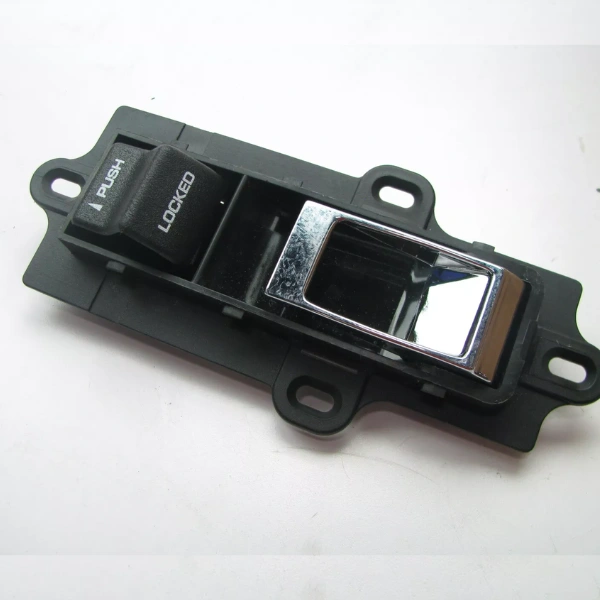
About the Chrysler TC Inside Door Handle
Direct fit Chrysler TC by Maserati 1989-1991 niche Italian-American collaboration vehicle (3 years US production, only ~7,300 total units produced globally). One of MOST UNUSUAL Mopar collaborations ever. LEE IACOCCA's pet project from Chrysler recovery era after Chrysler took ownership stake in Maserati mid-1980s (Iacocca and Alejandro de Tomaso friendship led to investment partnership).
BUILT IN ITALY at Maserati Modena facility with Italian craftsmanship and Detroit engineering. Platform: based on Chrysler K-Car 'Q-Body' variant (specific body style designation within K-Car family for TC), despite Italian premium styling and pricing. Body style: 2-door convertible primary with removable hardtop option, some hardtop-only variants limited production.
Engines: 2.2L Turbo Intercooled I4 (Chrysler turbocharged, ~160-200 HP, the famous K-Car era turbo engine used in Daytona/LeBaron Turbo/Shadow Turbo), 2.2L Turbo with Maserati 16-valve cylinder head (limited production ~200 HP with Italian DOHC head on Chrysler block), 3.0L Mitsubishi 6G72 V6 (1990-1991 some models, ~141 HP, sourced via Chrysler-Mitsubishi joint venture partnership). Transmissions: Getrag 5-speed manual (German manufacturer heritage, sporting choice) or 3-speed automatic. FWD only.
MSRP $33,000-37,000 in 1989 (very expensive, comparable to Cadillac Allante and higher than many Mercedes sedans of era). Discontinued 1991 due to slow sales, K-Car platform limitation apparent to knowledgeable buyers, parallel Italian collaboration challenges (Cadillac Allante similar issues), Chrysler strategic shift toward LH Platform under Robert Lutz successor era. Today CULT COLLECTOR VEHICLE appreciating in value as 80s Detroit/Italy collaboration era artifact with rare production and Iacocca personality.
Inside door handle: interior door release lever mounted on inside panel of driver and passenger doors, pull-lever action allowing door opening from inside vehicle, mechanical linkage to door latch mechanism. Italian-influenced premium construction reflecting TC's premium positioning. Many TC parts are TC-specific not interchanging with mainstream Chrysler lineup.
TC by Maserati Heritage
- Production: 1989-1991 (~7,300 total units)
- Iacocca Project: Personal Maserati collaboration
- Built In: Italy (Maserati Modena facility)
- Platform: K-Car Q-Body variant (FWD)
- Engines: 2.2L Turbo I4, 3.0L Mitsubishi V6
- MSRP 1989: $33,000-37,000 (premium pricing)
- Status Today: Cult collector vehicle appreciating
Vehicle Compatibility
TC by Maserati Coverage:
| Detail | Description |
|---|
| Chrysler TC by Maserati 1989 | 1st year production |
| Chrysler TC by Maserati 1990 | Middle year |
| Chrysler TC by Maserati 1991 | Final year production |
| TC Convertible (primary body) | 2-door soft top with removable hardtop |
| TC Hardtop-Only Variants | Limited production |
| Driver Side (Left) Door | Specify when ordering |
| Passenger Side (Right) Door | Specify when ordering |
| Engine: 2.2L Turbo I4 | Most common engine variant |
| Engine: 2.2L Turbo Maserati 16V Head | Premium variant |
| Engine: 3.0L Mitsubishi 6G72 V6 | 1990-1991 some configurations |
| NOT Compatible: Mainstream Chrysler K-Car (LeBaron, Aries) | Different platform/handles |
| NOT Compatible: Dodge LeBaron Convertible | Different platform |
| NOT Compatible: Other Chrysler/Dodge Vehicles | TC-specific handle |
Fitment Assistance
Call (240) 301-0095. Critical questions: (1) Year (1989, 1990, 1991 - some changes between years). (2) Side (driver left or passenger right). (3) Engine configuration (2.2L Turbo vs Maserati 16V vs 3.0L V6 - interior may have subtle differences). (4) Body style (convertible vs hardtop). (5) Color/material preference (chrome, color-coded plastic, leather-wrapped variants). (6) Restoration project (matching original spec preferred) or driver vehicle (used acceptable).
Condition and Inspection
- Lever functional Pull action engages latch
- Linkage connection secure
- No cracked plastic
- Chrome plating intact Premium variants
- Leather wrapping present If applicable
- Mounting hardware compatible
- Year/side/configuration verified
- Donor vehicle disclosed
- Cleaned and protected
Why Buy from Us
- For Chrysler TC by Maserati inside door handle
- Niche vintage vehicle expertise
- 1989-1991 3-year production knowledge
- Lee Iacocca era Chrysler collaboration context
- Italian Maserati Modena facility heritage
- K-Car Q-Body platform context
- Iacocca personal Maserati investment context
- Alejandro de Tomaso friendship era
- Cadillac Allante parallel collaboration context
- 80s Detroit/Italy collaboration era knowledge
- 2.2L Turbo engine family (K-Car performance)
- Maserati 16-valve head limited variant
- Mitsubishi 6G72 V6 joint venture context
- Getrag 5-speed manual heritage
- Robert Lutz era LH Platform shift context
- Cult collector vehicle status
- Limited production rarity knowledge
- TC-specific parts identification
- Donor vehicle disclosed
- Free shipping all 50 states
- 15 day warranty
- No core charge
What was the Chrysler TC by Maserati?
The CHRYSLER TC BY MASERATI was ONE OF MOST UNUSUAL Mopar collaborations ever (1989-1991, 3 years, ~7,300 total units globally): (1) ORIGIN - Lee Iacocca's pet project from Chrysler recovery era after Chrysler took ownership stake in Maserati mid-1980s. Iacocca and Maserati owner Alejandro de Tomaso were friends and business partners. The TC reflected Iacocca's personal interest in combining American practicality with Italian craftsmanship. (2) PRODUCTION LOCATION - Built in Italy at MASERATI MODENA FACILITY with Italian craftsmanship and Detroit engineering. Body-in-white components shipped to Italy for final assembly then back to North America for sale. (3) PLATFORM - Based on CHRYSLER K-CAR 'Q-BODY' variant (specific body style designation within K-Car family for TC), the Q-Body was modified K-Car architecture tailored for 2-door convertible body style with Italian body panels and hand-finished interior. K-Car heritage from Iacocca's Chrysler recovery 1981+. (4) BODY - 2-door convertible (with removable hardtop option) primary configuration. Some hardtop-only variants limited production. Italian design elements including hand-finished leather interior, premium soft top mechanism, distinctive Italian styling cues reminiscent of Maserati sports coupes. (5) ENGINES: 2.2L Turbo Intercooled I4 (Chrysler turbocharged engine ~160-200 HP, famous from Daytona Turbo/LeBaron Turbo era), 2.2L Turbo with MASERATI 16-VALVE DOHC cylinder head (Italian Maserati-designed head on Chrysler block, limited production ~200 HP), 3.0L Mitsubishi 6G72 V6 (1990-1991 some models ~141 HP, sourced via Chrysler-Mitsubishi joint venture). (6) TRANSMISSIONS: Getrag 5-speed manual (German Getrag heritage), 3-speed automatic. (7) FWD ONLY - despite Italian sports car aesthetic, drivetrain was FWD from K-Car platform (some critics considered this contradictory). (8) MSRP $33,000-37,000 in 1989 (very expensive, comparable to Cadillac Allante, higher than many Mercedes sedans). (9) DISCONTINUED 1991 - slow sales, K-Car platform limitation apparent to knowledgeable buyers, Iacocca era ending, Robert Lutz successor focusing on mainstream products. (10) CULT COLLECTOR STATUS TODAY - appreciating in value as 80s Detroit/Italy collaboration era artifact with rare production and Iacocca personality.
How is the TC related to Lee Iacocca?
The Chrysler TC by Maserati was PERSONAL PROJECT of Lee Iacocca during Chrysler recovery era: (1) IACOCCA BACKGROUND - Lee Iacocca (born 1924, died 2019) was famous American auto executive, previously Ford executive (where he led Mustang development 1960s before being fired by Henry Ford II 1978), then joined Chrysler 1978 to lead recovery. (2) CHRYSLER RECOVERY - Iacocca's leadership 1978-1992 included: federal loan guarantees 1980 (1.5 billion dollars to save company), K-Car launch 1981 (revolutionary FWD platform documented earlier batches), Dodge Caravan/Plymouth Voyager minivan launch 1984 (revolutionary minivan concept), Lebaron Convertible 1982 (first American convertible after long absence). (3) MASERATI ACQUISITION - As Chrysler became profitable, Iacocca pursued: Maserati ownership stake (mid-1980s, partial ownership), AMC acquisition 1987 (Jeep brand), Lamborghini acquisition 1987 (eventually sold). (4) DE TOMASO FRIENDSHIP - Alejandro de Tomaso owned Maserati from 1976. He and Iacocca developed personal friendship that contributed to collaboration. De Tomaso was Italian-Argentine racing driver and automotive entrepreneur. (5) TC AS PERSONAL PROJECT - the Chrysler TC by Maserati reflected Iacocca's vision: combining Chrysler engineering with Italian craftsmanship, leveraging Maserati ownership for premium positioning, building specialty vehicle different from mainstream Chrysler lineup. (6) PRODUCTION PROBLEMS - the project encountered: cost overruns from Italian assembly complexity, K-Car platform limitation underneath Italian styling, premium pricing hard to justify, slow customer reception. (7) IACOCCA RETIREMENT 1992 - Iacocca retired as Chrysler CEO 1992, succeeded by ROBERT LUTZ era focusing on more mainstream products. The TC was discontinued before his retirement (1991), reflecting product line rationalization. (8) IACOCCA LEGACY at Chrysler - revolutionary K-Car FWD platform, minivan revolution, federal loan repayment ahead of schedule, Italian collaborations including TC, AMC/Jeep acquisition. The TC represents quirky but memorable chapter of Iacocca era at Chrysler. (9) AS COLLECTOR VEHICLE - TCs are increasingly valued because of Iacocca connection, limited production, Italian heritage, era distinctiveness.
How is the TC compared to Cadillac Allante?
The Chrysler TC by Maserati and Cadillac Allante are TWO SIMILAR 80s Detroit/Italy collaboration vehicles: (1) CADILLAC ALLANTE 1987-1993 (7 years): (a) Cadillac luxury 2-door convertible. (b) Italian body construction at Pininfarina facility. (c) Body shipped via Boeing 747 (the 'Air Bridge' from Italy to Detroit). (d) Cadillac engines (4.1L V8, later 4.5L, then 4.6L Northstar V8). (e) FWD platform (E-Body Cadillac platform). (f) MSRP $54,000-65,000 (more expensive than TC). (g) Approximately 21,430 total units produced. (h) Discontinued 1993. (2) CHRYSLER TC BY MASERATI 1989-1991 (3 years): (a) Chrysler specialty 2-door convertible (hardtop option). (b) Italian construction at Maserati Modena facility. (c) Chrysler K-Car based platform. (d) 2.2L Turbo I4, 3.0L Mitsubishi V6 engines. (e) FWD only. (f) MSRP $33,000-37,000 (less expensive than Allante). (g) Approximately 7,300 total units produced. (h) Discontinued 1991. (3) SIMILARITIES: (a) Both 80s Detroit/Italy collaboration vehicles. (b) Both luxury convertibles. (c) Both used Italian body construction. (d) Both targeted premium customers. (e) Both used FWD platforms. (f) Both discontinued due to commercial disappointment. (g) Both have collector status today. (4) DIFFERENCES: (a) Cadillac was premium American luxury brand vs Chrysler mainstream. (b) Allante used V8 engines for performance vs TC's I4 turbo or smaller V6. (c) Allante had higher MSRP. (d) Allante had longer production run (7 vs 3 years). (e) Allante had higher total volume (21,430 vs 7,300). (5) MARKET CONTEXT - both vehicles represented era when American manufacturers tried to capture premium European market with Italian collaboration. Both ultimately disappointed commercially but represent unique 80s automotive history. (6) COLLECTOR MARKET TODAY - both appreciating. Cadillac Allante slightly more popular due to: V8 power, longer production, Cadillac brand recognition. TC has its enthusiasts due to: rarity, Italian construction, Iacocca personality. (7) PARTS AVAILABILITY - both have parts sourcing challenges due to limited production. TC may be slightly harder due to lower production. Both require restoration specialists for proper service.
What is the K-Car Q-Body platform?
The Chrysler K-CAR 'Q-BODY' was SPECIFIC BODY STYLE within K-CAR PLATFORM FAMILY: (1) K-CAR PLATFORM ORIGIN - introduced 1981 (Dodge Aries/Plymouth Reliant) as part of Lee Iacocca's Chrysler recovery strategy. FWD unibody architecture, compact dimensions, efficient packaging. Revolutionary for Chrysler. (2) K-CAR BODY DESIGNATIONS - Chrysler used letter codes for K-Car body variations: (a) A-Body - original K-Car compact sedan/coupe/wagon (Aries/Reliant 1981-1989). (b) E-Body - extended K-Car wheelbase. (c) G-Body - various extended variants. (d) H-Body - extended K-Car derivatives. (e) J-Body - Chrysler LeBaron/Dodge 600. (f) K-Body - various K-Car derivatives. (g) Q-BODY - SPECIALTY DERIVATIVE TAILORED FOR CHRYSLER TC BY MASERATI (this listing's platform). (h) AA-Body - mid-size FWD sedan (Dynasty/New Yorker documented Batch 54 vaz508). (3) Q-BODY SPECIFICS for TC: (a) MODIFIED K-CAR ARCHITECTURE tailored for 2-door convertible body style. (b) Italian body panels fitted to Chrysler chassis. (c) Hand-finished interior at Maserati Modena facility. (d) Different exterior dimensions than mainstream K-Car (slightly different wheelbase, length). (e) Specialty trim and equipment. (f) Premium pricing and positioning. (4) K-CAR HERITAGE - the Q-Body inherited K-Car characteristics: (a) FWD only drivetrain. (b) Transverse-mounted engine. (c) MacPherson strut front suspension. (d) Trailing arm or twist-beam rear suspension. (e) Unibody construction. (f) Chrysler 2.2L family engines (or available V6). (5) WHY ITALIAN STYLING DESPITE K-CAR UNDERNEATH - Iacocca's strategy: combine reliable Chrysler engineering with Italian premium aesthetics, target buyers wanting Italian look without Italian car maintenance, leverage Chrysler-Maserati ownership relationship. (6) Q-BODY VARIANT WAS UNIQUE - no other Q-Body vehicles. TC was sole Q-Body application. After TC discontinuation 1991, Q-Body designation discontinued. (7) MODERN PERSPECTIVE - K-Car platform was reliable proven architecture, Italian styling was distinctive, but mismatch between mainstream K-Car underpinnings and premium Italian appearance limited market acceptance. Many buyers preferred either: actual Italian sports cars (Ferrari, Lamborghini) or German luxury (Mercedes, BMW) for similar money, or affordable convertibles like Mustang or Camaro for less money.
What was the 2.2L Maserati 16-valve engine?
The CHRYSLER 2.2L TURBO WITH MASERATI 16-VALVE HEAD was PREMIUM ENGINE OPTION on TC: (1) BACKGROUND - Chrysler 2.2L was famous K-Car era 4-cylinder engine used across many vehicles 1981-1995: Dodge Aries/Plymouth Reliant (base), Dodge Daytona/Chrysler Laser/Plymouth Sundance (sport variants), Dodge Caravan/Plymouth Voyager (minivans), many others. The base 2.2L was reliable workhorse. (2) TURBOCHARGED VERSIONS - Chrysler developed 2.2L Turbo variants for performance applications: (a) Dodge Daytona Turbo 1984+ (sport coupe). (b) Chrysler LeBaron Turbo (convertible). (c) Dodge Shadow ES/Plymouth Sundance Turbo. (d) Dodge Spirit/Plymouth Acclaim Turbo. (e) Chrysler TC by Maserati. (3) MASERATI INPUT - for TC application, Chrysler partnered with Maserati to develop UPGRADED CYLINDER HEAD for 2.2L Turbo: (a) MASERATI-DESIGNED 16-VALVE DOHC CYLINDER HEAD (Double Overhead Cam with 4 valves per cylinder vs base 2.2L SOHC 8-valve). (b) Italian engineering quality. (c) Higher performance potential. (d) More aggressive valve timing. (e) Premium intake/exhaust design. (4) HORSEPOWER - the 2.2L Turbo Maserati 16-valve produced approximately 200 HP (more than base 2.2L Turbo ~160 HP), making it premium engine option on TC. (5) IDENTIFICATION - the Maserati head can be identified by: (a) DOHC configuration vs SOHC base 2.2L. (b) Maserati script/badging on head some configurations. (c) Italian manufacturing markings. (d) 16-valve count (4 per cylinder vs 2 per cylinder base). (6) RARITY - the Maserati 16-valve head was LIMITED PRODUCTION variant, not standard on all TCs. Most TCs received standard Chrysler 2.2L Turbo (8-valve head). The 16-valve variant adds significant value to collector TCs. (7) PROBLEMS - the Italian-source 16-valve head had reliability issues compared to standard Chrysler head: (a) Higher complexity. (b) Different parts availability. (c) Italian sourcing for replacement parts. (d) Some TCs had multiple head replacements over years. (8) MODERN VALUATION - TCs with original Maserati 16-valve heads are most desirable collectors. Surviving examples command premium prices. (9) FOR INSIDE DOOR HANDLE specifically - engine doesn't affect interior door handle compatibility, but engine identification confirms TC is genuine high-spec variant.
Why was production limited to ~7,300 units?
Chrysler TC by Maserati production was LIMITED to approximately 7,300 total units across 3 years due to multiple factors: (1) SLOW SALES vs Expected - Chrysler projected higher production volumes that never materialized due to customer reception challenges. (2) PRICE POSITIONING ISSUE - MSRP $33,000-37,000 in 1989 placed TC in difficult market position: (a) Too expensive for mainstream Chrysler buyers (who shopped under $20,000). (b) Not prestigious enough for German luxury buyers (Mercedes/BMW competitors at similar price). (c) Not exclusive enough for Italian exotic car buyers (Ferrari/Lamborghini for similar money). (d) Cadillac Allante and Mercedes 380SL competitors with stronger brand cachet. (3) K-CAR PLATFORM LIMITATION - knowledgeable customers recognized K-Car underpinnings beneath Italian styling, making premium pricing harder to justify. The 'Chrysler' badge despite Italian construction was difficult for premium buyers. (4) FWD ARCHITECTURE - some critics argued Italian sports car aesthetic with FWD drivetrain was contradictory. Most premium 2-door sports cars and Italian competitors were RWD or AWD. (5) ITALIAN ASSEMBLY COMPLEXITY: (a) Manufacturing coordination between Detroit engineering and Italian assembly was costly. (b) Body-in-white shipped to Italy then completed vehicles shipped back. (c) Long manufacturing lead times. (d) Parts logistics challenges. (e) Quality control across two continents. (6) MASERATI BRAND CONFUSION - the 'TC by Maserati' designation confused some customers: was it a Chrysler or a Maserati? Different positioning approaches across markets. (7) IACOCCA PERSONAL PROJECT - the TC was personal Iacocca project not necessarily strategically essential to Chrysler product lineup, so business priority was lower than mainstream products. (8) PARALLEL ISSUES - similar Detroit/Italy collaboration Cadillac Allante also struggled commercially despite higher volume, indicating broader market reception challenges for these niche specialty vehicles. (9) PRODUCTION TIMELINE: (a) 1989 model year: first year production launching at very limited volumes as Italian assembly ramped up. (b) 1990 model year: peak production year. (c) 1991 model year: final year as discontinuation decision made. (10) DECISION TO END PRODUCTION - by 1991 it was clear TC wouldn't reach projected volumes, ongoing Italian production complexity was costly, Iacocca was approaching retirement, Chrysler was preparing LH Platform mainstream sedan launch 1993, strategic refocus needed. The remaining inventory was cleared and production ended 1991. (11) RESULT FOR COLLECTORS TODAY - low production of ~7,300 units globally creates rarity, all surviving TCs are increasingly valuable, parts availability is limited as small donor pool ages. Restoration projects require patience for sourcing TC-specific components.
How do I install an inside door handle?
Chrysler TC by Maserati inside door handle installation typically straightforward: (1) DISCONNECT BATTERY (precaution for any electrical work). (2) REMOVE DOOR PANEL: (a) Locate any visible screws (typically near armrest and at edges). (b) Remove window crank or handle (if manual windows). (c) Remove door handle bezel if attached separately. (d) Carefully pry door panel edges away from door frame (use plastic trim tools to avoid damage). (e) Disconnect any wiring (door lock, window switches, courtesy light, mirror controls if equipped). (f) Lift door panel up and out. (3) ACCESS HANDLE MOUNTING: (a) Inside door panel area now exposed. (b) Locate handle mounting (typically 2-3 screws or clips). (c) Identify mechanical linkage from handle to door latch. (4) DISCONNECT OLD HANDLE: (a) Disconnect cable or rod linkage to door latch (note position carefully). (b) Remove mounting screws/clips. (c) Lift old handle out of mounting area. (5) COMPARE NEW HANDLE: (a) Verify size and shape match. (b) Verify mounting hole alignment. (c) Verify linkage attachment point matches. (d) Test movement - lever should pull freely with proper return spring action. (6) INSTALL NEW HANDLE: (a) Position handle in mounting area. (b) Reconnect linkage to door latch (verify orientation). (c) Install mounting screws/clips. (d) Test handle operation BEFORE reinstalling door panel. (e) Pull handle - door latch should release. (f) Release handle - lever should return to home position. (7) REINSTALL DOOR PANEL: (a) Reconnect wiring. (b) Position door panel against door frame. (c) Engage mounting clips around perimeter. (d) Reinstall any screws. (e) Reinstall window crank or handle if removed. (8) RECONNECT BATTERY. (9) TEST: (a) Door handle operation from inside. (b) Door latch engagement. (c) Window/mirror/lock controls. 30-60 minutes typical. TIPS: take photos before disassembly for reference, work slowly to avoid damaging plastic panels, vintage TC parts may not be perfectly interchangeable so test fit before final installation, replacement handle may need slight adjustment of linkage tension.
How does shipping work?
Free shipping to all 50 US states. Chrysler TC inside door handle is small/lightweight (0.5-1 lb) shipped in padded box. UPS or FedEx Ground typical (3-7 days transit). LIMITED SOURCING due to: only ~7,300 total TCs produced globally, vehicle is 35+ years old, donor pool decreasing as TCs become collector vehicles preserved rather than parted out, TC-specific parts not interchanging with mainstream Chrysler lineup. May require sourcing from collector vehicle community or specialty restoration sources. Allow extended lead time for confirmation of availability. Aftermarket reproduction parts not commonly made for TC. International sourcing from Italy possible but adds shipping time/cost.